
What Is a Watch Complication? A Collector’s Guide to Horological Functions
Posted by Luxury of Watches on 12th Jul 2026
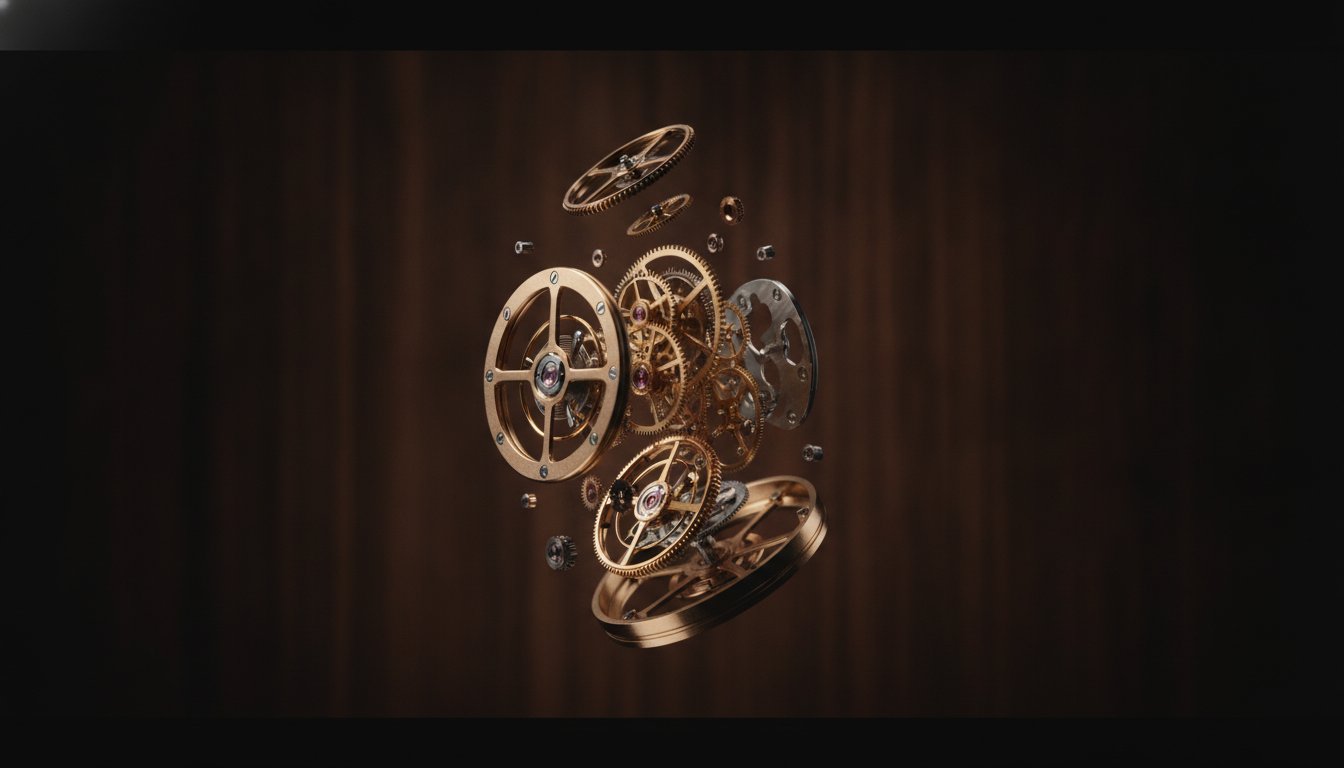
The most expensive part of a luxury watch is often the function you use the least. For many collectors, the price jump between a standard three-hand model and one featuring extra sub-dials can feel arbitrary or even daunting. You aren't alone if you've looked at a dial and wondered exactly what is a watch complication or why it demands such a significant premium. It's a common point of confusion that separates casual enthusiasts from true horological connoisseurs who value the micro-engineering hidden beneath the sapphire crystal.
We'll demystify these mechanical marvels, from the everyday convenience of a date window to the sheer technical audacity of a perpetual calendar. You'll learn to identify essential functions like chronographs and GMTs while discovering how they define a timepiece's character and long-term market value. This guide provides the clarity you need to choose a watch that balances prestige with practical utility. We'll also explain how expert verification and our five-year in-house warranty ensure your complex movement remains a reliable heirloom for generations to come.
Key Takeaways
- Master the fundamental definition of what is a watch complication, learning how these mechanical additions transform a standard movement into a specialized tool.
- Identify practical complications that enhance daily life, including the ubiquitous date window and the high-precision chronograph found in leading Rolex models.
- Discover the elite world of High Horology by exploring grand complications like perpetual calendars and the gravity-defying tourbillon.
- Evaluate how mechanical complexity influences a watch’s physical profile, its resale value, and the specialized care required for its upkeep.
- Understand why a comprehensive five-year in-house warranty is a critical safeguard for the intricate movements found in pre-owned luxury timepieces.
Defining the Watch Complication: More Than Just Timekeeping
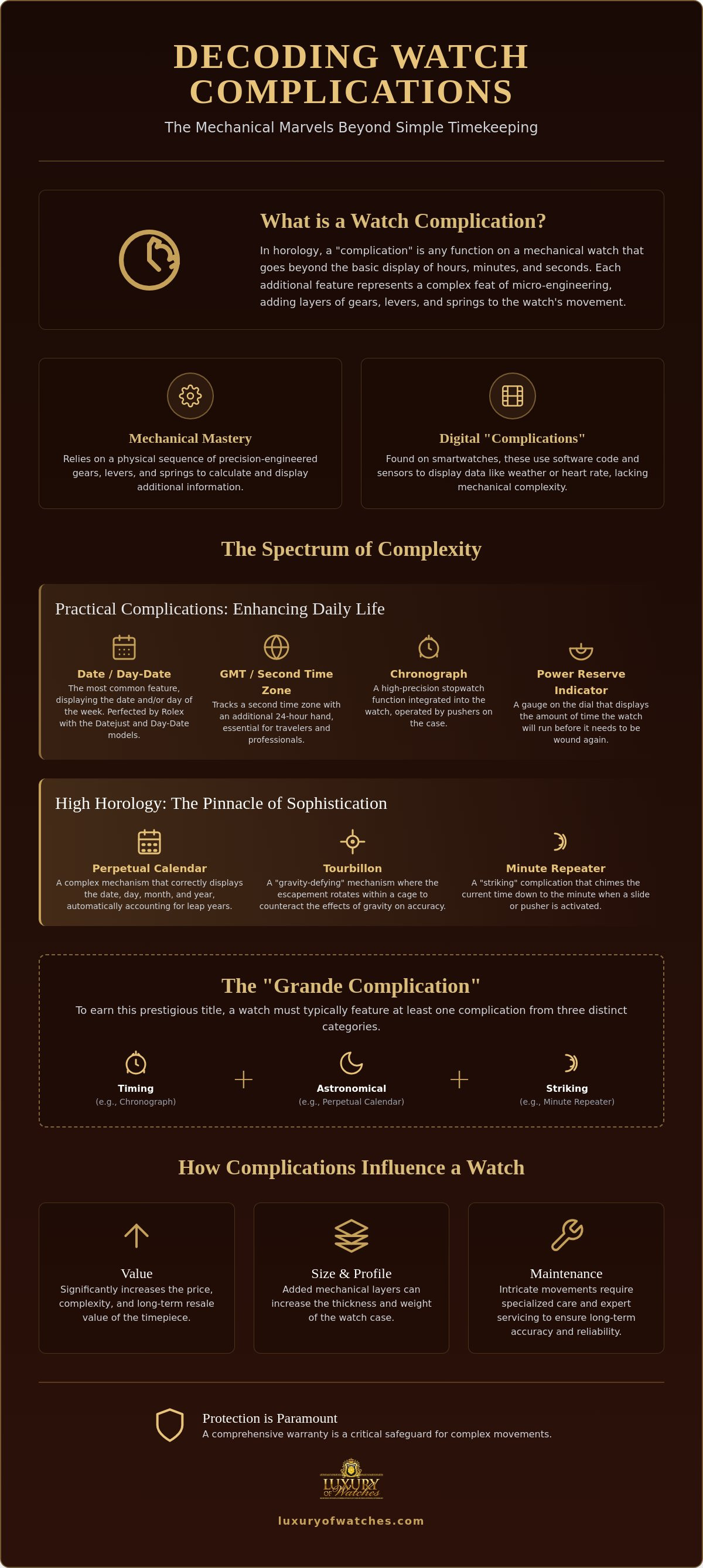
A mechanical watch movement in its purest form is designed to do one thing: track the passage of hours, minutes, and seconds. This is known as a "simple" movement. While achieving chronometric precision in this basic format is already a feat of engineering, the true artistry of horology begins when a watchmaker adds functions that go beyond the standard display of time. When you ask what is a watch complication, you are essentially asking about the physical additions to a movement that allow it to perform secondary tasks.
The term "complication" is literal. Every additional feature requires more parts, more space, and more energy from the mainspring. In the world of traditional watchmaking, a complication (horology) is a physical manifestation of mechanical problem solving. This differs significantly from the digital "complications" found on modern smartwatches. While a digital interface uses software code to display weather or heart rates, a mechanical complication relies on a complex sequence of gears, levers, and springs to calculate and display information. This physical complexity is why a mechanical timepiece with even a few extra functions is often considered a masterpiece rather than a mere tool.
The Mechanical Mastery Behind the Function
Integrating extra functions into the confined space of a watch case is a delicate balancing act. Watchmakers typically use two methods to achieve this: integrated movements or modular additions. An integrated complication is built directly into the base movement from the start, which often results in a thinner, more elegant profile. Alternatively, a "module" is a separate layer of components that sits on top of a base movement to add a specific function like a chronograph or a moon phase. A complication is any function beyond basic timekeeping that requires its own dedicated mechanical train. Because these systems add friction and weight, they demand expert calibration to ensure the watch remains accurate. This is why our five year in-house warranty is so vital; it provides the specialized security required for these intricate mechanical systems.
Simple vs. Grand Complications
Collectors generally divide these functions into two tiers based on their technical difficulty. "Small complications" are practical features used in daily life. These include date windows, power reserve indicators, and second time zones. These additions are common in professional models from brands like Rolex and Breitling, offering utility without overwhelming the dial.
At the other end of the spectrum lies the "Grande Complication." To earn this title, a watch must typically feature at least one complication from three distinct categories: timing (such as a split-seconds chronograph), astronomical (like a perpetual calendar), and striking (such as a minute repeater). Patek Philippe remains the undisputed master of this category, producing timepieces that contain hundreds of individual components. These watches are the pinnacle of horological achievement, representing hundreds of hours of hand finishing and assembly by the world's most skilled watchmakers.
Practical Complications: Enhancing Your Daily Life
While the mechanical complexity of a movement is fascinating, most collectors prioritize features that offer tangible benefits. When you explore what is a watch complication through the lens of daily wear, you'll find that utility often drives the most iconic designs. These "small complications" provide essential data at a glance, turning a luxury accessory into an indispensable tool for the modern lifestyle. They bridge the gap between pure aesthetics and professional functionality, ensuring your timepiece serves a purpose beyond simply marking the hours.
The Rolex Cyclops and Date Functions
The date window is the most ubiquitous function in horology. Rolex significantly influenced this category by introducing the Datejust in 1945, the first self-winding chronometer to display the date in a window on the dial. The addition of the "Cyclops" magnifying lens later became a hallmark of the brand, enhancing legibility for the wearer. For those tracking Rolex prices 2026, the presence of a date function often influences the entry point and long term value of a model. Beyond the standard date, the Rolex Day-Date provides the day of the week spelled out in full. More advanced versions, like the annual calendar, only require adjustment once a year at the end of February, offering a sophisticated balance of convenience and engineering.
The Chronograph: From Racing to Aviation
The chronograph is perhaps the most visually distinct complication, often identified by the presence of pushers on the side of the case and multiple sub-dials. This function allows the watch to act as a high precision stopwatch. The Rolex Daytona and various Breitling watches have defined this category for decades. These timepieces use sub-dials, or registers, to track elapsed minutes and hours independently of the main time. Many chronographs also feature a tachymeter scale on the bezel. While not a mechanical complication itself, this scale allows the wearer to calculate speed based on travel time, a feature deeply rooted in the worlds of professional racing and aviation. If you're looking for a functional masterpiece, our selection of pre-owned luxury watches includes many iconic chronograph models from the world's leading manufacturers.
For the frequent traveler, the GMT or Dual Time complication is an essential upgrade. This feature allows you to track two time zones simultaneously, typically using a dedicated 24 hour hand that points to a rotating bezel. It’s a favorite among pilots and international executives alike. Additionally, power reserve indicators have gained popularity as a way to monitor the energy remaining in the mainspring. This visual gauge tells you exactly when your watch needs winding, preventing the inconvenience of a stopped movement. You can find a detailed breakdown of these functions in this guide to watch complications, which highlights how these features evolved from professional requirements into symbols of status and taste.
High Horology: The Pinnacle of Sophistication
Beyond the practical utilities of the daily wearer lies a tier of horology reserved for the most ambitious mechanical pursuits. When you progress from basic date functions to asking what is a watch complication in the context of high horology, you are entering the territory of mechanical computers. These movements don't just track time. They calculate it for decades or even centuries. At this level, the watch is no longer a simple instrument; it's a testament to the limits of human engineering and micro-mechanical artistry.
The Perpetual Calendar: Engineering for Eternity
A perpetual calendar is widely considered the hallmark of masters like Patek Philippe and Audemars Piguet. While an annual calendar requires manual correction once a year in February, a perpetual calendar mechanically accounts for the varying lengths of all twelve months, including the leap year cycle. This requires an extraordinary part count, often adding hundreds of microscopic components to the movement. These watches are engineered to remain accurate without adjustment until the year 2100, when the Gregorian calendar skips a leap year. Because these systems are so intricate, they represent some of the most prestigious pre-owned luxury watches available today. Their value is found in the sheer density of the engineering required to manage such a complex calendar system.
The Art of the Tourbillon
Originally patented in 1801, the tourbillon was designed to improve accuracy by placing the escapement and balance wheel in a rotating cage. This constant motion counters the negative effects of gravity on the movement's timing, particularly when a watch stays in a fixed vertical position. While modern manufacturing has made standard movements incredibly precise, the tourbillon remains a symbol of extreme luxury and technical prowess. Many collectors prefer "open-heart" dials that showcase the rotating cage, turning a functional escapement modification into a mesmerizing visual centerpiece. It's a pure horological flex that demonstrates a manufacturer's ability to assemble and regulate the most delicate components.
The minute repeater is perhaps the most difficult complication to produce. It uses a complex system of tiny hammers and gongs to chime the hours, quarters, and minutes on demand. This audible function was essential in the era before luminous dials, allowing owners to tell the time in total darkness. Similarly, the moon phase indicator offers an astronomical connection by tracking the 29.5-day lunar cycle. While often chosen for its poetic aesthetic, it requires a precision gear train to ensure the lunar disc aligns perfectly with the sky above. These high-tier functions represent a significant investment in both craftsmanship and heritage. Given the immense complexity of these movements, our comprehensive five-year in-house warranty provides the essential security required when acquiring these mechanical marvels.
How Complications Influence Value, Size, and Maintenance
Owning a timepiece with multiple functions is a rewarding experience, but it introduces a specific set of ownership realities. When you understand what is a watch complication from a technical perspective, you quickly realize that every additional gear and lever represents a new layer of maintenance. This mechanical density is a double-edged sword. While it elevates the prestige and exclusivity of the piece, it also dictates the physical presence of the watch on your wrist and the long-term cost of keeping it in peak condition.
In the market for pre-owned luxury watches, complications are a significant driver of investment value. Highly complicated pieces from elite manufacturers often retain their value better than simpler models because they are produced in much smaller quantities. However, these movements are inherently more fragile than their "time-only" counterparts. A grand complication lacks the robust shock resistance found in a professional tool watch, making it a piece that requires a higher level of care and awareness from the wearer.
Maintenance and the 5-Year Warranty
Expert servicing is non-negotiable for high-tier movements. A standard chronograph movement can contain nearly double the parts of a basic automatic caliber, leading to more friction points and a greater need for specialized lubrication. A standard service for a grand complication can take months due to the hundreds of tiny, hand-finished parts that must be meticulously inspected and regulated. This is why our five-year in-house warranty is a cornerstone of our brand promise. It ensures that your investment is protected by master watchmakers who understand the nuances of these complex systems, providing the security needed for high-value horological acquisitions.
The Aesthetic Trade-off
Adding complications inevitably affects a watch’s dimensions. To understand this, compare the ultra-slim, refined profile of a Cartier Tank to the robust, technical presence of an IWC Pilot's Chronograph. Every complication is a physical layer added to the movement, which often results in a taller case. This "stacking" also influences the dial layout. A perpetual calendar must balance multiple sub-dials and windows without sacrificing legibility. Collectors must often decide between the understated elegance of a simple dress watch and the technical command of a complicated dial. If you are ready to find a timepiece that perfectly balances sophisticated function and timeless form, browse our authenticated selection of Pre-Owned Luxury Watches today.
Selecting the Right Complication for Your Collection
Choosing a timepiece is a deeply personal journey that balances mechanical fascination with daily utility. Now that you've explored what is a watch complication and how it impacts a movement’s architecture, the final step is identifying which functions serve your specific lifestyle. For some collectors, a watch is a high-precision tool designed for a specific task. For others, it’s a statement of engineering appreciation where the complexity itself is the primary draw. Identifying your priorities early will help you build a collection that feels intentional rather than impulsive.
Lifestyle Match: The Tool Watch
The GMT function stands as the ultimate office complication for the modern international professional. If you frequently manage teams across different time zones, the ability to track home and local time at a glance is more than a luxury. It’s a practical necessity that streamlines your workflow. Meanwhile, the chronograph remains a favorite for those who value tactile interaction with their movement. Whether you’re timing a flight leg or a racing lap, the mechanical feedback of a pusher provides a unique connection to the gears within. While a "daily driver" often features a simple date or GMT, a "grail watch" might be the place to indulge in the astronomical beauty of a moon phase or the technical audacity of a tourbillon.
For new collectors, the date window and GMT are often the most logical entry points. These functions offer immediate utility and are common across many prestigious models from Rolex and Breitling. They provide a taste of horological complexity without the extreme maintenance overhead associated with grand complications. Conversely, many seasoned purists eventually find themselves drawn back to "time-only" movements. They argue that less is more, finding a different kind of beauty in an uncluttered dial and a movement dedicated solely to chronometric perfection.
Buying with Confidence
Authenticity and condition are paramount when you’re acquiring complicated pre-owned pieces. A non-functioning sub-dial or a misaligned calendar wheel can quickly turn a dream purchase into a costly and frustrating repair project. It’s essential to verify that every lever, spring, and gear operates exactly as the manufacturer intended before you finalize a transaction. You should always look for pieces that come with a history of expert care and official documentation.
This level of scrutiny is why Luxury of Watches has become a premier destination for serious collectors seeking verified, complex timepieces. Our rigorous verification process ensures that every function, from the simplest date to the most intricate chronograph, is in perfect working order. Combined with our comprehensive five-year in-house warranty, we provide the security and peace of mind required for high-value horological acquisitions. Explore our curated selection of luxury watch brands to find the specific complication that defines your next horological milestone.
Elevating Your Horological Journey
Understanding what is a watch complication allows you to appreciate the profound level of engineering required to track more than just the passing seconds. Whether you're drawn to the practical utility of a GMT for international travel or the astronomical beauty of a perpetual calendar, these functions transform a timepiece into a specialized legacy. Every additional gear and lever represents a commitment to craftsmanship that defines the long term value and character of your investment. Choosing the right function is about matching mechanical audacity with your personal narrative.
As you refine your collection, remember that complexity demands a higher tier of security and expert care. We ensure your piece remains a reliable masterpiece through our A+ rated verification process and dedicated specialist support. Explore our collection of complicated luxury watches with a 5-year warranty to find a timepiece that resonates with your lifestyle. Our expertly verified inventory and comprehensive five-year in-house warranty provide the absolute confidence required for high-value horological acquisitions. Your next mechanical milestone is waiting to be discovered.
Frequently Asked Questions
Is a date display considered a watch complication?
Yes, a date display is a complication. By definition, anything beyond the basic display of hours, minutes, and seconds qualifies as a complication. When exploring what is a watch complication, it's important to remember that even a simple date window requires its own wheel and a mechanical jump every 24 hours. This adds physical parts and energy requirements to the movement that aren't present in a time-only caliber.
Why are watches with complications so much more expensive?
Complicated watches are more expensive because of the labor intensive engineering and increased part count required. A standard chronograph can add over 100 components to a movement. Each part must be hand finished, assembled, and regulated by master watchmakers. This level of craftsmanship takes significantly longer to complete, justifying the premium price found in the high end horology market.
What is the most useful watch complication for daily wear?
The date window and the GMT are widely considered the most practical complications for daily life. The date function offers immediate utility for administrative tasks, while the GMT allows you to track a second time zone during travel or international business. These features provide a perfect balance of mechanical interest and everyday convenience without the extreme maintenance needs of more exotic functions.
Does a complication make a watch less accurate?
Complications don't necessarily reduce accuracy, but they do increase mechanical drag on the movement. Extra gears and levers require more power from the mainspring to operate. Leading manufacturers like Rolex and Patek Philippe use advanced materials and engineering to ensure that even a highly complicated piece maintains its chronometric precision despite these additional mechanical loads.
What is a 'Grand Complication' exactly?
A Grand Complication is a timepiece that features at least one function from three specific categories: timing, astronomical, and striking. This typically includes a split seconds chronograph, a perpetual calendar, and a minute repeater. These watches represent the absolute pinnacle of mechanical achievement and are often the most prized assets in any private collection due to their extreme scarcity and complexity.
Do complications require more frequent servicing?
Yes, watches with complications generally require more meticulous and frequent servicing. More moving parts mean more points of potential wear and friction. Understanding what is a watch complication helps you realize why professional maintenance is non negotiable for long term reliability. Our five year in-house warranty provides the necessary security for owners of these complex mechanical systems.
What is the difference between an annual calendar and a perpetual calendar?
The primary difference is how they handle the month of February. An annual calendar recognizes 30 and 31 day months but must be manually adjusted once a year on March 1st. A perpetual calendar is a mechanical computer that accounts for the varying lengths of all months, including leap years, requiring no manual adjustment until the year 2100.
Is a tourbillon actually a complication?
While often categorized as one, a tourbillon is technically a modification to the escapement rather than a complication. It doesn't provide a secondary function like a date or timer. Instead, it places the balance wheel and escapement in a rotating cage to counter gravity's effects. Despite this technicality, collectors value it as a high tier horological achievement that showcases a brand's mastery.