
Watches with Strong Resale Value in 2026: What Holds
Posted by Luxury of Watches on 22nd Oct 2026
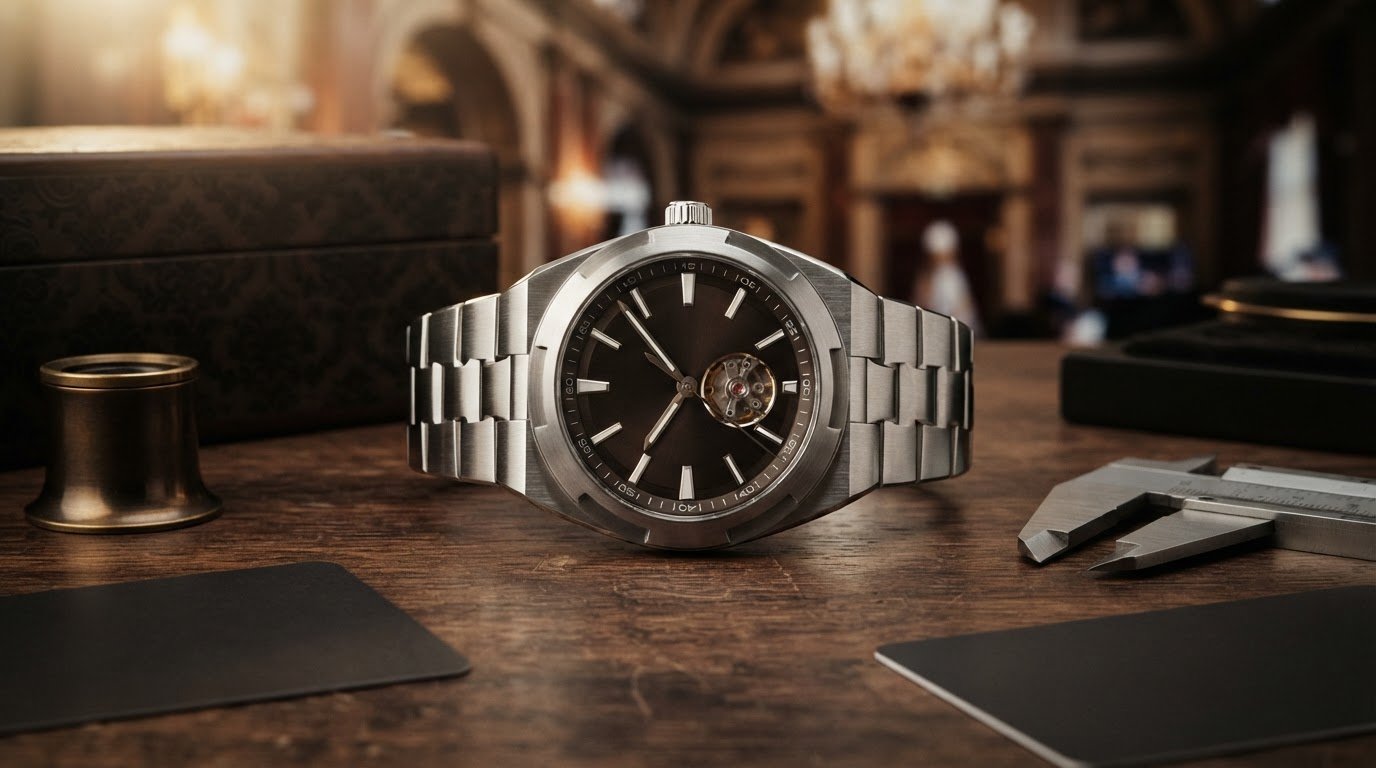
A 41mm steel Audemars Piguet Royal Oak has a secondary-market premium of 50% to 80% over retail, making it a standout among watches with the best resale value in 2026. That premium is a market snapshot, not a dependable forecast. Whether a luxury watch holds value also depends on its reference, condition, completeness, and current demand.
It’s natural to look for a timepiece that pairs enduring design with strong resale appeal. But a watch is a more considered purchase when enjoyment comes first and potential value retention is part of the decision, not a promise of future returns.
This guide explains what influences resale value, how buying for pleasure differs from buying with resale in mind, and how the Royal Oak has performed, including the steel references collectors watch closely. You’ll also find practical ways to assess condition and original accessories when comparing pre-owned watches.
Key Takeaways
- Assess resale potential through brand reputation, model demand, and completed sale prices rather than asking prices alone.
- Consider independent watchmakers producing fewer than 1,000 watches annually, while weighing collector interest against the challenges of a narrower market.
- Decide whether enjoyment or resale matters more before buying; that goal can guide your choice of reference, condition, and original accessories.
- Explore why the Royal Oak stands apart, and how its reference and material can shape resale performance.
1. Are Luxury Watches Still a Good Investment in 2026?
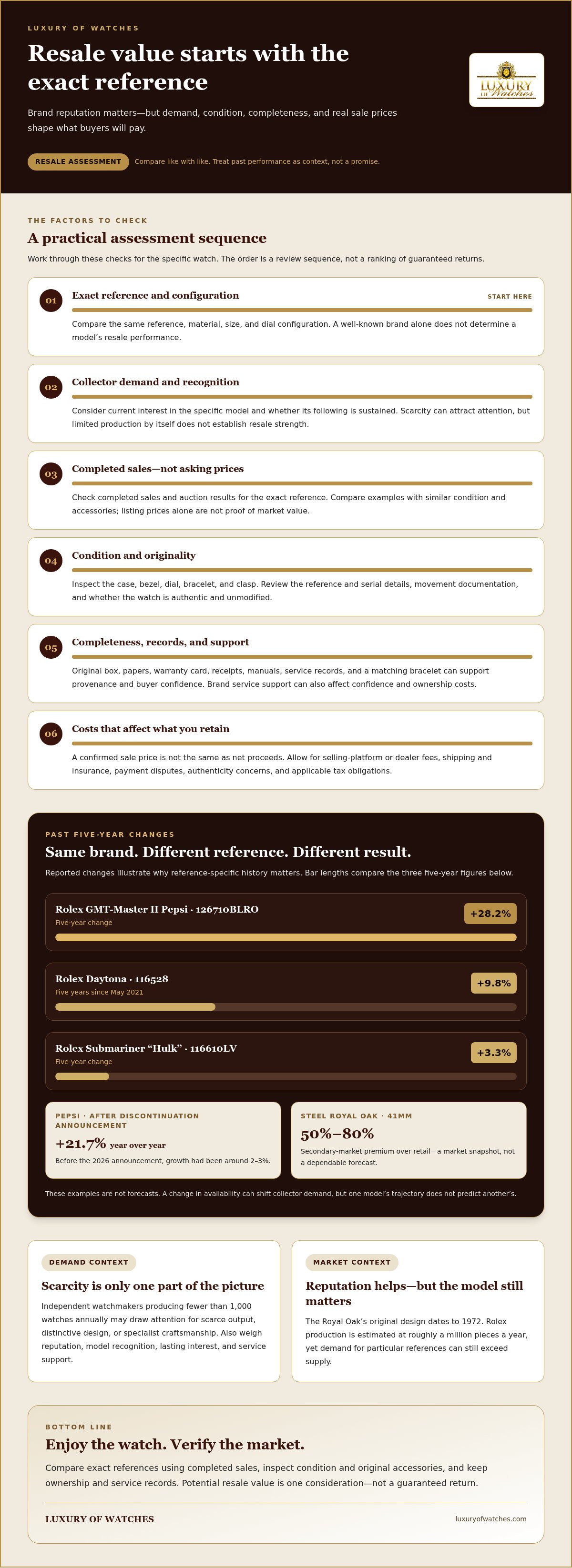
Some luxury watches have gained value, but that record doesn’t make every purchase a reliable investment. The Rolex Daytona reference 116528 increased by 9.8% over the five years since May 2021, while the Rolex Submariner reference 116610LV, known as the Hulk, rose by 3.3% over the last five years. These examples show why the reference matters as much as the brand name.
Past performance varies sharply between models. The Rolex GMT-Master II Pepsi reference 126710BLRO increased by 28.2% over the last five years, including a 21.7% year-over-year rise after its discontinuation was announced. Before that 2026 announcement, its growth had been around 2-3%. A change in availability can shift collector demand, but one model’s trajectory doesn’t predict another’s.
Brand reputation and heritage help create lasting recognition, while service support can influence buyer confidence and ownership costs. Audemars Piguet’s Royal Oak, whose original design dates to 1972, helped transform the modern luxury sports watch. Rolex’s production is estimated at roughly a million pieces a year, yet demand for particular references can still exceed supply. A well-known name matters, but specific model appeal remains decisive.
Independent watchmakers can attract collector interest through distinctive design, limited production, or specialist craftsmanship. Brands producing fewer than 1,000 watches annually may draw attention because their output is scarce relative to larger manufacturers. Scarcity alone, however, doesn’t establish resale strength: the maker’s reputation, ongoing demand, model recognition, and service support also matter. Collectors should consider whether a brand has a sustained following, not just a limited production run.
To assess how values have changed over the past five years, compare the same reference across that period. The Daytona 116528’s 9.8% increase, the Hulk’s 3.3% rise, and the Pepsi 126710BLRO’s 28.2% gain illustrate how differently watches with the best resale value in 2026 can perform. For a current US price check, look at completed sales and auction results for the exact reference, then compare condition and included accessories. Sale prices offer a clearer market signal than optimistic asking prices.
Before reselling, account for selling-platform or dealer fees, shipping and insurance, payment disputes, authenticity concerns, and applicable tax obligations. Keep purchase records and documentation that support the watch’s authenticity and ownership history. The final amount you retain depends on the sale channel and transaction costs, so distinguish the confirmed sale price from your net proceeds. Luxury watches are best purchased for their craftsmanship and enjoyment, with potential resale value treated as one consideration rather than a guaranteed return.
2. Buying watches for enjoyment versus investment
Start with the role you want the watch to play. If you’ll wear it often, prioritize comfort, legibility, design, and how it suits your daily routine. If resale matters, assess the specific model’s demand, condition, and sales history before choosing. These goals can overlap, but a watch that delights you isn’t automatically a strong investment.
Think beyond a brand name. A sports watch may appeal for its versatility, while a dress watch may better suit formal occasions. Compare examples across references, sizes, materials, and dial configurations. Note which features you genuinely value, then assess whether collector demand supports the same choices. This helps you refine your shortlist without letting resale speculation dictate every preference.
Buying pre-owned can provide access to discontinued references and established secondary-market pricing. It also lets you assess the condition of the exact watch you’ll own, rather than relying only on a new model’s specifications. Review the reference, serial details, case, dial, movement documentation, and included accessories. Original papers, service records, and a matching bracelet can help establish provenance and support buyer confidence later.
New and pre-owned purchases involve different trade-offs. A new watch offers the experience of being its first owner, while a pre-owned example may offer a discontinued design or a clearer view of actual market pricing. Compare like with like: the same reference, material, condition, and accessories. A listing price isn’t proof of a completed sale, so treat realized prices as the more useful comparison.
For a first purchase, set a firm budget before browsing and shortlist models you’d still enjoy if resale demand changed. Learn the reference details and inspect photographs closely, especially around the bezel, case edges, bracelet, and clasp. Favor authentic, unmodified examples with documentation that matches the watch. Avoid buying solely because a model is described as scarce: resale strength also depends on lasting recognition and active demand.
If resale is a priority, preserve the watch and its original components from the outset. Keep the box, papers, warranty card, receipts, manuals, and service records together. Avoid heavy modifications, since personalized parts can narrow the pool of future buyers. Before purchasing, compare the full set and condition against completed sales for the same reference. Browsing pre-owned watch examples can help you consider how condition and completeness shape a purchase.
3. What Determines Whether a Luxury Watch Holds Value?
A luxury watch’s resale value reflects several factors working together, not a single prestigious name. Brand reputation can attract buyers, while the specific reference, current demand, condition, and completeness shape what they’ll pay. Two watches from the same manufacturer can perform differently if one model has stronger collector interest or a more recognizable design. Assess the exact watch rather than assuming the brand’s reputation represents the highest value across its entire range.
Demand and availability influence resale strength. Waiting lists for stainless steel Rolex Daytona models at authorized dealers can extend for years, illustrating how limited access can sustain interest in a sought-after reference. Yet a waiting list alone doesn’t establish a watch’s market value. Compare completed sales of the same reference, and consider whether buyer interest appears consistent or tied to a brief shift in attention.
Proportions and design also affect the pool of potential buyers. Contemporary demand favors classic case sizes of 36mm and 39mm in 2026. These dimensions can appeal to buyers seeking versatile proportions, while a less widely preferred size may attract a narrower audience. Compare the specific watch’s fit and design with current demand rather than treating one case size as suitable for every wrist or style.
Originality and condition deserve close inspection. A replacement vintage dial can reduce a watch’s value by 40% to 60%, making originality especially important for collectors comparing older references. Look for signs of refinishing, replaced components, or alterations that change the watch’s original appearance. A heavily modified example may be harder to resell because its configuration no longer matches what buyers expect from that reference.
Completeness can help build buyer confidence. Original box, papers, warranty cards, and accessories support the watch’s ownership history and help distinguish a full set from a watch sold alone. Condition matters alongside those items: scratches, bracelet wear, and damage affect how buyers judge an example. Keep service records and purchase documents together, so the next owner can understand the watch’s history.
Use a consistent comparison process. First, identify the reference and material. Next, compare completed sales for that same model, matching condition and included accessories as closely as possible. Then weigh current demand against the watch’s originality and completeness. For example, a Rolex Daytona with strong recognition may attract attention, but its condition and exact configuration still shape its resale appeal. This approach helps separate broad brand prestige from the factors that influence an individual watch’s value.
4. Materials, craftsmanship, condition, and maintenance
A watch’s resale appeal depends on its exact reference, originality, condition, and supporting records. Buyers assessing a Patek Philippe, for example, may compare the dial, case, bracelet, and movement against that reference’s original configuration. Material and craftsmanship contribute to desirability, but limited production alone doesn’t establish lasting demand. A well-preserved example with recognizable design details can make a stronger impression than a watch altered from its intended form.
Case condition deserves particular attention. Heavy polishing can reduce a watch’s value by 15% to 30%, since excessive refinishing may soften edges and change the original case profile. Prioritize unpolished or lightly polished examples when resale matters. Inspect the lugs, bezel, and case lines under clear light, and look for consistent finishing across surfaces. The same close review applies to a TAG Heuer Carrera Chronograph, where condition and reference both matter.
Originality affects collector confidence, especially for vintage watches. Replacing a vintage dial can reduce value by 40% to 60%, so compare its details with the correct reference before buying. Check hands, bezel, crown, and bracelet for appropriate components, not merely an attractive appearance. Keeping the original bracelet and clasp also helps preserve the watch’s completeness and appeal to a future buyer.
Documentation and accessories add useful context. A full set includes the original box, papers, warranty cards, and accessories. Losing the original papers can reduce a watch’s value by 10% to 20%. Manuals, receipts, and service records can also help support authenticity and ownership history. Store these items together, and match the paperwork’s reference details to the watch rather than treating a box alone as proof.
Service history provides another part of the ownership record. For modern watches, manufacturer service intervals are typically every 5-7 years. Keep service documentation with the original papers, noting the work completed and the watch’s condition at that time. A clear record helps buyers understand maintenance history; undocumented work can leave questions about originality or replaced components. Avoid unnecessary polishing during routine care, since preserving the case profile matters.
Use a consistent inspection process before buying: confirm the reference, examine the case and dial, compare components with the original configuration, then review the box, papers, and service records. For a Patek Philippe or another watch with limited production, this evidence helps distinguish scarcity from condition and authenticity. These details matter across the global secondary market, where buyers compare individual examples, not just the manufacturer’s reputation.
5. Audemars Piguet Royal Oak resale performance
The Royal Oak combines recognizable design with sustained collector interest. Audemars Piguet introduced its original design in 1972, and the model helped transform modern luxury sports watches. Its octagonal bezel, integrated bracelet, and distinctive case finishing create an iconic identity that remains recognizable decades later. That heritage supports demand, but resale strength still varies by reference, material, condition, and market timing.
For 2026, a 41mm steel Royal Oak has a secondary-market premium of 50% to 80% over retail. The Royal Oak Offshore ranges from 10% below retail to retail. These relative comparisons show why buyers shouldn’t treat every Audemars Piguet model as equivalent. The collection, reference, configuration, and condition all shape the relationship between retail and resale value.
Reference-level performance adds important detail. The grey-dial Royal Oak reference 15400ST increased in value by 2.1% year over year and 25.4% over the five years since 2021. Steel Royal Oak reference 15500ST and its successors are also associated with strong resale values. Those figures offer useful context, but they describe individual references, not a guaranteed result for every Royal Oak.
Material can affect buyer demand. Steel Royal Oak models attract strong attention in the secondary market, while other metals and configurations can follow different value paths. The Royal Oak Offshore’s broader range, from below retail to retail, illustrates that a celebrated name alone doesn’t determine a premium. Compare sales for the same reference and material before drawing conclusions from a collection-wide reputation.
Condition and completeness matter alongside the model’s profile. Examine the bezel, bracelet, case edges, dial, and finishing for wear or alterations. Original papers and accessories help document the watch and support buyer confidence. A polished case or missing documentation can influence appeal, even when the reference has a strong collector following. Match the watch’s details to its reference before comparing prices.
The practical takeaway is specific: the Royal Oak has powerful heritage and strong-performing steel references, but its resale picture isn’t uniform. Compare the 15400ST, 15500ST, and Offshore separately, then weigh their material, condition, documentation, and current demand. For a closer look at Audemars Piguet watches, explore the available selection with those reference-level distinctions in mind.
Luxury of Watches: Rolex Watches
Luxury of Watches offers Rolex watches and used Rolex watches for readers comparing a new or pre-owned timepiece. If the factors discussed above have narrowed your search to a particular reference, condition, or original documentation, explore the selection with those priorities in mind. You can also consider pre-owned luxury watches and Breitling watches as you compare established brands and styles.
For added reassurance, Luxury of Watches provides a five-year in-house warranty on its authentic watch selection. A warranty doesn’t replace careful attention to reference details, condition, or included accessories, but it can form part of a considered ownership decision. Choose the watch that suits your collecting goals, then contact Luxury of Watches to discuss your next step.
Choose a Watch That Fits Your Next Chapter
Make your next step practical: turn your shortlist into a clear set of priorities. Decide which references suit your style, what condition you’re comfortable with, and which documents matter to your ownership plans. That framework helps keep the decision personal, even when resale value remains part of the picture.
As you refine your search for watches with the best resale value in 2026, compare options that match those priorities. Luxury of Watches offers Rolex Watches, Used Rolex watches, and Pre-Owned Luxury Watches, giving you categories to consider as you evaluate your next timepiece. Focus on the specific watch that fits your goals, not only its reputation.
When you’re ready to take the next step, contact Luxury of Watches today. A thoughtful choice can bring together lasting design, personal enjoyment, and a more considered approach to ownership.
Frequently Asked Questions
Are Luxury Watches Still a Good Investment in 2026?
Luxury watches are best approached as collectible purchases with potential resale value, not conventional investments. A sound buying decision starts with your intended holding period, how often you’ll wear the watch, and your preferred resale route. Compare completed sales for the exact reference, then account for ownership and selling costs. If the purchase only makes sense under a rapid price rise, choose a watch you’ll still value for its design and daily use.
Which Luxury Watch Brands Perform Best on the Second Hand Market?
Rolex, Patek Philippe, and Audemars Piguet have recognizable models with strong collector interest, but brand-wide rankings can hide substantial differences. Compare specific lines, such as Rolex sports models, Patek Philippe’s Nautilus and Aquanaut, or Audemars Piguet’s Royal Oak. Cartier and Breitling also have established heritage and sought-after designs. For a useful comparison, match references, materials, condition, and documentation rather than comparing brand names alone.
What Determines Whether a Luxury Watch Holds Value?
Resale value is shaped by the exact reference, buyer demand, condition, originality, and completeness. A sought-after model in an uncommon configuration can attract a different audience than the same reference in a standard configuration. Before buying, match the reference number and dial details, then compare completed sales of similar watches. Documentation that connects the watch to its ownership and service history can also help clarify its background for the next buyer.
Which watch brands and models have the best resale value in 2026?
Rolex sports models, the Patek Philippe Nautilus and Aquanaut, and steel Audemars Piguet Royal Oak references are notable candidates for resale strength. The Rolex Datejust, Explorer, and Yacht-Master also have established buyer recognition. Treat these as starting points, not interchangeable investments: dial, material, reference, and condition affect demand. Check actual completed sales for the precise model and configuration before deciding which example best fits your priorities.
Which Rolex models retain or exceed their retail value in 2026?
Rolex Daytona, Submariner, GMT-Master II, Datejust, Explorer, and Yacht-Master models are frequently discussed for resale demand. Within each line, reference, material, dial, condition, and availability influence performance. A discontinued configuration can attract attention, but its name alone doesn’t establish a premium. Compare the exact watch against completed transactions, and distinguish a resale price from the amount a seller keeps after transaction costs.
How do Patek Philippe, Audemars Piguet, and Richard Mille compare for resale value?
Patek Philippe Nautilus references and Audemars Piguet Royal Oak steel models have demonstrated strong collector interest, while performance varies across each maker’s catalogue. Compare the Nautilus with the Aquanaut, and the Royal Oak with the Offshore, rather than relying on brand prestige. Assess Richard Mille by its exact reference, material, condition, and completed-sale history. A sound comparison uses the same criteria for all three makers and avoids treating one model’s demand as brand-wide performance.
Which affordable luxury watches have the strongest resale value in 2026?
Consider the Rolex Oyster Perpetual, pre-owned Cartier Tank, and selected TAG Heuer models as accessible starting points for research. Their resale appeal depends on the specific reference, condition, and buyer interest, not simply the entry category. Compare examples with similar accessories and documentation, then focus on completed sales rather than asking prices. Buying pre-owned can also open access to earlier references and established secondary-market pricing.
What are the 2026 resale prices and retail prices for top-performing watches?
A 41mm steel Audemars Piguet Royal Oak has a secondary-market premium of 50% to 80% over retail. The Royal Oak Offshore is listed at 10% below retail to retail, while the Code 11.59 is listed at 30% below retail; no absolute prices are given for these models.