
Watches That Are Likely to Appreciate in Value: The 2026 Investor’s Guide
Posted by Luxury of Watches on 24th Jul 2026
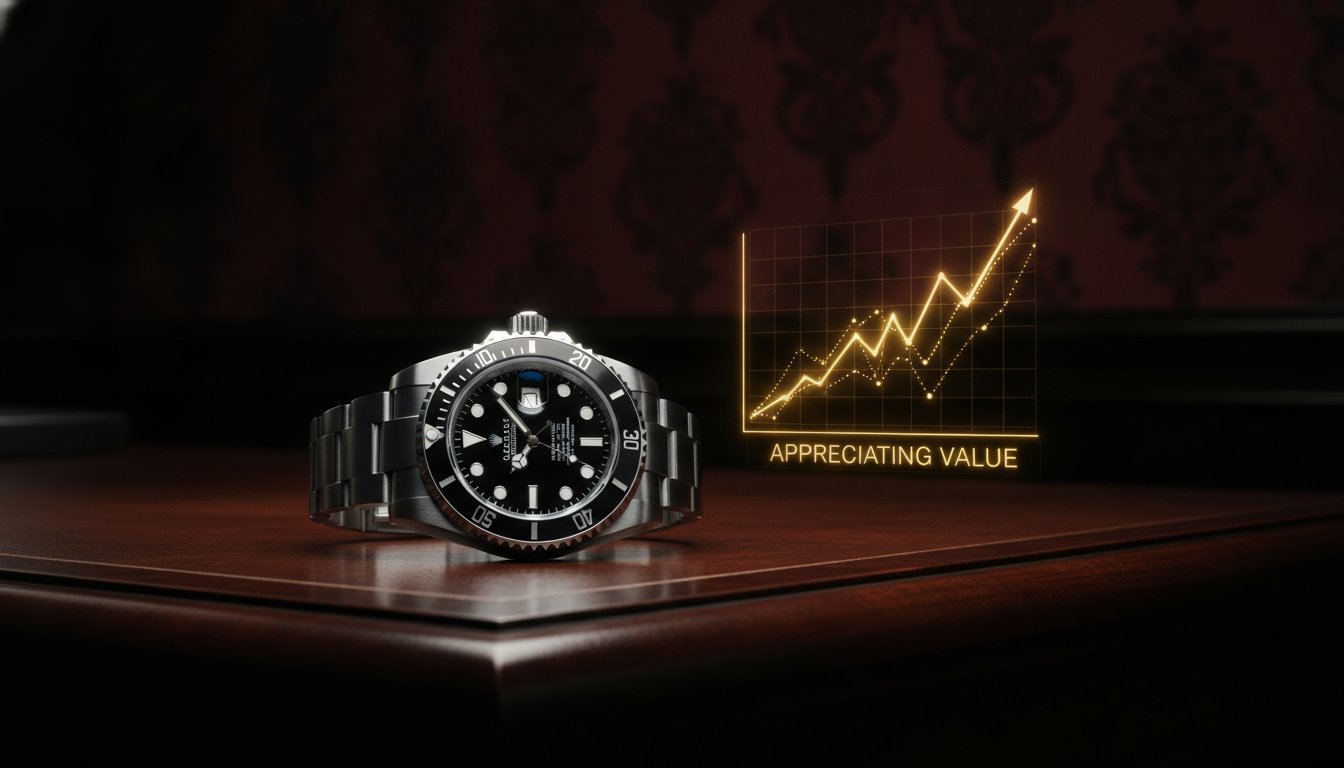
Did you know that only about 5% of luxury timepieces consistently increase in price over time? It's a sobering reality for many collectors who realize that most acquisitions simply retain their retail worth rather than growing it. You've likely felt the frustration of watching market bubbles expand and contract, wondering if you're buying at a peak or if a grey market premium is actually justified. Identifying watches that are likely to appreciate in value requires moving past the hype and focusing on horological fundamentals. We understand the hesitation that comes with high-value transactions, especially when authenticity and price volatility are at the forefront of your mind.
This 2026 guide provides the clarity you need to move forward with absolute confidence. We'll identify the specific blue-chip models from manufacturers like Patek Philippe and Rolex that are currently showing the strongest technical indicators for long-term growth. You'll learn how to evaluate the shift toward smaller case sizes and the renewed interest in shaped cases that are defining the current market. We'll also provide a clear framework for verifying documentation and condition to ensure your portfolio remains as secure as it is prestigious.
Key Takeaways
- Distinguish between volatile "hype watches" and true investment-grade pieces to ensure your collection serves as a stable hedge against inflation.
- Master the technical criteria and market signals used to identify watches that are likely to appreciate in value, focusing on scarcity and provenance.
- Analyze the historical performance of the "Big Three" manufacturers to understand why they account for the majority of secondary market value.
- Review our curated 2026 shortlist, featuring blue-chip models like the Rolex Submariner 126610LN that offer high liquidity and consistent growth.
- Gain the tools to buy pre-owned with confidence by prioritizing absolute verification and long-term service coverage for your timepieces.
The 2026 Luxury Watch Market: Why Certain Timepieces Appreciate
Identifying watches that are likely to appreciate in value requires a departure from the speculative frenzy that characterized the early 2020s. By 2026, the global inflation rate has stabilized at approximately 3%, making luxury timepieces an increasingly attractive tangible asset for those seeking to preserve purchasing power. True value appreciation in horology isn't merely a price increase. It's the ability of a timepiece to act as a sophisticated hedge against currency devaluation while maintaining high liquidity in the global market. The 2026 landscape has shifted toward selective collecting, where buyers prioritize "horological fundamentals" over social media hype.
Investors who chased trends during the speculative peaks of previous years often fell victim to the Greater Fool Theory, where price growth is driven by the hope of selling to another speculator rather than intrinsic value. In contrast, investment-grade pieces are defined by their long-term stability and historical performance. Research indicates that only about 5% of luxury watches consistently appreciate in value. This elite tier typically includes models with significant heritage, technical innovation, or extreme scarcity. Understanding the difference between a temporary price spike and sustained growth is the cornerstone of a successful horological portfolio.
The Shift from Retail to the Secondary Market
The pre-owned luxury watch market is projected to reach $35 billion by 2026. This growth isn't accidental. The secondary market has become the most accurate indicator of a watch's real-time value, often reflecting demand that authorized dealer (AD) waiting lists cannot satisfy. When a specific Rolex or Patek Philippe requires a multi-year wait at retail, the secondary market price naturally rises to reflect the immediate availability premium. For many investors, pre-owned luxury watches offer the most logical entry point for growth. Buying pre-owned allows you to bypass the initial retail depreciation that affects less desirable models, ensuring your capital is immediately tied to the asset's true market worth.
Supply vs. Demand: The Scarcity Principle
Scarcity remains the primary driver of appreciation. Manufacturers like Patek Philippe and Audemars Piguet maintain strict production caps, ensuring that supply never fully meets global demand. This tension is amplified by the "discontinued" effect. When a manufacturer ceases production of a specific reference, the fixed supply immediately transforms the model into a finite collectible, often leading to significant price spikes. Artificial scarcity in high-end horology is the strategic restriction of production for coveted references to sustain a permanent imbalance between supply and global collector demand. This controlled output, paired with the 64% market share held by the "Big Three" brands, ensures that the most desirable references remain insulated from broader economic volatility.
Investment Indicators: The Anatomy of a Value-Growth Watch
Identifying watches that are likely to appreciate in value requires a keen eye for technical and historical details that go beyond mere brand recognition. While some analysts argue that watches are a poor economic investment compared to traditional equities, the 2026 market proves that specific blue-chip indicators can yield significant returns. One of the most vital indicators is the presence of original "Box and Papers." Complete documentation typically commands a 10% to 20% premium in the secondary market. This paperwork provides the absolute verification serious collectors demand and acts as a signature of the brand's promise of legitimacy.
Material choice also plays a critical role in long-term performance. Historically, stainless steel sports models from top-tier manufacturers have outperformed their precious metal counterparts. Steel offers a more accessible entry point and a rugged utility that resonates with the current preference for everyday luxury. Additionally, the "First and Last" rule remains a staple of savvy collecting. Investors often target the first year of a new reference's production or the final year before a model is discontinued. These bookend pieces frequently become the most sought-after by future enthusiasts because they represent a definitive moment in a manufacturer's timeline.
Reference Numbers and Movement Significance
Collectors don't just buy a brand; they buy a specific reference number. The caliber, or internal movement, is the heart of a watch's value. Transitional references are particularly lucrative. These are models produced for a short period that bridge the gap between two major generations, often featuring a unique mix of old-school aesthetics and modern technical upgrades. In high horology, high complications such as perpetual calendars or minute repeaters from Patek Philippe act as anchors of value. These movements represent the pinnacle of mechanical achievement and maintain their worth regardless of broader market fluctuations.
Provenance and Historical Significance
A timepiece's heritage provides an emotional and historical anchor that sustains its price. Models with a documented history in diving, aviation, or racing tend to maintain higher resale values because their utility is proven. Cult status often follows specific models associated with significant cultural moments or celebrities, creating a halo effect that boosts demand. Condition is the final, non-negotiable pillar. An unpolished case with its original factory chamfers and sharp edges is significantly more valuable than a heavily restored piece. If you're looking to build a secure portfolio, exploring pre-owned luxury watches with verified provenance and original condition is the most professional path forward.
The 'Blue Chip' Brands: Rolex, Patek Philippe, and Audemars Piguet
The "Big Three" manufacturers represent the bedrock of horological investment. Collectively, Rolex, Patek Philippe, and Audemars Piguet account for approximately 64% of the secondary market value. This concentration of worth isn't merely a result of brand prestige. It's a reflection of consistent historical performance and engineering excellence that spans decades. Recent analysis from July 2025 suggests that the global luxury watch market is thriving, particularly as younger investors recognize these pieces as viable alternative assets. These brands have mastered the art of balancing supply with global demand, ensuring their most coveted references remain insulated from broader economic shifts.
Rolex: Liquidity and Brand Dominance
Rolex remains the undisputed leader in market liquidity. Many collectors view these timepieces as a "cash equivalent" because they can be liquidated almost instantly in any global market. Historically, the brand has demonstrated a consistent annual growth rate of 5% to 7%, though the pre-owned Rolex market grew by 7.92% as of May 2026. Models like the GMT-Master II and the Cosmograph Daytona continue to be top performers, frequently trading at significant premiums. For a deeper dive into specific valuations, consult our Rolex Prices 2026: The Comprehensive Market Value & Buying Guide. This predictable performance makes Rolex a primary target for those seeking watches that are likely to appreciate in value without the volatility seen in smaller brands.
Patek Philippe and Audemars Piguet: The High-End Tier
While Rolex offers volume and liquidity, Patek Philippe and Audemars Piguet provide a level of exclusivity that appeals to the world's most serious collectors. Patek Philippe is synonymous with wealth preservation, famously marketed as a timepiece you merely look after for the next generation. Their Grand Complications are considered the ultimate tools for asset security, relying on mechanical complexities that few other manufacturers can replicate. Audemars Piguet relies heavily on the Royal Oak, a design icon that has transcended mere market trends. Current interest in the Royal Oak 15500ST remains high, even as collectors begin to favor smaller 36mm and 37mm references. Understanding these nuances is essential for navigating the secondary market safely. We provide detailed insights on these shifts in The Comprehensive Guide to Pre-Owned Luxury Watches, helping you select pieces with the greatest potential for long-term growth.
Top Watches Likely to Appreciate in 2026: The Investor’s Shortlist
The 2026 landscape has corrected the volatile price spikes of the early 2020s, leaving a market that rewards horological significance. Selecting watches that are likely to appreciate in value now requires a focus on established icons with proven secondary market demand. The Rolex Submariner (Reference 126610LN) remains the quintessential benchmark for any portfolio. Its consistent liquidity and status as a professional diving icon ensure it remains insulated from broader economic shifts. Beyond the crown, the Cartier Santos has emerged as a rising star. Collectors are increasingly drawn to its historical provenance as the first pilot’s watch and its distinctive square silhouette, reflecting a renewed interest in shaped cases.
Vintage-inspired chronographs are also regaining momentum. The Breitling Navitimer, with its complex slide-rule bezel and aviation heritage, offers a compelling mix of technical utility and aesthetic appeal. Similarly, the IWC Big Pilot provides a stable asset for military watch enthusiasts who value legibility and robust engineering. These models represent the shift toward "value-driven collecting" where heritage anchors the price and protects against the volatility of newer, unproven references.
Entry-Level Investments Under $10,000
Resale stability is often found in timeless designs like the Cartier Tank Must. Its minimalist elegance ensures it never falls out of fashion, protecting its value over decades. A notable trend in 2026 is the surge in mid-size and vintage pieces. For instance, the Rolex Datejust 31 (ref. 6827) saw ownership values surge 68.42% between late 2025 and April 2026. For those seeking motorsport heritage, the TAG Heuer Monaco remains a strong contender. Limited editions frequently see growth as they become harder to source. You can also find value in pre-owned Panerai and Hublot models. By entering the market at a pre-owned price point, you avoid the initial retail depreciation.
Professional-Grade Investments Over $20,000
At the higher tier, the Rolex Cosmograph Daytona continues to dominate. The "Panda" dial remains a permanent collector target, especially given that 56% of Rolex models were selling above retail in early 2026. For those focusing on scarcity, the Audemars Piguet Royal Oak 'Jumbo' Extra-Thin is a cornerstone asset. Interest in 36mm and 37mm Royal Oaks has increased by 12% recently, reflecting a broader market shift toward smaller case sizes. Conservative collectors should look toward the Patek Philippe Calatrava. While it lacks the aggressive styling of a sports watch, its understated elegance and mechanical perfection make it a sleeper investment for generational wealth preservation. You can explore our curated selection of pre-owned luxury watches to begin building your investment portfolio today.
Safeguarding Your Investment: Buying with Confidence
Acquiring watches that are likely to appreciate in value is only the first step in a successful investment strategy. The second, and perhaps more critical, phase involves managing the Total Cost of Ownership (TCO) and ensuring the absolute security of your capital. In the 2026 market, gross appreciation can easily be eroded by unforeseen maintenance costs or the discovery of non-original parts. Protecting your investment requires a shift in perspective. You aren't just buying a timepiece; you're securing a high-value asset that demands rigorous verification and long-term mechanical support. Buying online offers competitive pricing, but it also necessitates a partner who can provide boutique-level security without the traditional retail premiums.
Authentication is the non-negotiable pillar of horological investing. With the secondary market projected to reach $35 billion by 2026, the sophistication of counterfeit or "franken-watches" has increased. A watch with a replaced dial or an incorrect movement caliber can lose up to 30% of its market value instantly. Maintenance history also plays a vital role in long-term ROI. A documented service history from a reputable specialist ensures the movement remains within factory specifications, preserving both its mechanical integrity and its resale appeal. By prioritizing these factors, you ensure that the price growth you see on paper translates into actual profit when it's time to liquidate.
The Luxury of Watches Difference
Luxury of Watches bridges the gap between the competitive pricing of the secondary market and the peace of mind found in a heritage boutique. Since 1999, we've specialized in the absolute verification of new and pre-owned timepieces from manufacturers like Rolex, Patek Philippe, and Audemars Piguet. Our primary differentiator is our 5-year in-house warranty. While many dealers leave you vulnerable to high maintenance costs, our warranty acts as a strategic hedge against mechanical failure, protecting your investment's TCO. We're committed to providing 100% authentic timepieces, backed by an A+ BBB rating and a team of experts ready to guide first-time horological investors through the nuances of technical movements and heritage.
Final Checklist for the 2026 Watch Investor
Before finalizing any high-value transaction, ensure you've checked the following markers of a secure investment:
- Verify Reputation: Confirm the seller has a long-standing US-based physical presence and a proven track record in high-value horology.
- Documentation: Ensure the original box and official papers are present, as this documentation adds a 10% to 20% premium to watches that are likely to appreciate in value.
- Mechanical Security: Look for extended service coverage that goes beyond a standard 30-day return policy.
- Condition: Prioritize unpolished cases and original components to ensure maximum future liquidity.
Success in the 2026 horological landscape is reserved for those who pair emotional passion with intellectual security. When you're ready to take the next step in your journey, explore our curated selection of investment-grade watches and buy with the confidence that only decades of expertise can provide.
Building Your Horological Portfolio with Confidence
The 2026 market rewards the disciplined collector who prioritizes technical merit and historical provenance over short-term speculation. Success in this landscape requires a focus on blue-chip manufacturers and specific reference numbers that have proven their resilience through varying economic cycles. By sticking to these fundamentals, you can identify watches that are likely to appreciate in value while enjoying the prestige of a world-class timepiece. Remember that documentation, original condition, and verified service history remain the ultimate anchors of long-term resale worth.
Securing these high-value assets requires a partner who understands the complexities of luxury transactions. Luxury of Watches provides the intellectual and financial security you need through our A+ BBB rating and secure, US-based operations. Every timepiece in our verified authentic inventory is backed by a comprehensive five-year in-house warranty, ensuring your investment remains mechanically sound for years to come. We're here to ensure your next acquisition is as secure as it is inspiring.
Secure Your Investment: Shop Authentic Luxury Watches with a 5-Year Warranty
Your journey into high-end horology is a commitment to craftsmanship and legacy. We look forward to helping you find a piece that truly stands the test of time.
Frequently Asked Questions
Which watch brand holds its value the best?
Rolex, Patek Philippe, and Audemars Piguet consistently lead the market in value retention. These three manufacturers account for approximately 64% of the total secondary market value in 2026. Rolex is particularly noted for its high liquidity and predictable annual growth, while Patek Philippe is favored for long-term wealth preservation through its complex, generational timepieces.
Is it better to buy a new or pre-owned watch for investment?
Buying pre-owned is often the most strategic entry point for an investor. This approach allows you to bypass the initial retail depreciation that affects many models the moment they leave the boutique. In a market where the pre-owned sector is projected to reach $35 billion by 2026, purchasing a verified, high-condition used model ensures your capital is immediately tied to the asset's true market value.
Do luxury watches actually appreciate in value like stocks?
Only about 5% of luxury watches consistently appreciate in value over the long term. While they don't function exactly like equities, they serve as a sophisticated tangible asset and a hedge against inflation. For most high-end pieces, "holding value" means retaining 85% to 95% of their original retail price after five years, though elite references can see much higher returns.
What is the best Rolex to buy for investment in 2026?
The Rolex Submariner 126610LN and the Cosmograph Daytona remain the strongest candidates for growth. These are watches that are likely to appreciate in value because they possess universal appeal and high secondary market liquidity. In early 2026, over half of all Rolex models continued to trade above their original retail prices, with professional sports models leading the surge.
How much does a watch’s condition affect its resale value?
Condition is one of the most critical factors in determining an asset's worth. An unpolished case with its original factory chamfers is significantly more valuable than a heavily restored or polished piece. Any replacement of original parts, such as the dial or hands, can reduce a watch's resale potential by as much as 30%, as collectors prioritize original integrity above all else.
Does "Box and Papers" really make a difference in price?
Original documentation typically adds a premium of 10% to 20% to the final sale price. Collectors view the original box and warranty papers as absolute verification of the watch's provenance and legitimacy. For those looking to maximize their ROI, ensuring these items are present is essential, as they act as a signature of the brand's promise and simplify the future resale process.
Can I wear my investment watch or will it lose value?
You can certainly wear your watch, provided you maintain it with care. While "New Old Stock" condition often commands the highest price, most blue-chip models are robust enough for regular use without significant value loss. It's important to avoid heavy impacts or deep scratches that require invasive polishing, as maintaining the original case geometry is vital for long-term appreciation.
Why is the secondary market price often higher than the retail MSRP?
This price disparity is driven by the scarcity principle and immediate availability. When waiting lists at authorized dealers for coveted models span several years, the secondary market price rises to reflect the premium collectors are willing to pay for instant ownership. This is especially common for stainless steel sports watches where global demand consistently outpaces the manufacturer's controlled production capacity.