
Unworn vs Mint Watches: Condition Grades and Resale Prices
Posted by Luxury of Watches on 24th Oct 2026
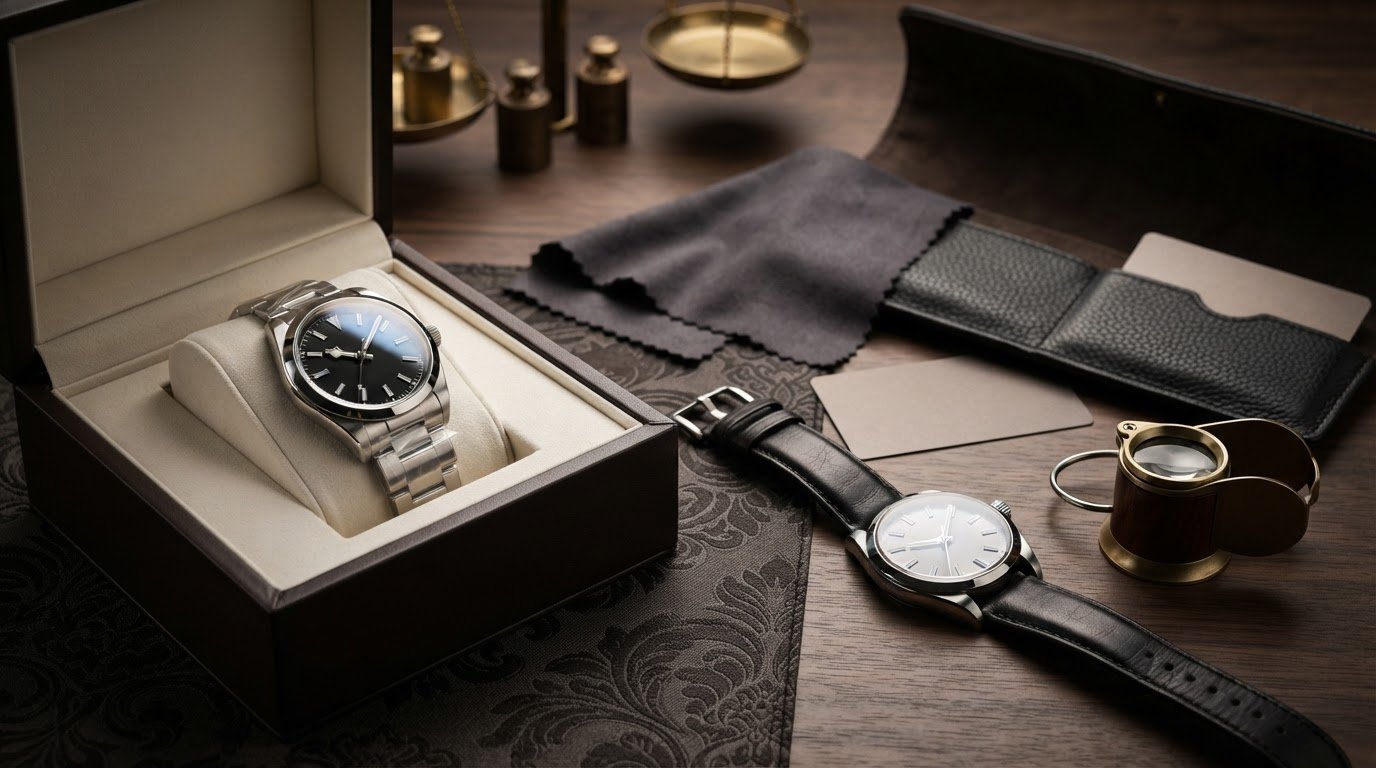
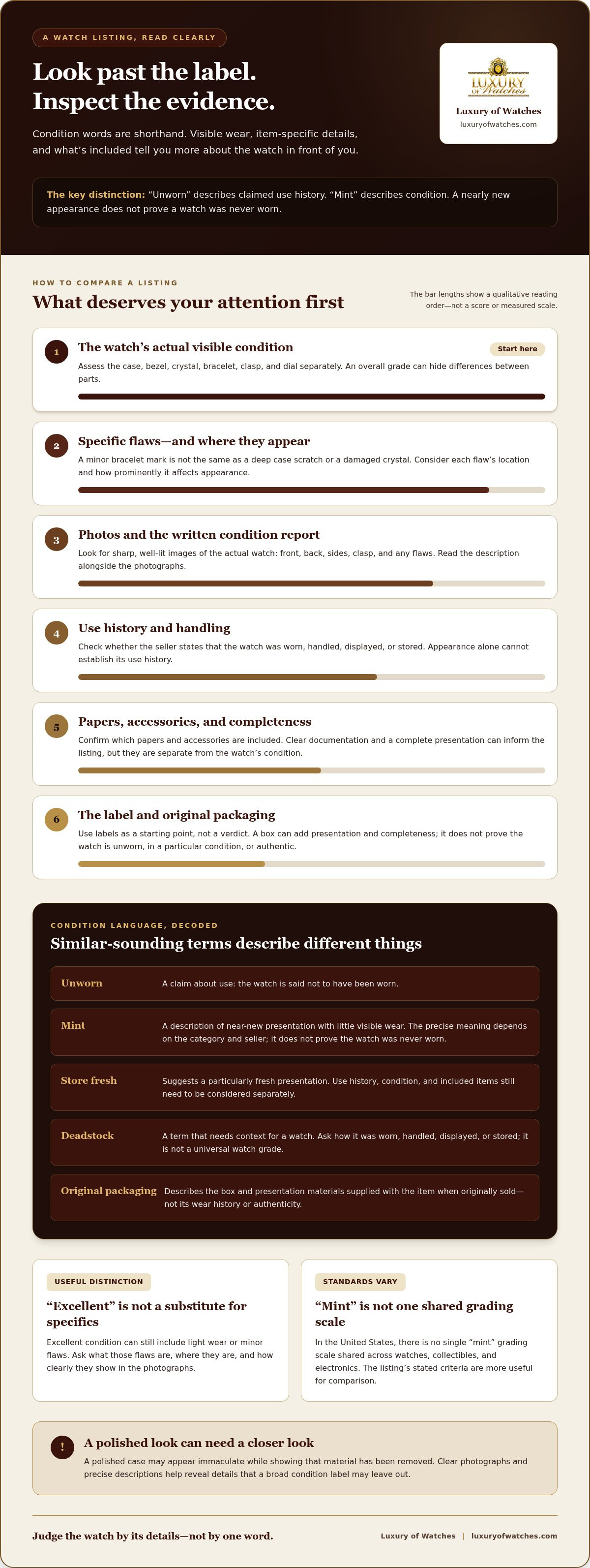
A watch that looks untouched isn’t described the same way by every seller. If you’re asking what “unworn” or “mint condition” means, “unworn” describes a watch claimed not to have been worn, while “mint” describes one in exceptionally well-preserved condition. “Mint” alone doesn’t prove the watch was never worn. “Store fresh” suggests a particularly fresh presentation, but use history, condition, and included items are separate details.
The strongest-sounding label doesn’t necessarily mean the best resale value. Buyers also consider visible wear, packaging, and documentation, so the label alone doesn’t tell the whole story. This guide explains how “store fresh” differs from “unworn,” what condition grades communicate, and how a watch’s presentation and completeness can influence resale appeal. You’ll have a clearer way to compare listings and understand what each description does, and doesn’t, tell you.
Key Takeaways
- Compare the watch’s actual signs of wear with its condition label; terms such as “pristine” and “excellent” describe different levels of visible wear.
- Treat original packaging as part of a watch’s presentation, not as proof of its wear history or authenticity.
- When assessing a watch in good condition, focus on the specific flaws and how prominently they affect its appearance.
- Resale appeal depends on more than a grade: condition, completeness, and buyer expectations all shape how a watch is valued.
- Use clear, item-specific descriptions when comparing listings, since “mint” may not communicate the same condition in every context.
Pristine, Excellent, and Good condition descriptions
Condition labels can help compare pre-owned items, but the details matter more than the grade alone. Look for specific information about wear, flaws, accessories, and presentation.
Pristine Condition
Pristine condition describes an item that appears exceptionally well preserved, with little or no visible wear. For clothing, an immaculate piece appears to have had very little wear.
For a watch, assess the case, bezel, crystal, bracelet, clasp, and dial separately. A polished case may look immaculate while showing that material has been removed, so clear photographs and precise descriptions matter. Look for details about marks or replaced parts instead of relying on an overall grade.
Sellers can document condition with sharp, well-lit photographs of the front, back, sides, clasp, and any flaws. A written condition report should identify included papers and accessories. Pictures should show the actual item, not just a stock image.
Excellent Condition
Excellent condition means an item presents very well, though close inspection may reveal light wear or minor flaws. In clothing descriptions, “very good” is often treated as equivalent to excellent, except for some minor flaws.
Excellent-condition vintage clothing can be a compelling choice when its fabric, seams, fastenings, and lining remain sound. Check for fading, repairs, stains, and weakened areas; age alone doesn’t describe its present condition. A vintage garment several decades old may retain character without looking or smelling new.
An excellent-condition bag may be worth buying if its structure, handles, corners, lining, and hardware suit your priorities. Compare each described flaw with its location and visibility in the photographs. Packaging or protective film alone cannot establish authenticity or prove an item has never been used.
In watch listings, “excellent” should be backed by details about the specific item. A minor bracelet mark differs from a deep case scratch, and both differ from a damaged crystal. Read the description and inspect the photographs together.
Mint Condition Standards
Mint condition generally describes an item in near-new presentation, with little visible wear. The precise meaning depends on the category and seller.
Grading standards for collectibles, watches, and electronics can differ because each category has different inspection criteria. In the United States, “mint” isn’t a single grading scale shared across all these categories. The listing’s stated criteria offer a more useful basis for comparison.
To understand what “unworn” or “mint condition” means in a particular listing, separate use history from appearance. “Unworn” describes claimed non-use; “mint” describes condition. A watch may look nearly new without that appearance proving it was never worn.
If an item advertised as unworn or mint arrives with wear or damage, photograph the issue promptly and compare it with the listing. Preserve the packaging and follow the purchase platform’s stated process to report the discrepancy.
The guide cautions that clothing several decades old shouldn’t be expected to smell new after steaming or dry cleaning.
Deadstock and original packaging
Deadstock and original packaging describe storage history and presentation, not necessarily authenticity or present condition. For watches, treat those details separately from a claim that a piece is unworn.
Deadstock commonly describes clothing that has remained unworn in its original packaging for several years, sometimes decades. The term points to an item’s history and packaging, rather than proving perfect preservation. Fabric can age in storage, and packaging can deteriorate. A deadstock garment may still show creasing, discoloration, or weakened elastic after years in storage.
For a watch listing, treat “deadstock” as a description that needs context, not as a universal watch grade. The seller should explain whether the watch was worn, handled, displayed, or stored. A watch kept in a box may still have handling marks, while a watch without its original box may be unworn. Those are separate claims.
Original packaging means the box and presentation materials supplied with an item when it was originally sold. For a watch, the set may include a branded box, documents, tags, or other accessories. Their presence can make a listing more complete and clarify what comes with the watch. Packaging alone doesn’t establish the watch’s wear history, condition, or authenticity.
Inspect the contents as carefully as the exterior. Compare the box, papers, and visible identifiers with the listing description, then check photographs for wear on the watch itself. A clean box can’t cancel out a scratched clasp, and missing packaging doesn’t prove the watch was worn. Keep the seller’s wording precise: “box included” describes an item; “unworn” describes use history.
- Read the description for a direct statement about wear, storage, and handling.
- Compare photographs of the watch with the stated condition, including the case, bracelet, and clasp.
- Confirm which accessories are pictured and included, rather than assuming a complete set.
Packaging details require careful interpretation beyond watches, too. Protective film on a Hermès bag’s hardware doesn’t, by itself, prove the bag is new or genuine. The same principle applies when evaluating a watch: packaging is supporting context, not a substitute for examining the item and its documentation.
For resale, original packaging may strengthen presentation and completeness, while visible condition and credible documentation remain distinct considerations. A buyer comparing two similar watches should note what each listing includes, then assess the watch independently. To compare pre-owned watches alongside their listed details, explore pre-owned watch listings.
Good condition
Good condition describes a watch with visible signs of use that remains presentable as a pre-owned timepiece. A clasp with desk marks or light case scratches may fit this grade, while the wording alone says little about each flaw’s depth or location.
Read “good” as a starting point for inspection, not a complete condition report. A photo of the dial may show an attractive face but reveal nothing about the caseback, bracelet, or clasp. Examine every angle in the listing, then compare the written description with the images. A scratch visible in a photograph should be clearly identified in the text.
Separate cosmetic wear from information about the watch’s operation. A listing should describe what’s known about the movement and functions, rather than letting a condition grade stand in for those details. A worn bracelet and a watch that keeps time, for example, are two distinct observations. The first concerns appearance; the second concerns function.
Look closely at the components most likely to show contact during regular wear. The bezel can have small marks, bracelet links can show rubbing, and the clasp can have scratches from daily handling. Inspect the crystal and dial for damage that could affect legibility or appearance. Distinguish light surface marks from chips, dents, or deeper scratches.
- Check whether the seller identifies the location and type of each visible flaw.
- Compare close-up photographs of the bezel, lugs, caseback, bracelet, and clasp.
- Read any description of function separately from the cosmetic grade.
- Note whether the listing explains replaced parts or alterations.
Condition also depends on what matters to you. A collector seeking an untouched appearance may find a scratched clasp distracting, while someone choosing a watch for regular wear may accept that mark in exchange for a lower condition grade. A polished case may look cleaner, but polishing can change the sharpness of its original edges. The listing should describe any polishing rather than leaving you to infer it from photographs.
Before comparing two watches both described as “good,” write down their actual differences. One may have a clean dial and marked bracelet; another may show case wear but come with more complete documentation. The grade is useful only when paired with those specifics. Compare condition, function, and included items, not just the adjective.
How condition grades affect resale prices
Resale value is the amount a buyer is prepared to pay for a pre-owned watch, shaped by its condition and appeal. A grade influences that judgment, alongside the specific model, completeness, and documented history.
Condition can affect price because buyers compare the watch in front of them with cleaner examples of the same model. A visible clasp mark may matter less than a deep case scratch or crystal damage. The location, depth, and prominence of wear help explain why two watches with the same grade may attract different offers.
Compare like with like before drawing conclusions. Match the brand, model, reference, dial, and included accessories as closely as possible. Then review photographs and descriptions for differences in wear. A lightly worn example with clear documentation may present differently from one described as “mint” but shown only in distant photographs.
Completeness can also shape buyer interest. A listing that includes the original box and papers presents different information from one containing only the watch. These items don’t erase scratches or establish wear history, but they can affect how a buyer assesses the overall package. Treat the watch’s condition, documentation, and accessories as separate factors.
Use this practical comparison when evaluating two listings:
- Match the model: Compare the same reference and configuration, not merely watches from the same brand.
- Inspect visible wear: Check the case, bezel, crystal, bracelet, and clasp in close-up images.
- Read the details: Note stated flaws, replaced parts, included documents, and packaging.
- Compare the whole listing: Consider condition and completeness together rather than treating one grade as a price guarantee.
A grade can help organize a comparison, but it can’t replace an accurate description. For example, “excellent” paired with photographs of a marked bracelet gives buyers more useful context than the grade alone. Precise wording helps sellers avoid overstating condition and gives buyers a clearer basis for comparing examples.
For sellers, document the watch before listing it. Photograph the dial, case sides, caseback, bracelet, and clasp, then describe each visible mark plainly. Clearly identify what comes with the watch. For buyers, use those same details to compare listings and decide which trade-offs matter most: cosmetic wear, completeness, or the particular model.
Ultimately, condition grades help set expectations about resale appeal. A pristine presentation may attract buyers who prioritize appearance, while a watch with visible wear may still interest someone focused on its model and overall completeness. Compare the actual watch, not just its label.
Does “mint condition” have a standardized definition in the United States?
Mint condition describes an item that appears exceptionally well preserved, but the phrase doesn’t represent one universal grading standard across U.S. resale categories. A watch seller, vintage dealer, and collectibles grader may apply different criteria. Use the seller’s specific description and evidence rather than assuming the label means the same thing everywhere.
For a watch, “mint” usually concerns visible condition, not verified non-use. A watch can look nearly untouched yet have been worn carefully. Conversely, an unworn watch can show marks from storage or handling. Read “mint,” “unworn,” and “original packaging” as separate claims. Each describes a different aspect of the item.
Inspection criteria vary by category. A collectibles grader may focus on packaging, completeness, or preservation. A watch buyer may inspect the crystal, dial, case edges, bracelet, and clasp. An electronics listing may emphasize operation and exterior wear. These differences make a grade meaningful only in its stated context. A label without category-specific detail leaves important questions unanswered.
Use a practical checklist when comparing a U.S. watch listing:
- Identify the claim: Does “mint” describe appearance, while “unworn” describes use history?
- Read the criteria: Look for specific statements about scratches, polishing, replaced parts, and storage.
- Review the evidence: Compare close-up photographs with the written description.
- Separate completeness: Note whether documents, tags, and packaging are included, without treating them as proof of condition.
For example, a listing may call a watch mint while showing a clasp mark in a close-up image. The photo provides a concrete detail that the broad grade can’t express. Another listing may say unworn but show handling marks. That wording describes the claimed use history, not an absence of every mark.
Clear grading starts with observable details. Sellers can identify the affected component and describe the mark plainly. Buyers can compare those details across listings for the same model, rather than treating “mint” as a guarantee of identical standards. If a description gives only a grade, photographs and written condition notes are especially useful for understanding what the seller means.
For a watch purchase, compare listings by model, stated wear, visible condition, and included documentation. Compare watch listings with those details in mind, and assess the individual description rather than relying on “mint” alone.
Evaluate the full description rather than relying on the label alone. Keep the condition claim distinct from claims about use, completeness, or included items. A broad grade can guide attention, but the details remain the basis for comparing what is actually offered. Photographs and specific notes can clarify what the seller means, while the grade by itself cannot settle every question about the item.
People’s feelings about items packed away from an everyday collection can vary. That prediction concerns personal belongings and everyday storage, not a standardized condition grade for watches. It should not be treated as a test of whether a watch is mint, unworn, or complete. For a watch, return to the specific description and visible evidence, and assess the stated condition on its own terms. The general example may prompt a personal decision about what to keep, but it does not establish a grading rule.
Luxury of Watches: Rolex Watches
Luxury of Watches offers Rolex Watches and Used Rolex watches for readers comparing condition, completeness, and wear history. Its Pre-Owned Luxury Watches provide another way to explore established brands, including Breitling Watches.
Apply the same care when reviewing a listing: distinguish the stated condition from included documentation and packaging. Luxury of Watches sells authentic watches and offers a five-year in-house warranty on its watch selection, an added consideration when comparing pre-owned options.
If you’re ready to explore Rolex Watches or compare pre-owned choices, visit Luxury of Watches or contact the team.
Make Your Next Watch Choice With Confidence
Knowing what “unworn” or “mint condition” means gives you a sharper starting point. Next, decide which details matter most: a particular model, a specific presentation, or a pre-owned watch suited to your collecting priorities. That perspective makes it easier to compare listings on their individual merits.
Luxury of Watches offers Rolex Watches, Used Rolex watches, and Pre-Owned Luxury Watches. Explore these options with your preferences in mind, focusing on the watch and listing details that align with your decision.
Contact Luxury of Watches to continue your search. A considered choice can make the experience of owning your next watch all the more rewarding.
Frequently Asked Questions
What does “mint condition” mean for used items?
“Mint condition” usually means a used item appears exceptionally well preserved, but the precise standard depends on its category and seller. For a watch, inspect the dial, case, bracelet, and clasp rather than judging by the label alone. A close-up of a small clasp mark can clarify the description. Treat “mint” as a condition claim, not proof of an item’s age, authenticity, or complete history.
How is “unworn” different from “new with tags” or “new without tags”?
“Unworn” describes claimed use history, while “new with tags” and “new without tags” describe retail presentation, especially for clothing. A garment can be unworn after its tags were removed, or retain tags despite having been tried on. For watches, review what the seller means by unworn and examine the watch itself. Tags or sealed packaging alone don’t establish how an item was handled or stored.
How is “mint condition” different from “like new” or “excellent condition”?
These labels suggest strong condition, but they don’t create a universally fixed ranking across sellers or categories. One seller may use “like new” for an item with minimal handling marks; another may describe the same visible wear as excellent. Compare the written description and photographs, then note specific flaws. For a watch, a clean dial and marked clasp give more useful detail than any single adjective.
How do resale marketplaces define “unworn” and “mint condition”?
Resale marketplaces may set their own condition categories, while individual sellers describe items within those rules. Read the platform’s condition guidance alongside the listing, since a marketplace label may not explain a particular scratch or handling mark. For example, compare a seller’s “unworn” claim with photographs of the clasp and bracelet. If a delivered item differs from its description, follow the platform’s stated process for reporting a mismatch.