
Tropical Dials and How Vintage Watch Faces Change Color
Posted by Luxury of Watches on 2nd Nov 2026
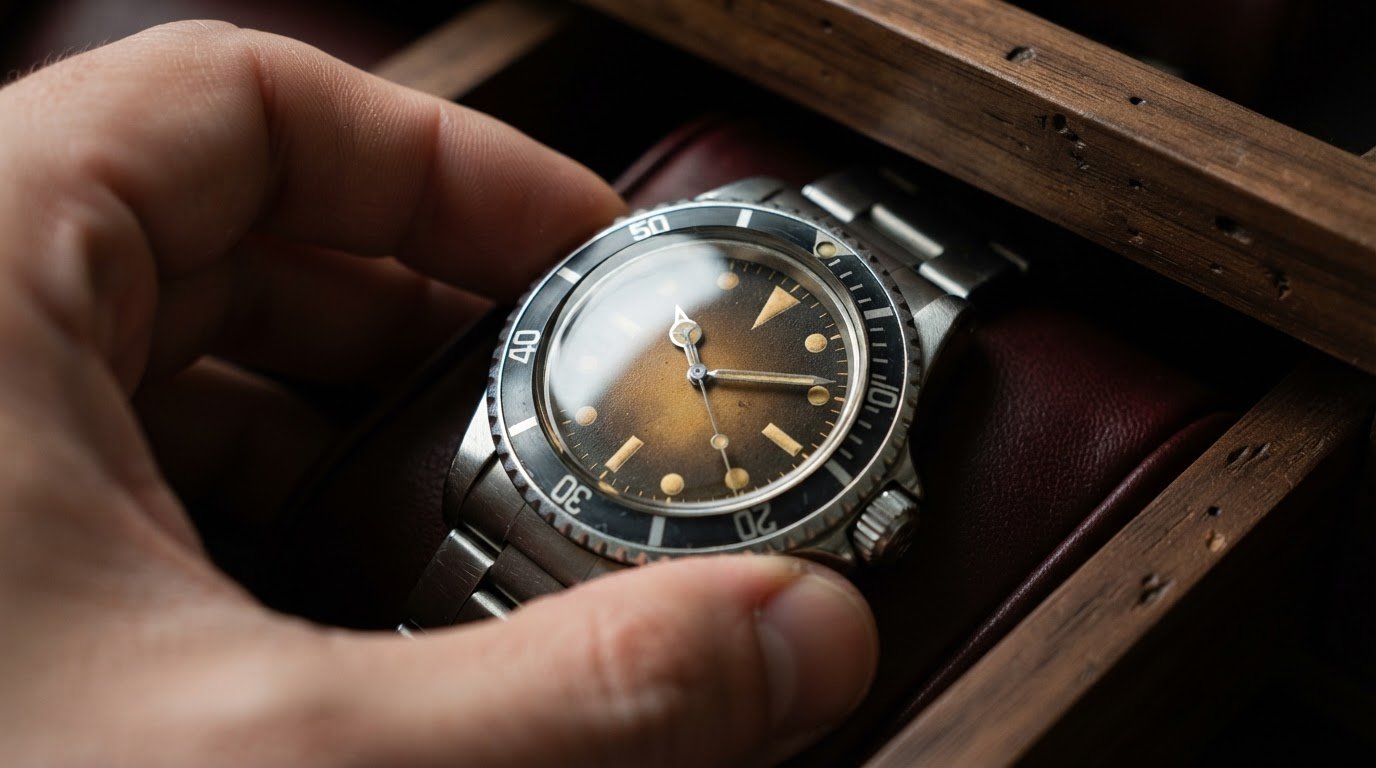
A once-black dial can become one of a vintage watch’s most distinctive features. Collectors call a dial “tropical” when its color changes over time, often shifting from black to brown, honey, or coffee tones. To understand what a tropical dial is on a vintage watch, look for this natural change rather than a particular model or original dial color.
The appeal lies in the character of the aging, but an unusual hue alone doesn’t tell the whole story. Sun exposure, humidity, and the dial’s original materials can all influence how its finish develops, creating anything from an even brown tone to subtle gradients or speckling. In this article, you’ll learn what causes tropical aging, which colors and patterns it can produce, and why collectors consider a dial’s condition and history when assessing it. You’ll also see why these changes can make one vintage watch feel entirely individual, while reminding you that tropical aging isn’t automatically attractive or desirable.
Key Takeaways
- Recognize tropical aging as a vintage dial’s color change, often from black to brown or warm honey tones.
- Understand how sunlight, humidity, and the dial’s materials can shape its color and pattern over time.
- Compare uniform color shifts with gradients, speckling, and other distinctive aging effects.
- Consider a watch’s provenance and overall dial condition when judging whether its tropical appearance is compelling.
What is a 'tropical dial' on a vintage watch
A tropical dial is a vintage watch face whose original finish has changed color with age. Collectors most often use the term for black dials that have faded to brown or chocolate. Rolex sports watches are familiar examples, but the effect is not limited to one maker or original shade. A tropical dial may develop warm, individual tones that distinguish one watch from another. To understand what a tropical dial is on a vintage watch, consider both its visible color and how that color developed.
The change can happen gradually as sunlight and humidity interact with a dial’s materials. Mid-20th-century lacquers and pigments weren’t always resistant to ultraviolet light or chemically stable. As those finishes aged, an initially black surface could shift toward brown, honey, gold, or coffee. Some dials took years of sunlight exposure to discolor fully. A watch’s storage and exposure history also affects its aging, so two watches with similar original dials may develop different results.
There is no single tropical color or pattern. A black dial might turn an even chocolate brown, while another develops a gradient, freckles, or almond tones. Some silver dials take on orange or yellow coloring instead. Tropical aging can also appear in specific parts of a watch: the dial may retain its original color while the luminous material or subdials turn brown. Describe exactly what has changed, since “tropical” does not always mean the entire face has changed uniformly.
Rolex and Omega models produced from roughly the 1950s through the 1970s are often associated with this aging. Examples include Rolex Submariners and GMT-Masters, Omega Speedmasters, early Heuer chronographs, and Universal Genève watches. Some 1969 Rolex GMT-Master and Submariner dials, alongside Omega Speedmaster dials, have a paint discrepancy that can turn black matte surfaces brown. The model and reference offer context, but the specific dial’s color, pattern, and condition remain central to identifying its appearance.
That change wasn’t always considered desirable. In the 1960s, buyers might have regarded the imperfections behind tropical coloring as defects. Collector tastes later made certain naturally aged dials more appealing, particularly when the color appears distinctive and visually coherent. Yet a brown dial isn’t automatically attractive or valuable. Uneven discoloration, distracting marks, or a mismatch with the rest of the watch can affect its appeal. The outcome depends on the individual dial, not simply the word “tropical.”
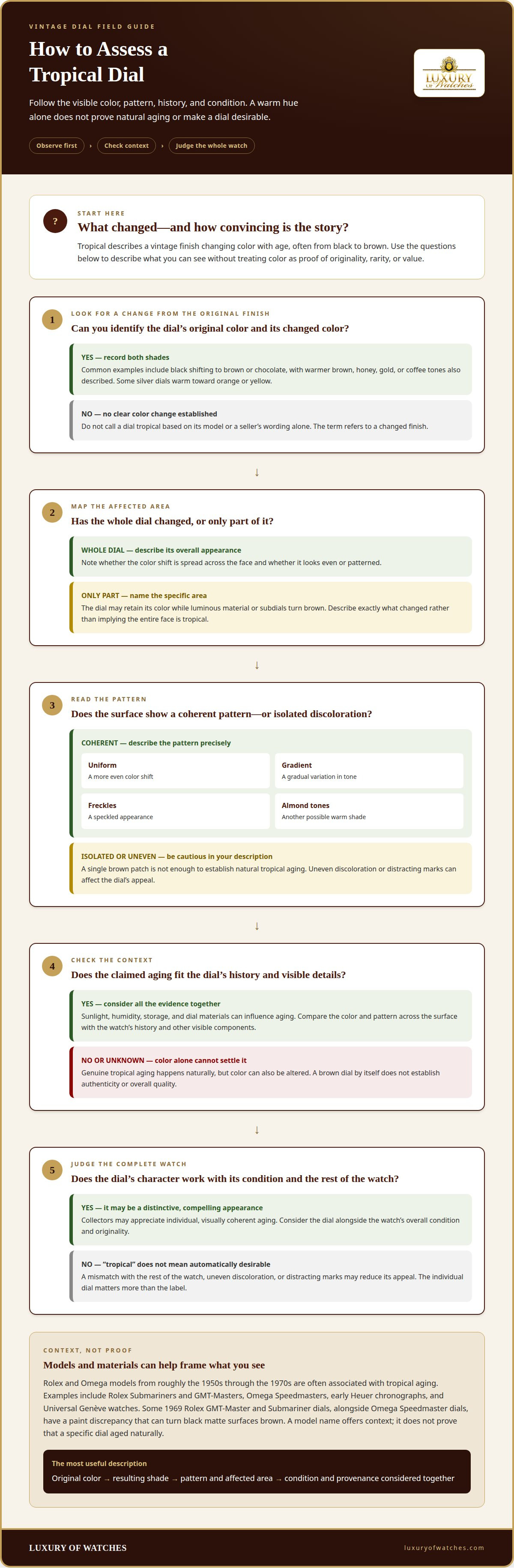
When assessing a watch, begin by identifying the dial’s original color and examining the whole surface. Note whether a black face has shifted to brown, a silver face has warmed toward orange, or only the subdials have changed. Then look at the pattern: uniform color, gradients, freckles, and almond tones create different effects. Compare the dial with its luminous material and other visible components. This careful observation helps distinguish an overall aged appearance from isolated discoloration.
Provenance and origin deserve equal attention. Genuine tropical aging happens naturally, while color can also be altered to make a watch appear more desirable. Consider a claimed tropical finish alongside the watch’s history and the dial’s visible details. Look for consistency across the surface rather than relying on a single brown patch or a seller’s description. A Rolex Submariner with warm aging still needs to be assessed as a complete vintage watch.
Color change alone does not establish a dial’s authenticity or overall quality. Consider whether the visible aging fits the model and whether the pattern appears consistent. Rolex GMT-Master and Omega Speedmaster examples can offer useful context, since both have models associated with tropical aging. But the model name does not prove that a particular dial aged naturally. Tropical describes an appearance and a natural aging process, not a guarantee of originality, rarity, or collector appeal.
Ultimately, a tropical dial records the interaction between a vintage finish and its history. Sunlight, humidity, storage, and material stability help explain why one face turns chocolate while another develops honey or orange tones. A useful description identifies the original color, the resulting shade, and the pattern across the dial. These details give collectors a clearer basis for comparing examples and understanding what makes each aged face distinctive.
Luxury of Watches: Rolex Watches
Luxury of Watches offers Rolex watches, including pre-owned models, for readers considering a vintage or pre-owned timepiece. If a tropical dial has drawn you to a particular Rolex, assess the watch as a complete piece, putting the dial’s appearance in context. Consider its color and pattern alongside the watch’s overall condition, originality, and provenance, rather than treating a warm dial tone as the sole measure of its appeal.
The collection also includes pre-owned luxury watches from established watchmakers in a range of styles. Exploring the collection is a natural next step when you are ready to compare available timepieces after learning how tropical aging develops. Browse Luxury of Watches’ selection and contact the company for help exploring the collection.
Choose the Character That Speaks to You
Understanding what a tropical dial is on a vintage watch can sharpen your eye, but the final choice is personal. Consider what you want a watch to bring to your collection: a distinctive visual presence, a connection to a particular design era, or a balance of both. A compelling dial matters most when the entire timepiece feels right to you.
Take time to compare individual watches and decide which details matter most to you. That perspective can focus your search, whether you are drawn to a singular vintage look or exploring other pre-owned styles. The right choice is not simply the most unusual one; it is the piece whose design and history you will enjoy wearing and appreciating.
For your next step, contact Luxury of Watches to explore your interest in Rolex and pre-owned timepieces. Let your own collecting priorities guide the conversation, and enjoy discovering a watch that feels distinctly yours.