
Top Pilot Watches for Aviation Enthusiasts: 2026 Guide
Posted by Luxury of Watches on 18th Oct 2026
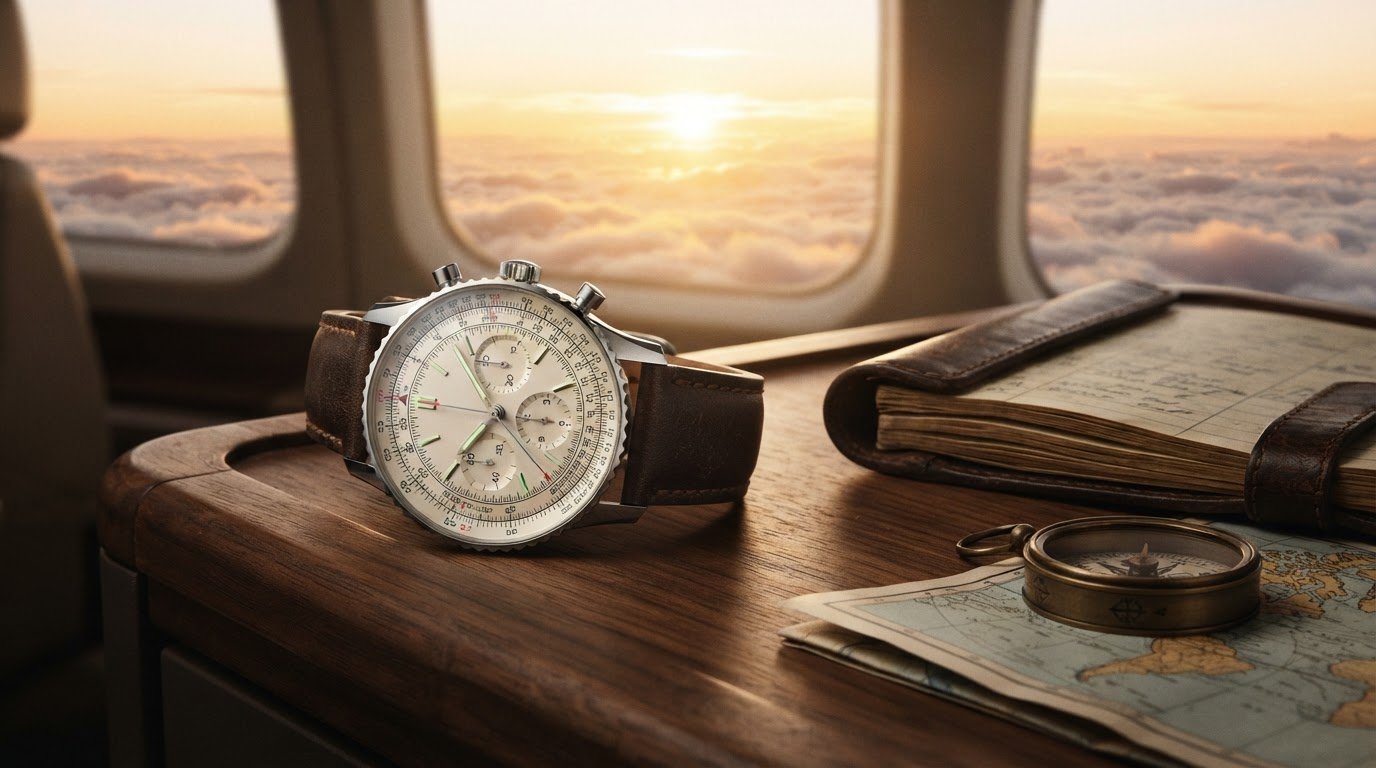
The most aviation-looking watch isn’t necessarily the most useful one. When comparing the top pilot watches for aviation enthusiasts, look beyond heritage styling: dial contrast, comfortable fit, and functions that suit your routine matter just as much. A slide-rule bezel may appeal to a collector who enjoys a technical display, while a GMT function can be more useful for keeping track of another time zone.
It’s easy to mistake cockpit-inspired design for cockpit utility, especially when technical terms make models difficult to compare. This guide explains the main pilot-watch styles and what a chronograph, GMT function, or slide-rule bezel does. It also helps distinguish aviation character from practical everyday use. Whether you prefer a heritage chronograph or a more understated design, use the comparisons to build a shortlist around readability, useful functions, and personal style. We’ll also look at aviation-associated names such as Breitling and IWC, both carried by Luxury of Watches, where watches sold are guaranteed authentic.
Key Takeaways
- Separate aviation-inspired design from practical cockpit utility, and treat any watch as a timepiece rather than a replacement for flight instruments.
- Compare simple displays, chronographs, GMT functions, and slide-rule bezels by the tasks you want them to support.
- Use the guide to shortlist the top pilot watches for aviation enthusiasts by style, readability, and everyday comfort.
- Match your choice to your priorities, whether you fly, collect aviation watches, travel frequently, or want a distinctive everyday watch.
- Explore aviation-associated Breitling and IWC watches at Luxury of Watches, with an authenticity guarantee and more than 25 years in business.
What Makes a Pilot Watch Right for Aviation Enthusiasts?
A pilot watch draws on aviation needs, design codes, or both. Some prioritize quick time reading and useful functions; others borrow visual cues from aviation history. That distinction matters. A cockpit-inspired dial can express a connection to flying without making a watch suitable for operational use or a substitute for aircraft instruments.
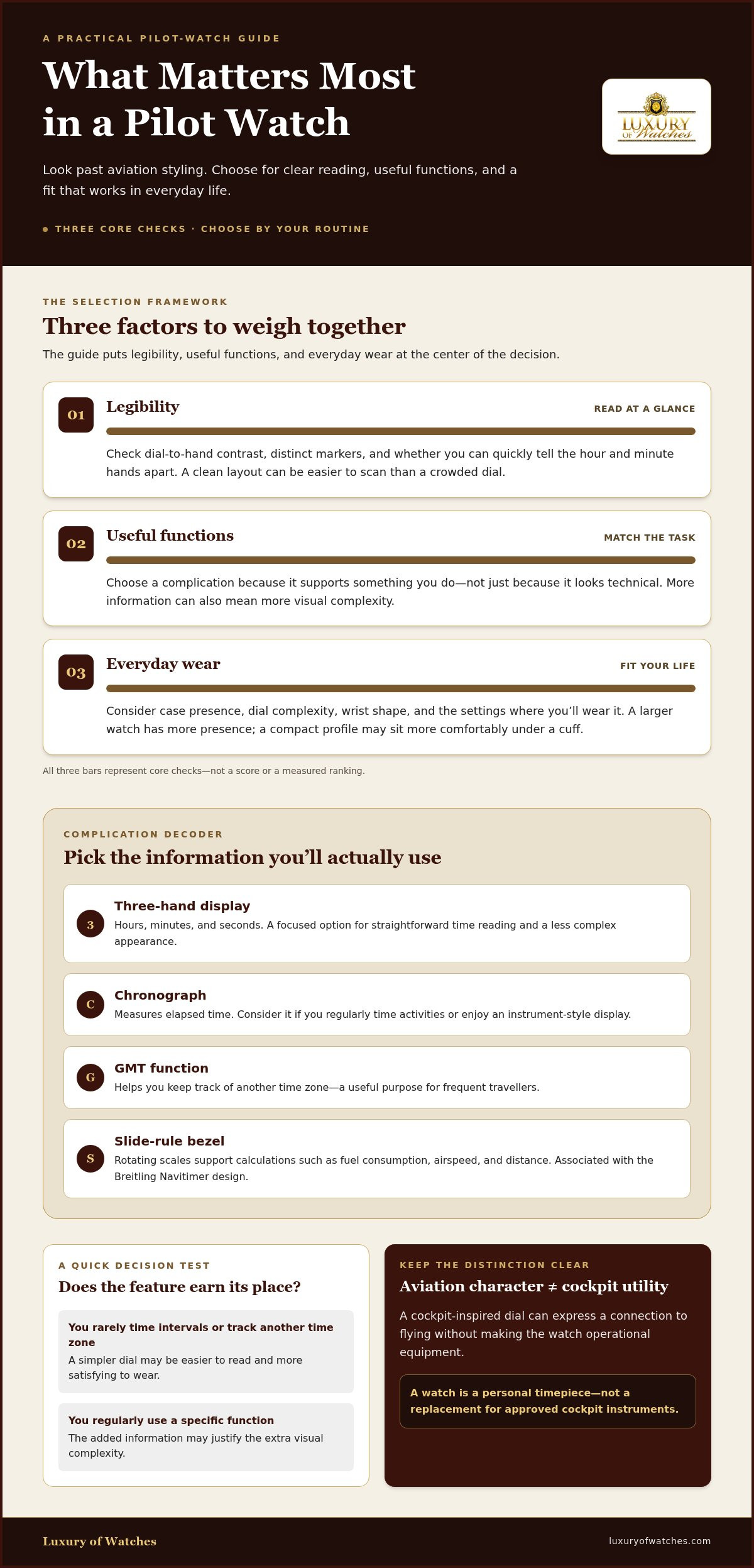
To compare the top pilot watches for aviation enthusiasts, focus on three things: legibility, useful functions, and everyday wear. Check whether you can read the time at a glance, whether a complication serves a real purpose, and whether the case and dial feel comfortable beyond a product photo. A feature adds value when it suits your routine, not simply because it looks technical.
This guide compares watch styles and selection priorities, not flight-safety equipment. Even a watch with aviation heritage is a personal timepiece. Pilots should rely on approved cockpit instruments for operational information.
- Legibility: Look at contrast, marker shapes, and how quickly you can identify the hands.
- Function: Consider whether elapsed-time measurement or a second time zone is useful in your daily life.
- Wearability: Think about case presence, dial complexity, and how the watch fits your usual settings.
Pilot watch, aviation watch, and flieger: what is the difference?
The terms overlap, but they don’t describe one fixed specification. “Pilot watch” is a broad label for watches inspired by aviation or designed around needs associated with flying. “Aviation watch” can mean much the same thing, covering both heritage-led designs and watches with practical timing features.
Flieger refers to a recognizable historical design category. Some examples use a triangle marker at 12 o’clock, while other military-inspired layouts emphasize large Arabic numerals or a distinctive division of the dial. These cues can make a watch easy to recognize, but they don’t guarantee a chronograph, GMT function, or any particular technical capability. Compare the actual display and functions rather than relying on the label alone.
Are pilot watches still useful beyond their aviation heritage?
Yes, depending on what you value. A high-contrast display can make time checks straightforward in everyday settings, while a GMT function can help frequent travellers keep track of another time zone. A chronograph can measure elapsed time, though its usefulness depends on whether you regularly need that information. These are practical conveniences, separate from the pleasure of wearing a design with aviation character.
Other details may be primarily decorative or heritage-led. A complex dial can evoke an instrument panel without making every scale useful to its wearer. Decide whether a feature supports a real task or appeals to you for its visual and historical character. Either can be a good reason to choose a watch, as long as you know which matters most.
Which Pilot-Watch Features Matter Most to Aviation Enthusiasts?
Start with the display. Strong contrast between the dial and its hands, distinct markers, and a layout without unnecessary clutter can make the time easier to read at a glance. Large numerals and prominent hands are familiar aviation cues, but no single arrangement suits every wearer. Look for a dial that lets you distinguish the hour and minute hands quickly and find the information you care about without searching.
Give complications the same practical scrutiny. A simple three-hand watch displays hours, minutes, and seconds. A chronograph adds elapsed-time measurement, a GMT function tracks another time zone, and a slide-rule bezel offers scales for calculations. Each adds a different kind of information, and more functions can mean a busier face. For the top pilot watches for aviation enthusiasts, usefulness depends on your routine, not the number of features.
A pilot-watch feature is useful only when it solves a real need for the person wearing it. If you rarely measure intervals or track another time zone, a simpler dial may be easier to read and more satisfying to wear. If you regularly use those functions, the added information may justify the extra visual complexity.
Legibility, dial layout, and case proportions
Consider contrast in the conditions where you’ll actually check the time, then look for markers and hands that stand apart clearly from the dial. A clean layout can be easier to scan than one crowded with scales. Case size also affects the experience: a larger watch may give the dial more presence, while a compact profile may sit more comfortably under a cuff. Wrist shape and personal preference matter, so treat dimensions as a fit question rather than a universal rule.
Chronograph, GMT, and slide-rule functions
A chronograph lets you measure elapsed time, which may appeal if you regularly time activities or like an instrument-style display. A GMT hand or equivalent indication can help frequent travellers keep track of another time zone. A slide-rule bezel, associated with the Breitling Navitimer design, pairs rotating scales to support calculations such as fuel consumption, airspeed, and distance. It’s an aviation-linked feature, not required cockpit equipment.
Use this quick comparison to decide which functions deserve space on the dial:
- Three-hand display: A focused choice for straightforward time reading and a less complex appearance.
- Chronograph: Suits buyers who want to measure elapsed intervals and appreciate a more instrument-like dial.
- GMT: Adds another time-zone reference for travel or keeping track of a second location.
- Slide-rule bezel: Brings aviation heritage and calculation scales, with a denser layout to learn and read.
Before choosing, picture how you’d use each complication in an ordinary week. If possible, try the watch on to see how the case sits and whether the display feels natural to read. Once you’ve identified the features that matter, explore aviation-associated Breitling and IWC watches at Luxury of Watches.
Top Pilot-Watch Styles Compared: Heritage, Chronograph, and Modern Tool Design
Pilot watches span several design approaches, from restrained historical cues to dense, instrument-inspired dials. Comparing them by style brings the trade-offs into focus: a clean face can be quick to scan, while extra scales and indications add information and visual character. The right choice depends on the design you enjoy wearing and the functions you expect to use.
| Style | Defining design cues | Likely appeal | Main trade-off |
|---|---|---|---|
| Flieger-inspired | Large, high-contrast numerals or distinctive triangle-at-12 layouts | Collectors drawn to historical aviation design and uncluttered time reading | Heritage cues don’t guarantee additional functions |
| Clean aviation-inspired | Restrained dial, prominent hands, and a straightforward display | Wearers who value simplicity and an aviation-influenced look | Offers less information than a complication-rich dial |
| Aviation chronograph | Subdials and pushers for measuring elapsed time | Those who want timing capability and a more instrument-like appearance | Subdials can make the face busier |
| Slide-rule design | Rotating bezel with calculation scales | Enthusiasts attracted to aviation history and mechanical visual detail | Scales take familiarity to read and add dial complexity |
| GMT watch | A second time-zone indication, often shown with an additional hand | Frequent travellers who want to track another time zone | The extra indication may be unnecessary for single-zone use |
| Modern tool style | Purposeful, contemporary design with an emphasis on practical presentation | Buyers seeking an aviation-adjacent watch for varied everyday settings | May feel less connected to traditional aviation codes |
Classic flieger and clean aviation-inspired designs
Flieger-inspired watches draw their appeal from recognizable historical design language. High-contrast numerals, bold hands, or a prominent marker at 12 o’clock can give a dial a focused, purposeful quality. Cleaner aviation-inspired designs take a similarly restrained approach without necessarily following one historical layout. Both can suit buyers who prefer quick, uncluttered time reading to multiple scales and subdials.
The trade-off is simple: a spare display gives visual emphasis to the time, while a chronograph or slide-rule layout adds information and presence. Choose a cleaner style if simplicity is a priority, not because every aviation enthusiast needs the same dial.
Aviation chronographs, GMTs, and slide-rule designs
These styles answer different needs. A chronograph measures elapsed time, a GMT helps track another time zone, and a slide-rule bezel pairs scales for calculations. The Breitling Navitimer is a market example of an aviation-associated slide-rule chronograph. Its layered display has a distinctly instrument-led look, but takes more time to learn than a simple dial.
Complexity can be part of the appeal, especially for collectors who appreciate mechanical detail and aviation associations. But extra indications earn their place only if you enjoy reading or using them. Luxury of Watches carries Breitling and IWC watches, giving enthusiasts two aviation-associated brands to explore while they weigh heritage against everyday wearability.
How to Choose a Pilot Watch for Your Flying, Travel, and Everyday Needs
A focused selection process can turn a broad style search into a personal shortlist. Start with the role you expect the watch to play, then assess its functions, readability, and fit in that order. This keeps impressive specifications from overshadowing the details that matter after the purchase.
- Define the use. Decide whether you’re buying for aviation collecting, frequent travel, daily wear, or a combination.
- Choose useful functions. Prioritize only complications you expect to use regularly, such as elapsed-time measurement or a second time zone.
- Assess readability. Check that the hands, markers, and any additional indications are easy for you to distinguish.
- Test the fit. Consider how the case sits on your wrist and whether it works with the cuffs and clothing you wear often.
Match the watch to how you will wear it
For active flying, distinguish an aviation-inspired timepiece from equipment intended for operational use. Consider heritage and legibility as personal preferences, but rely on approved cockpit instruments for flight information. Collectors may give more weight to historical design cues and dial character. Frequent travellers can consider whether a second-time-zone display would help, while everyday wearers should weigh comfort, easy reading, and versatility across different settings.
Think beyond the idealized scenario. If you travel only occasionally, a GMT function may matter less than comfort and a dial you enjoy looking at each day. If a historic design is the main attraction, there’s no need to justify it as a cockpit tool. Choose for how you’ll actually wear the watch.
Use a practical shortlist before deciding
Rank three priorities before comparing watches: one for readability, one specific function or design quality, and one for wrist comfort. Apply those criteria consistently. A model with more complications isn’t necessarily the stronger choice if its display feels crowded or its size is awkward on your wrist.
Then compare the watch’s design, stated condition, included documentation, and warranty terms. New watches from Luxury of Watches are unworn and in original factory condition; pre-owned status applies to certain Rolex models. Those pre-owned Rolex watches are polished, serviced, and presented in mint showroom condition. Check the details for the specific watch you’re considering. A 5-year Luxury of Watches warranty applies to select brand watches, with coverage for movement, functionality, and manufacturing defects. The battery is excluded. This warranty isn’t an aviation-performance certification.
For deeper brand context, the article Breitling Watches: The Ultimate Collector’s Guide to Heritage and Performance can help you explore the history behind one aviation-associated name. Then compare each candidate against the same priorities. This makes it easier to separate a compelling design from a suitable purchase.
Ready to compare aviation-associated brands against your criteria? Explore Breitling and IWC watches at Luxury of Watches. Watches sold by the retailer are guaranteed authentic.
Explore Aviation-Associated Breitling and IWC Watches at Luxury of Watches
After comparing dial styles, complications, and fit, look for a watch that matches the priorities you’ve set. Luxury of Watches carries Breitling and IWC, two names with strong associations for enthusiasts exploring aviation-inspired design. The retailer offers new and pre-owned luxury watches, and watches sold are guaranteed authentic. Compare the options in the current selection against your shortlist, paying attention to the features and design you want rather than choosing by brand name alone.
A considered purchase involves more than recognition. Compare the watch’s design and stated condition, review the documentation provided with that watch, and understand the terms that apply to it. These details help you assess the individual timepiece. Aviation heritage and visual character answer a separate question: whether you’ll enjoy wearing it.
What to know about condition, authenticity, and warranty
Watches sold by Luxury of Watches are guaranteed authentic. Condition differs by watch, so distinguish new, unworn watches in original factory condition from pre-owned examples. Pre-owned Rolex watches are polished and serviced, and presented in mint showroom condition. These descriptions aren’t interchangeable: pre-owned should not be described as new.
A 5-year Luxury of Watches warranty applies to select brand watches, not every watch. Its stated coverage includes movement, functionality, and manufacturing defects; the battery is excluded. Treat this as purchase information, not a claim about aviation performance or cockpit suitability. Review the terms for the watch you’re considering, and keep warranty coverage distinct from the authenticity guarantee.
Luxury of Watches has been in business for over 25 years and has served more than 15,000 customers. That history offers context as you explore the retailer. The authenticity guarantee and the specific watch’s condition and warranty details are separate points to consider in your decision.
Make a confident next move with Luxury of Watches
For more background on Breitling’s history and aviation associations, explore the retailer’s Breitling Watches: The Ultimate Collector’s Guide to Heritage and Performance. If you’re weighing brands beyond aviation-associated names, Top 15 Best Luxury Watch Brands: The Ultimate Collector’s Guide (2026) offers a broader comparison. Use both for context, then return to the features and wearing priorities you identified earlier.
The top pilot watches for aviation enthusiasts aren’t defined by one complication or one heritage-led dial. The right fit reflects your taste, intended use, and the details of the individual watch. Explore Luxury of Watches’ carried brands and current selection to compare aviation-associated Breitling and IWC watches against your shortlist.
Explore luxury watches at Luxury of Watches
Choose the Watch You’ll Enjoy Wearing
Your shortlist doesn’t need to lead to the most complicated dial or the strongest aviation aesthetic. Look for a watch that feels right in your routine: one you can read comfortably, wear with confidence, and appreciate for its design after the initial appeal of a feature fades. That personal connection is part of what makes choosing a luxury timepiece rewarding.
As you compare options, give yourself room to reconsider. A style that first caught your eye may feel different beside a cleaner design or a more travel-oriented display. Focus on the qualities you genuinely value, and choose with intention rather than treating a longer specification list as a better fit.
The top pilot watches for aviation enthusiasts are ultimately the ones that match their owner’s taste and everyday needs. Explore the current selection of luxury watches and take the next step toward a timepiece that feels distinctly yours.
Explore luxury watches at Luxury of Watches
Frequently Asked Questions
Are pilot watches useful for actual flying?
They can be useful as personal timepieces, but they shouldn’t replace approved cockpit instruments or be treated as a source of operational flight information. A watch may help its wearer keep track of personal time or elapsed intervals, depending on its functions. For example, a recreational pilot might appreciate a clear dial on the ground while relying on cockpit equipment for navigation and other flight decisions.
What makes a watch a pilot watch?
There isn’t one universal design that makes a watch a pilot watch. The label generally reflects aviation-inspired visual cues, functions associated with timing, or a combination of both. Look beyond the name: examine the dial layout, indications, and stated construction details. A heritage-style face can communicate an aviation connection, but the label alone doesn’t establish technical certification or suitability for a particular cockpit.
Is a chronograph necessary in a pilot watch?
No. A chronograph is an optional elapsed-time function, not a requirement for an aviation-inspired watch. It may suit someone who regularly times intervals or enjoys using the pushers to track an activity. If you’re unlikely to use that function, a simpler display may be a better fit. Consider whether you’ll operate the chronograph, not just whether its subdials appeal visually.
What does a GMT function do on a pilot watch?
A GMT function lets you keep track of another time zone alongside local time, which can be helpful on trips or when coordinating with someone in another region. For instance, a traveller can use the additional indication as a reference to home time while away. It’s most valuable if you regularly need that second reference; occasional travellers may find that a straightforward display meets their needs.
Are all aviation watches designed for professional pilots?
No. Many aviation watches are created for enthusiasts who appreciate the history and visual language of flight, rather than as professional cockpit equipment. The top pilot watches for aviation enthusiasts may prioritize a heritage look, a travel-friendly time-zone display, or a distinctive dial. Those qualities don’t establish professional certification or replace instruments intended for flight operations, so choose according to your intended use.
How should I choose between a new and pre-owned luxury pilot watch?
Compare the specific watch’s stated condition, included documentation, and warranty terms, then decide which presentation suits you. At Luxury of Watches, new watches are unworn and in original factory condition. Pre-owned status applies to certain Rolex models, which are polished, serviced, and presented in mint showroom condition. Assess the individual listing rather than assuming every watch has the same condition or included materials.
Does Luxury of Watches offer a warranty on every watch?
No. A 5-year warranty applies to select brand watches, not every watch sold. The stated coverage includes movement, functionality, and manufacturing defects, and excludes the battery. Treat the warranty as a separate purchase consideration from the watch’s aviation styling or functions. Review the terms associated with the specific watch you’re considering to understand whether the select-brand coverage applies and what it covers.