
The Best Way to Clean a Rolex Bracelet: A Professional Guide to Maintenance
Posted by Luxury of Watches on 11th Jul 2026
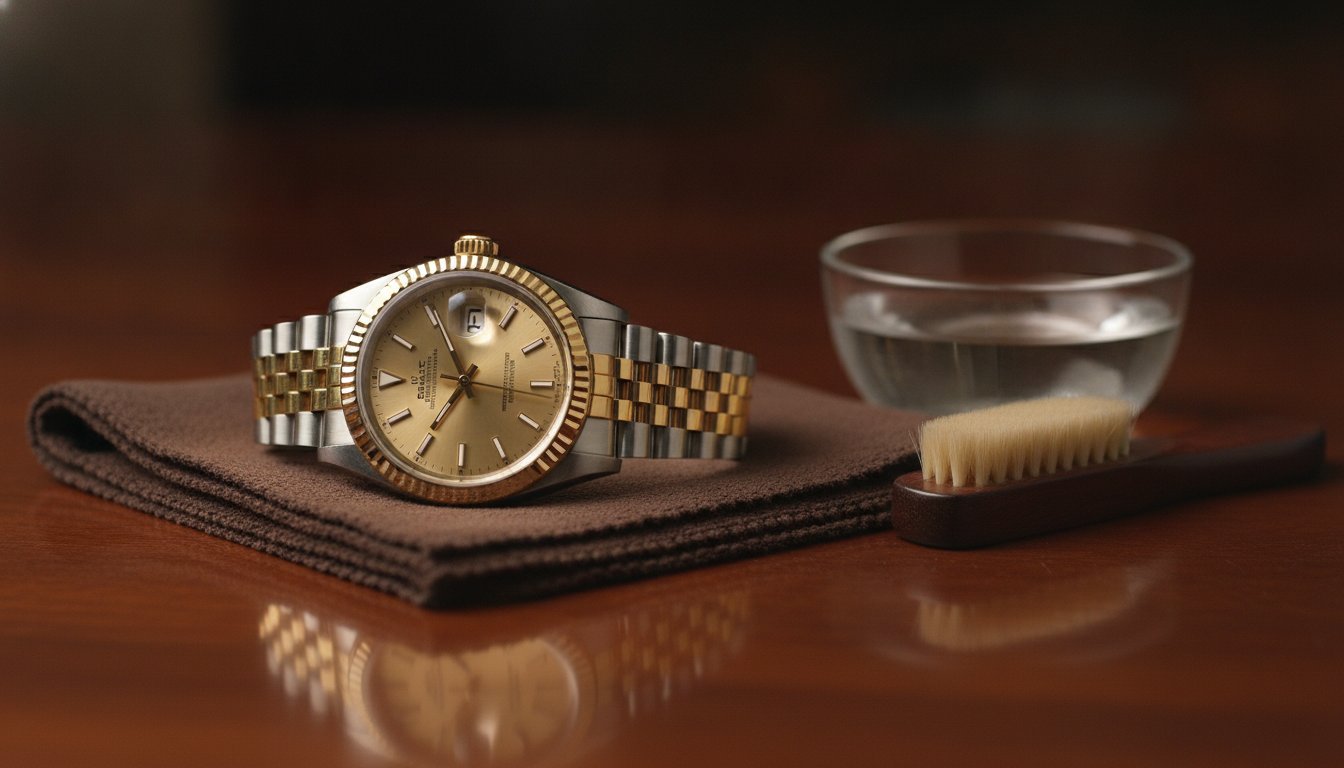
The "stretch" often found in older Rolex bracelets isn't actually the metal expanding; it's the result of microscopic grit acting as an abrasive that slowly files away the internal pins. You likely feel a protective instinct over your Oystersteel or precious metal timepiece, perhaps hesitating to scrub those polished center links for fear of creating fine swirls or compromising the case's water resistance. It's a valid concern, especially as the average pre-owned Rolex price reached $15,273 in the second quarter of 2026. Understanding the best way to clean a rolex bracelet is about more than just aesthetics; it's a vital part of preserving the mechanical longevity of your investment.
This guide provides the definitive, expert-approved methods for removing stubborn oils and grime while maintaining the absolute integrity of the Oyster seal. We'll show you how to achieve a factory-fresh shine at home with professional confidence. You'll learn the systematic steps to safely degrease your Jubilee or Oyster links, ensuring your watch remains a pristine example of horological excellence for decades to come.
Key Takeaways
- Understand how microscopic grit acts as an abrasive within your links and learn the specific cleaning intervals required to prevent permanent "bracelet stretch."
- Master the expert-approved, step-by-step method using lukewarm water and a soft brush, which remains the best way to clean a rolex bracelet without compromising its water resistance.
- Identify the critical differences in handling Oystersteel versus 18ct gold to ensure you restore luster without causing surface micro-scratches or swirls.
- Learn the professional safety protocols for using advanced tools, including why the watch head must never be subjected to an ultrasonic cleaning cycle.
- Discover how consistent home maintenance preserves the original finish of your timepiece, protecting its market value by avoiding the need for aggressive cosmetic refinishing.
The Fundamentals of Rolex Bracelet Maintenance
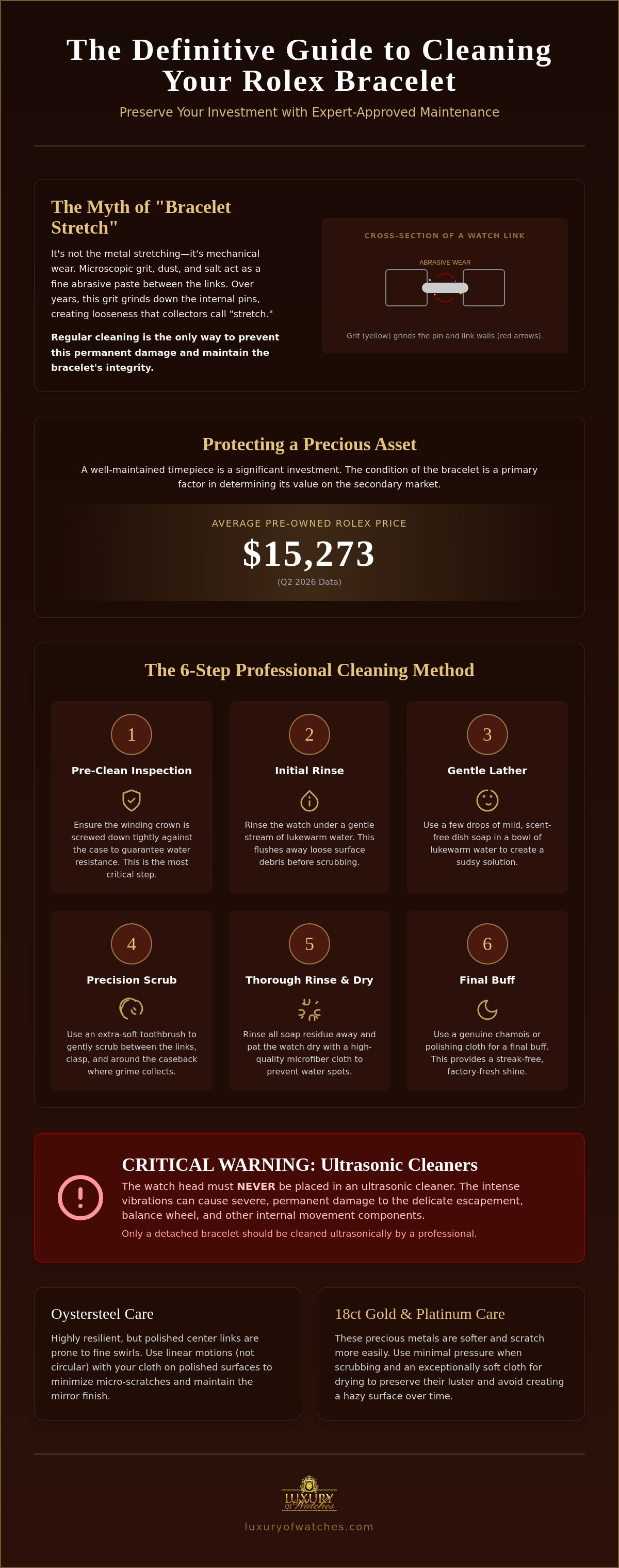
Maintaining a Rolex requires more than a casual appreciation for its aesthetics; it demands a technical understanding of how external elements interact with its architecture. The primary threat to your bracelet's integrity is often invisible. Microscopic particles of dust, salt, and sand act as a "silent killer" when they become trapped between moving parts. The best way to clean a rolex bracelet involves understanding this friction. When these particles settle inside the tight tolerances of an Oyster or Jubilee link, they act as an abrasive paste. Over time, this mixture files down the internal pins, leading to what collectors call "bracelet stretch." This isn't actually the metal stretching, but the internal components wearing away until the links sit loosely.
A consistent maintenance schedule prevents this mechanical degradation. We distinguish between the daily wipe-down, which removes surface oils and fingerprints, and the deep monthly clean that targets the grit hidden within the link junctions. Before any liquid touches the case, you must verify that the winding crown is screwed down tight against the case. Whether your model features the Twinlock or Triplock system, this seal is the only thing standing between a successful clean and a costly internal repair. If the crown is loose, water can bypass the gaskets and enter the movement, leading to catastrophic moisture damage.
Why Cleanliness Affects Resale Value
A pristine bracelet is a hallmark of a well-maintained investment. Skin oils and sweat contain acids that can lead to long-term corrosion, particularly on the older steel alloys used in vintage models. In the secondary market, the condition of the bracelet is a primary factor in determining the desirability of pre-owned luxury watches. A bracelet that remains tight and free of deep scratches suggests a level of owner discipline that translates directly into higher valuation. Maintaining that sharp, iconic Rolex profile requires a proactive approach to hygiene that preserves the factory finish.
Essential Tools for the Home Horologist
A professional watchmaker will tell you that the wrong tools can do more harm than good. The best way to clean a rolex bracelet at home starts with selecting non-abrasive materials that won't compromise the metal's luster. Avoid any cleaning agents containing ammonia or harsh chemicals, as these can damage the specialized finishes or gaskets.
- Extra-Soft Toothbrush: Mandatory for reaching between links without scratching the polished center surfaces.
- Mild Degreasing Soap: A simple, scent-free dish soap is often the safest and most effective choice for breaking down skin oils.
- High-Quality Microfiber: Ideal for the initial drying phase to prevent water spots.
- Genuine Chamois: The gold standard for a final buff, providing a streak-free, lint-free shine that highlights the grain of the metal.
Preparation is the foundation of excellence. By gathering these specific tools and ensuring the case is hermetically sealed, you create a safe environment for restoration. This systematic approach ensures that your maintenance routine adds value rather than risk.
The Step-by-Step Method for a Pristine Bracelet
Restoring the luster of your timepiece requires a systematic approach that prioritizes the watch's structural safety. Before you begin, perform a meticulous pre-cleaning inspection. Check every screw-in pin and link connection to ensure nothing has vibrated loose during wear. Most importantly, verify that the winding crown is fully secured against the case. Once you've confirmed the hermetic seal is intact, start with a gentle lukewarm rinse. This initial step is vital; it flushes away loose surface debris that could otherwise be dragged across the metal, causing the very scratches you're trying to avoid.
The best way to clean a rolex bracelet involves creating a controlled environment for degreasing. Prepare a bowl of lukewarm water mixed with a small amount of mild, scent-free dish soap. Submerge the bracelet, but keep the watch head above water if you're at all uncertain about its service history or gasket condition. Using an extra-soft toothbrush, perform a precision scrub. Move the brush in small, circular motions, focusing on the spaces between the links where biological oils and sweat accumulate. For a broader perspective on horological hygiene, you might consult an expert guide to cleaning your watch to understand the nuances of different metal finishes.
After the scrub, perform a final rinse under a low-pressure stream of lukewarm water. It's essential to remove every trace of soap residue, as dried soap acts as a magnet for new dust. Pat the bracelet dry with a clean microfiber cloth, then let it air dry in a dust-free environment for a few minutes. If you're considering adding a new piece to your collection, remember that every one of the Rolex watches we offer undergoes a rigorous verification and cleaning process before reaching your wrist.
Cleaning the Jubilee vs. Oyster Bracelet
The best way to clean a rolex bracelet depends heavily on its architecture. A Jubilee bracelet, with its five-piece link construction, features significantly more intersections and "pockets" where grime can hide. You'll need to spend more time angling the brush bristles into these small gaps. In contrast, the Oyster bracelet's broad, flat surfaces are easier to navigate, but the polished center links are more prone to showing swirls if any grit remains during the scrub. President bracelets require a delicate touch, as the semi-circular links and concealed Crownclasp have tighter tolerances that demand patience.
The Clasp and EasyLink Extension
The clasp is the most complex part of the bracelet and often the most neglected. Open the folding mechanism fully to access the hidden debris that builds up near the hinge. If your model features a Glidelock or EasyLink adjustment system, extend it to its furthest point. This prevents moisture from being trapped in the adjustment zones, which can lead to a "gritty" feeling when you resize the watch. After drying, test the "snap" of the clasp; a crisp, clean click indicates that the spring and locking surfaces are free of obstruction.
Material-Specific Care: Steel, Gold, and Platinum
Metallurgy dictates maintenance. While the mechanical steps of cleaning remain consistent, the pressure and precision you apply must vary based on the specific alloy of your timepiece. Rolex's proprietary 904L Oystersteel, for instance, is a superalloy typically reserved for the aerospace and chemical industries. Its exceptional corrosion resistance allows for a slightly more vigorous scrub to dislodge stubborn salt or mineral deposits. This durability is a hallmark of the brand's professional models, but even this hardened steel requires a thoughtful approach to preserve its factory-fresh appearance.
When transitioning to precious metals, the best way to clean a rolex bracelet shifts toward a gentler touch. 18ct yellow, white, and Everose gold are significantly softer than Oystersteel, making them more susceptible to micro-marring from trapped grit. Platinum models, crafted from the prestigious 950 platinum alloy, possess a dense, luminous quality that can be dulled by improper handling. For those seeking broader insights into maintaining high-value items, understanding how to clean and polish precious metals provides a foundational perspective on preserving the luster of soft alloys without removing material. In Rolesor models, where steel and gold meet, you must balance your technique to avoid over-polishing the softer gold center links while ensuring the steel outer links are thoroughly degreased.
Polished vs. Brushed Finishes
Modern Rolex bracelets often feature a juxtaposition of finishes, such as the high-polish center links (PCLs) found on the GMT-Master II or Daytona. These mirror-like surfaces are magnets for "desk diving" marks and fingerprints. It's vital to avoid using abrasive polishing cloths during your routine clean; these cloths often contain compounds that remove a microscopic layer of metal, eventually softening the sharp edges of the links. Instead, focus on maintaining the directional grain of the brushed satin outer links. Always brush in the direction of the grain to keep the finish looking uniform and crisp.
The Everose Exception
Advanced Cleaning: When to Use Professional Tools
Enthusiasts often seek a level of restoration that exceeds what a manual scrub can provide. While a soft brush is effective for surface maintenance, the best way to clean a rolex bracelet that has years of accumulated debris is through ultrasonic technology. An ultrasonic cleaner uses high-frequency sound waves to create millions of microscopic cavitation bubbles in a liquid solution. These bubbles implode upon contact with the metal, dislodging grit from the deepest recesses of the link pins. However, this power comes with a critical caveat: you must never place the watch head inside an ultrasonic machine. The vibrations are designed to strip away contaminants, but they can just as easily compromise the delicate internal mechanics of your timepiece.
To safely utilize this advanced method, you must first remove the bracelet from the case. This isolation ensures that only the metal links are subjected to the intense cleaning cycle. While a mild dish soap is suitable for home use, professional watch cleaning solutions are formulated to provide superior degreasing without leaving a film. If you find that the bracelet remains stiff or "gritty" even after an ultrasonic bath, it's a clear signal that the internal pins are significantly worn. At this stage, the best way to clean a rolex bracelet is to stop and consult a professional watchmaker who can assess the structural integrity of the metal.
The Danger of Movement Vibration
The primary risk of ultrasonic cleaning involves the watch's caliber. The high-frequency waves can cause the specialized lubricants within the movement to migrate or dry out prematurely. In some cases, these vibrations can even loosen the microscopic screws that hold the movement architecture together. Professional servicing, which Rolex recommends approximately every 10 years, includes a full disassembly where the movement is cleaned in a separate, specialized process. Attempting to "deep clean" the entire watch in an ultrasonic tank at home is a shortcut that often leads to a complete mechanical overhaul.
Drying and Moisture Management
Once the bracelet is clean, moisture management becomes your priority. Some collectors use a hair dryer on a low, cool setting to ensure water is driven out of the link junctions. This is generally safe for the bracelet, but you should never apply heat directly to the watch head, as it can cause the gaskets to expand and contract, potentially breaking the hermetic seal. Pay close attention to the spring bars; if they remain damp, they can develop "spring bar rot," a form of localized corrosion that weakens the connection between the bracelet and the case. Always allow the components to air-dry completely on a lint-free cloth before reassembly. For those looking to acquire a timepiece that has already been professionally vetted and cleaned, explore our curated selection of Pre-Owned Luxury Watches.
Protecting Your Investment and Long-Term Value
Maintaining a Rolex is an exercise in stewardship. When you commit to the best way to clean a rolex bracelet, you aren't just removing surface debris; you're actively preventing the need for aggressive cosmetic refinishing. Serious collectors often prioritize "unpolished" examples because every mechanical polishing cycle removes a microscopic layer of metal. Over time, this can soften the sharp bevels and crisp lug profiles that define the Rolex silhouette. By keeping abrasive grit out of the link junctions, you ensure the bracelet remains tight and structurally sound. This mechanical integrity is a significant driver of Rolex prices in the 2026 market, where "mint condition" examples continue to command a premium.
Documenting your maintenance routine adds a layer of transparency that's invaluable during a future trade or sale. A watch that shows signs of disciplined care suggests that the internal movement has likely been treated with similar respect. At Luxury of Watches, our commitment to your ownership journey begins the moment a timepiece enters our inventory. We meticulously verify and clean every watch to ensure it arrives in pristine condition. Our 5-year in-house warranty underscores this dedication to long-term watch health, providing the professional support you need for a high-value horological investment.
The Role of Professional Servicing
Home cleaning is vital for hygiene and aesthetics, but it isn't a substitute for a full mechanical overhaul. Rolex recommends a professional service approximately every 10 years to replace aged lubricants and worn internal components. During your monthly cleaning routine, take a moment to inspect the gaskets. If the winding crown feels "mushy" or if you notice any resistance that wasn't there before, it may be time for a professional pressure test. A factory-level "spa treatment" includes deep cleaning of the case and bracelet components that are inaccessible without specialized horological tools.
Safe Storage for a Clean Watch
The best way to clean a rolex bracelet is only half the battle; the other half is how you store it. Avoid leaving your watch on open surfaces where dust can settle into the links. High-quality watch rolls or dedicated storage boxes with suede or microfiber linings are ideal. Never store a timepiece for an extended period if it hasn't been cleaned, as biological oils can eventually react with certain alloys. Before placing your Rolex in storage, run through this final checklist:
- Verify the crown is fully screwed down to the case.
- Ensure the bracelet and clasp are free of moisture.
- Check that the spring bars are seated securely.
- Place the watch in a dust-free, temperature-controlled environment.
Preserving Your Horological Legacy
Mastering the best way to clean a rolex bracelet is a fundamental skill for any serious collector. By systematically removing abrasive grit and biological oils, you don't just restore a factory-fresh shine; you actively prevent the mechanical wear that leads to bracelet stretch. Whether you're navigating the tight tolerances of a Jubilee bracelet or maintaining the mirror-like finish of 18ct gold center links, a disciplined approach ensures your timepiece remains a pristine example of craftsmanship. This level of care protects the long-term market value of your investment while ensuring it performs flawlessly for years to come. If you're looking to maintain a polished personal style that complements your timepiece, check out Fabulous Looks for affordable high-street beauty brands.
At Luxury of Watches, we share your passion for excellence. Since 1999, we've provided A+ rated customer support to enthusiasts worldwide, ensuring every timepiece we offer is authenticity guaranteed. Our industry-leading 5-year in-house warranty reflects our confidence in the health and longevity of every watch in our inventory. When you're ready to expand your collection with a piece that's been vetted to the highest standards, we invite you to browse our collection of expertly maintained Rolex timepieces. Your journey in luxury horology deserves a partner that values precision as much as you do.
Frequently Asked Questions
Can I use Windex or glass cleaner to shine my Rolex bracelet?
No, you should avoid using ammonia-based glass cleaners or harsh household chemicals. These substances can degrade the synthetic rubber gaskets that maintain the watch's water resistance and may react negatively with certain precious metal alloys. The best way to clean a rolex bracelet is with a mild, pH-neutral soap that effectively breaks down oils without compromising the chemical integrity of the metal or its seals.
Is it safe to wear my Rolex in the shower to clean it?
While a Rolex is engineered for aquatic environments, wearing it in the shower is not recommended for routine cleaning. High-temperature water and steam can cause metal components to expand at different rates, potentially stressing the gaskets. Furthermore, many bath soaps and shampoos contain conditioners that leave a stubborn film on the links, which eventually attracts more abrasive grit and dulls the metal's luster.
How do I remove the 'black gunk' that builds up inside the links?
The "black gunk" is a combination of skin oils, sweat, and microscopic environmental dust that has been compressed within the link junctions. To remove it, submerge the bracelet in lukewarm soapy water for several minutes to loosen the debris. Use an extra-soft toothbrush to gently agitate the intersections of the links, ensuring you flush the area thoroughly with water afterward to prevent the residue from resettling.
Will cleaning my Rolex bracelet at home void my warranty?
Routine cleaning using the non-abrasive methods described in this guide will not void your 5-year in-house warranty from Luxury of Watches. Proper hygiene is actually considered essential maintenance that prevents the internal link erosion leading to bracelet stretch. However, damage resulting from the use of ultrasonic cleaners on the watch head or the use of abrasive scouring pads would likely be excluded from coverage.
How often should I professionally polish my Rolex bracelet?
Professional polishing should be done sparingly, ideally only during a full movement service every 10 years. Because polishing is a destructive process that removes a microscopic layer of metal, excessive refinishing can eventually soften the sharp, iconic edges of the Oyster or Jubilee links. Regular home cleaning is the best way to clean a rolex bracelet while maintaining its original factory geometry and weight.
Can I use a jewelry cleaning dip for my gold Rolex?
You should never use chemical jewelry dips or "instant" cleaners on a Rolex timepiece. These solutions are often too aggressive and can damage the specialized gaskets or cause discoloration in the soldering points of the bracelet links. For gold and platinum models, stick to lukewarm water and mild degreasing soap, which provides a safe and effective shine without the risk of chemical corrosion.
What should I do if I see moisture inside the crystal after cleaning?
If you notice fogging or droplets inside the crystal after cleaning, the hermetic seal has been breached and the watch requires immediate attention. This is a horological emergency that can lead to rapid movement corrosion. You should take the timepiece to a professional watchmaker immediately to have the case opened, the moisture removed, and the gaskets replaced to prevent permanent mechanical damage.
Is a microfiber cloth enough to keep the bracelet clean daily?
A microfiber cloth is an excellent tool for removing daily fingerprints and surface oils, but it cannot reach the grit trapped deep inside the link pins. While daily wiping keeps the polished center links looking their best, it doesn't replace the need for a monthly deep clean. Combining daily surface care with a periodic soapy rinse is the most effective strategy for long-term bracelet preservation.