
Starting Your Child's Watch Collection: A Guide
Posted by Luxury of Watches on 17th Oct 2026
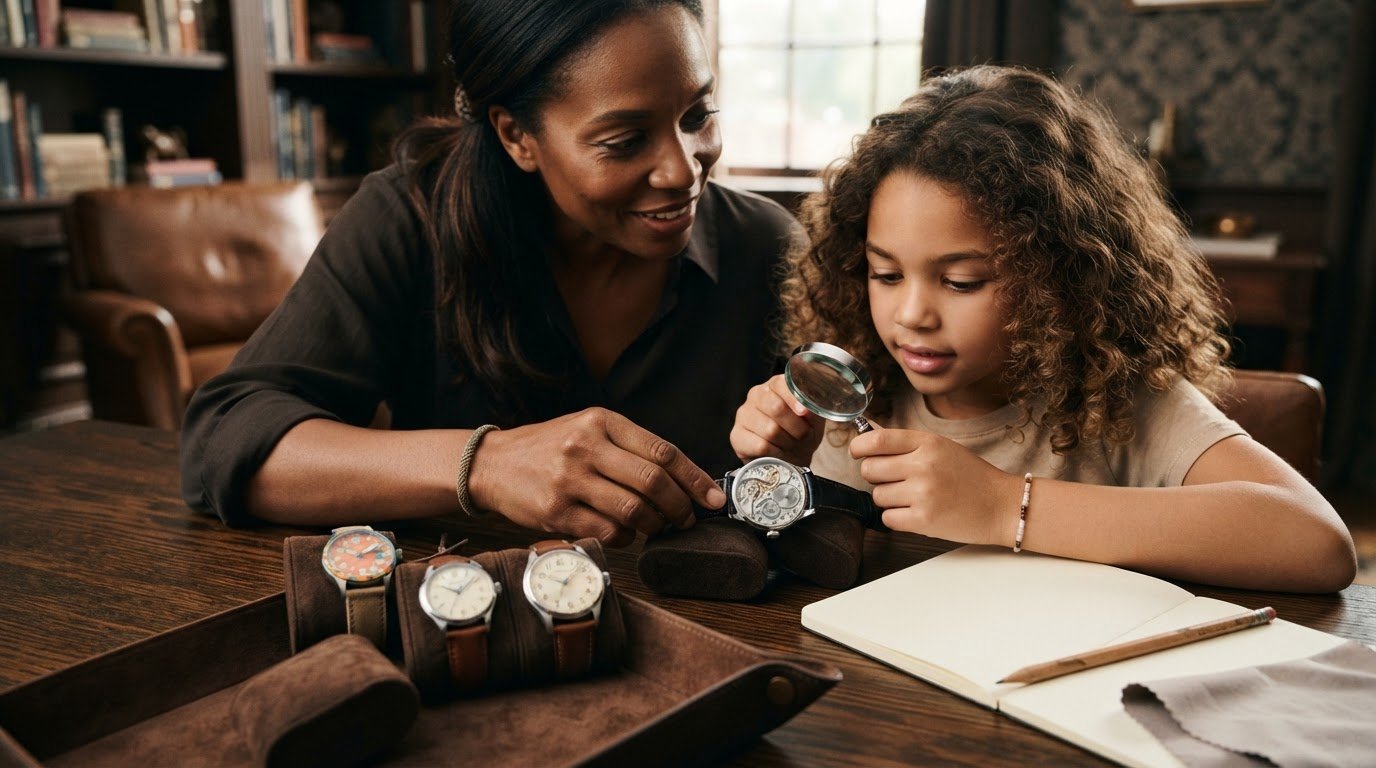
What if the best first watch for your child isn’t the one you’d choose for yourself? Starting a watch collection for your child can be a thoughtful way to explore design, timekeeping and craftsmanship together, but it doesn’t need to begin with a luxury purchase or a plan for an heirloom.
It’s natural to wonder what makes a sensible first choice, especially when your own tastes and expectations may differ from your child’s. A collection is more likely to feel personal when it grows from what captures their attention, whether that’s a watch’s color, its history or the way it keeps time. The goal is curiosity and enjoyment, not status or future resale value.
This guide will help you give your child room to discover what they like, choose a manageable direction for learning about watches, and make each addition meaningful without promising that it will become an inheritance. We’ll cover practical first steps, ways to explore the mechanics and stories behind watches, and how to keep the experience centered on your child’s interests.
Key Takeaways
- Make starting a watch collection for your child a response to their curiosity, not a plan for a future inheritance.
- Notice whether your child is drawn to design, watch stories, mechanics or everyday use, then let their interests guide exploration.
- Choose a first step that suits your child’s needs and your family’s boundaries, whether that means learning with a family watch, selecting a suitable piece or waiting.
- Use a simple journal to capture observations, questions and changing preferences as your child learns about watches.
- Let the collection evolve over time. Its meaning comes from shared discovery and enjoyment, not its size or resale value.
Starting a Watch Collection for Your Child: Begin with Their Curiosity
A child’s watch collection doesn’t need a formal theme, a set number of watches or a destination chosen by an adult. Think of it as a personal interest that can change as your child notices new details and learns more. Starting a watch collection for your child can mean comparing designs, asking how watches work or simply taking time to look closely at one watch together.
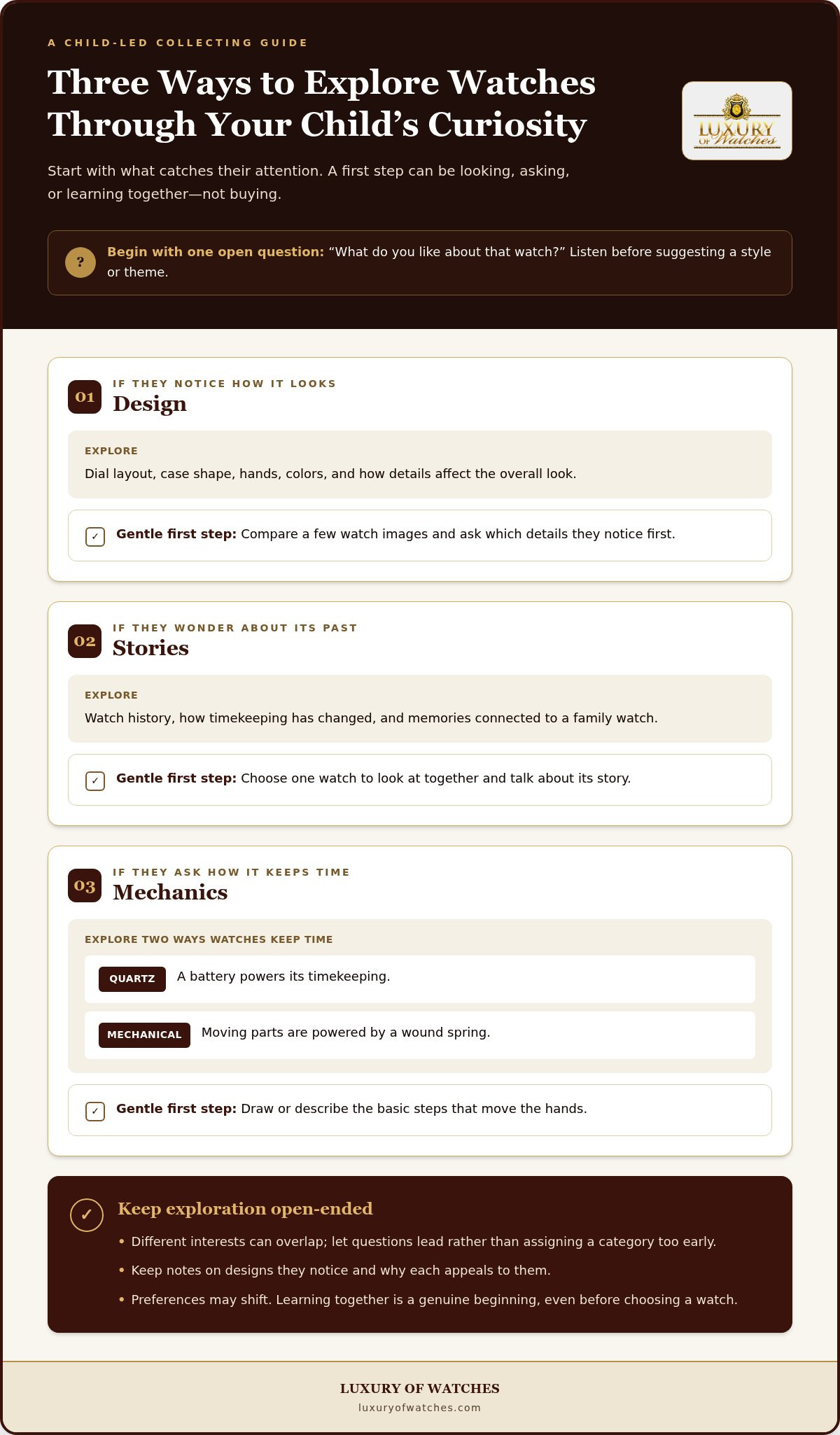
Begin with an open question: “What do you like about that watch?” Your child might point to its color or shape, ask how the hands move or mention a watch worn by someone in a favorite story. Each answer offers a different starting point: design, mechanics, storytelling or everyday usefulness. Listen before offering your own favorites. An adult’s enthusiasm can make watches inviting, but it doesn’t need to set the child’s direction.
Try exploring without making a purchase the measure of progress. Look at watches already in the family, compare how their dials are arranged or talk about how people have marked time in different periods. A short introduction to the history of watches can give a curious child stories and designs to react to. If their interest is still taking shape, learning together is a genuine beginning, not a delay.
How can you tell whether your child is genuinely interested?
Notice what they return to without prompting. Do they bring up an unusual dial, ask why one watch feels different from another or remember a story about a watch they saw? Invite them to describe what stands out before suggesting brands or styles. Curiosity can come and go. Treat it as an invitation to explore, not a promise that collecting will become a lifelong pursuit.
What does a meaningful collection mean to a child?
Meaning may come from a design they chose, a question they researched or a moment the family remembers. Sentimental value and monetary value are different, and one doesn’t have to cancel out the other. A watch may be valued for its craftsmanship or market worth, while its place in a child’s life comes from the story attached to it.
A child-led watch collection is a changing record of what interests a child, not a promise about who will own a watch in the future.
That distinction helps keep collecting enjoyable and open-ended. You can share why a particular watch matters to you, then make room for your child to respond differently. They may prefer a simple, practical design, become absorbed in how a movement keeps time or decide they’d rather keep learning before choosing anything. Each is a worthwhile outcome. The first step can be a conversation, a look at a family watch or no watch at all.
Choose a Collecting Direction That Fits Your Child’s Interests
A collecting direction is a useful way to focus exploration, not a rule your child has to follow. One child might notice the balance of a dial; another may want to know who wore a watch or how it was made. These interests can overlap, and none is a more serious way to appreciate watches. Help your child name what catches their attention before deciding whether it suggests a theme.
Use the comparison below as a conversation starter. The first step can be observation or a question, rather than buying a watch.
| What interests the child | What to explore | A gentle first step |
|---|---|---|
| Design | Dial layout, case shape, hands, colors, and how details affect the overall look | Compare a few watch images and ask which details they notice first |
| Stories | Watch history, how timekeeping has changed, and memories connected to a family watch | Choose one watch to look at together and talk about its story |
| Mechanics | How quartz and mechanical watches keep time | Draw or describe the basic steps that move the hands |
Should a child collect by design, story, or watch type?
Design-led interest starts with what a child can see: perhaps a clear dial, distinctive hands or a case with a shape they find appealing. Story-led interest follows the people, periods and family memories associated with watches. A child interested in mechanisms may enjoy learning that a quartz watch uses a battery to power its timekeeping, while a mechanical watch measures time through moving parts powered by a wound spring. Keep explanations brief and invite questions. There’s no need to master technical terms at once.
These directions can combine. A child might like a watch’s appearance, then become curious about its movement or history. Let their questions lead rather than assigning a category too early.
How can a child explore styles without choosing too soon?
Keep a short list of designs your child notices and add a note about why each appeals to them. Browse books, museum collections or watch images together at a comfortable pace. Comparing details can help them explain what they like without turning every discovery into a shopping decision. After a little time, ask whether their preferences have stayed the same or shifted.
A collecting theme can change as a child’s tastes develop; exploration is part of the collection, not a detour from it.
Starting a watch collection for your child can remain open-ended while they compare styles and learn watch vocabulary. If your family later wants examples of how established makers approach design, the broader luxury watch selection offers another point of comparison. Luxury of Watches carries brands including Rolex, Cartier, Breitling, IWC and Patek Philippe. Use the designs as a reference for shared exploration, not as a requirement for building a child’s interest.
Make the First Watch a Thoughtful Choice, Not a Status Test
A first watch should suit the child’s present-day interest, not an adult’s idea of what a collection ought to become. Before choosing, think about who will wear it, when it might be used, what feels comfortable and what the child actually wants from the experience. They may want a watch of their own, enjoy examining one with you or prefer to learn more before making any choice.
Set family boundaries first. Agree privately on a budget and practical expectations, such as where a watch will be worn and who will look after it. Then present options that fit those boundaries without making the child responsible for weighing an expensive purchase. A calm conversation keeps the decision focused on use and interest rather than prestige.
What should families consider before choosing a first watch?
Ask whether the watch is for everyday timekeeping, occasional wear or hands-on learning at home. Consider comfort and your child’s preferences. If they’ll wear it, check that the strap or bracelet fits comfortably and that they can read the display. Talk about where it will be kept when it’s not being worn. Starting a watch collection for your child doesn’t require immediate ownership: learning with a family watch, choosing a suitable first piece and waiting are all reasonable paths.
- Learn with a family watch: Use it to notice the dial, hands and timekeeping together, while making clear whether it’s for looking at or wearing.
- Choose a first piece: If the child wants ownership, select within the family’s agreed boundaries and keep the choice connected to their current interest.
- Wait: If preferences are uncertain, continue exploring before deciding. There’s no need to turn curiosity into a purchase.
These choices meet different needs. A family watch can make learning tangible without committing to a new purchase, while a child-owned watch can give them a personal object to observe and use. Waiting preserves flexibility. None is a test of how serious the child is, and none determines whether they’ll enjoy watches later.
Is a luxury watch necessary for a child’s collection?
No. A collection can begin with observation, reading or a suitable watch chosen for the child’s current use. Luxury craftsmanship may offer details to study, but higher cost doesn’t automatically create greater personal meaning. A watch’s appeal can come from its design, history or connection to a family moment, regardless of its market position.
There are trade-offs to consider, not a single correct answer:
- Learning without buying keeps the focus on questions and observation, though the child won’t have a watch of their own to explore.
- Choosing a suitable first piece gives the child something personal to engage with, while requiring a family decision about cost, use and care.
- Exploring luxury watches together can prompt discussion of craftsmanship and design, but it shouldn’t set a status benchmark or create pressure to own one.
Families curious about established makers can browse a selection of luxury watches together as a design reference. Compare details such as dial layout, case shape and hands, while keeping the child’s needs at the center. Mechanical complexity, a prestigious name and a growing number of watches are all optional.
Use a Simple Plan to Start, Learn, and Grow the Collection
A clear process helps keep watch collecting enjoyable without turning it into another obligation. Starting a watch collection for your child can be as simple as exploring together, recording what sparks interest and checking in before deciding what comes next. The pace belongs to your family, and a pause is a perfectly good part of the plan.
- Explore. Look at a few different watches or learn about a horological topic together. Invite your child to notice a detail, ask a question or share what surprises them.
- Discuss. Talk about what caught their attention and why. Their reason might be as straightforward as liking a clear dial or as curious as wanting to understand how a watch keeps time.
- Choose a focus. Use those observations to pick one small area to explore next, such as watch design, history or movements. Treat it as a temporary focus, not a permanent collecting rule.
- Document. Start a simple watch journal. A notebook is enough; the child can add short notes, sketches, questions or stories about a watch they’ve encountered.
- Revisit. Look back at the journal together after a while. Notice what still interests them and what has changed, then decide whether to continue, shift direction or take a break.
What are the first steps for starting together?
Begin with a conversation, then explore a small range of designs or topics before settling on a direction. To keep the process child-led, let them choose one manageable next step, such as drawing a favorite dial detail or writing down a question about a watch’s movement. That gives them a role in shaping the experience without making a purchase the expected outcome.
How can a watch journal make collecting more meaningful?
Record why a design or watch caught your child’s attention, not just its name. Add a sketch, a family story, a new term to look up or a question for a future conversation. When you revisit entries, treat changing preferences as useful information rather than a sign that the child has lost interest or made a poor choice.
A journal can also help make a small collection feel considered. One entry might describe a watch noticed during a family visit; another might capture what your child learned about quartz or mechanical timekeeping. There’s no need to fill pages or follow a schedule. A few thoughtful notes are more useful than a record that feels like homework.
For any watch the child handles or wears, follow the instructions specific to that watch. Keep care simple and grounded in its guidance rather than assuming every watch needs the same routine. The collection can remain modest, grow gradually or pause while other interests take priority.
If your family wants to compare established makers and designs as part of learning together, explore the broader luxury watch selection as a reference point. Let the journal and your child’s questions guide what, if anything, comes next.
Keep the Collection Meaningful as Your Child’s Interests Change
A watch collection doesn’t need to grow in size to be worthwhile. Its success is better measured by whether your child enjoys discovering how watches look, work and connect to people or moments. Interests may deepen, shift or fade for a time. Let that change guide the experience rather than treating it as a reason to push for another purchase.
Starting a watch collection for your child can also open a door to family stories. You might explain when you acquired a particular watch, what you admire about its design or why it reminds you of someone. Share the story as an invitation to learn, not as a signal that the child is expected to want the watch later.
How do you share family watches without setting expectations?
Ask what your child would enjoy: hearing the story, learning how the watch works or wearing it on an occasion you agree is suitable. They may be interested in one part and not another. Let them form their own preferences, and make clear that enjoying a family story doesn’t commit them to owning the watch or continuing a collection.
A useful distinction is between sharing meaning and assigning an heirloom. A watch can remain important to you even if your child doesn’t feel the same attachment. Their response isn’t a measure of affection or appreciation. It’s simply their own taste, developing in its own time.
Keep the collection’s purpose flexible, too. Your child might choose to keep a journal, spend time studying a family watch or move on to another interest. None of these outcomes diminishes the conversations you’ve shared. A thoughtful collection can be small, paused or reshaped without losing its value as a learning experience.
Where can families continue learning about established watch brands?
Adults who want to explore established makers can use Luxury of Watches as an optional reference while learning alongside their child. The retailer’s articles, including Top 15 Best Luxury Watch Brands: The Ultimate Collector’s Guide (2026) and The Comprehensive Guide to Pre-Owned Luxury Watches: Value, Authenticity, and Ownership, can help adults explore brand histories and pre-owned collecting. Keep browsing pressure-free: learning about a watch doesn’t create an expectation to buy one.
Luxury of Watches guarantees the authenticity of its watches. A 5-year Luxury of Watches warranty applies to select brand watches and covers movement, functionality and manufacturing defects. These details may help adults understand the retailer’s offering, but they don’t make a luxury watch necessary for a child’s interest.
Let your child’s enjoyment remain the measure of success, whether they’re curious about a single watch or ready to explore further. If you’d like to look at established designs together, you can explore the watch selection as a shared learning activity, with no need to turn curiosity into a commitment.
Let Curiosity Set the Next Step
The most rewarding part of starting a watch collection for your child may be seeing what they notice next. A question about a dial can lead to a conversation about design; a family story may spark interest in a different era of watchmaking. Leave room for that curiosity to develop at its own pace. Your child doesn’t need to share your taste or make collecting a permanent hobby for the experience to matter.
Luxury of Watches has been in operation for over 25 years and has served more than 15,000 customers. Its watches are guaranteed authentic, and a 5-year Luxury of Watches warranty applies to select brand watches. Browse together as a chance to compare craftsmanship and design, without making a purchase the goal.
Explore authentic luxury watches and discover established brands together. Let the next conversation, not an inheritance plan, shape what comes after.
Frequently Asked Questions
How do I start a watch collection for my child?
Start by finding out what your child wants to learn or explore, then agree on a small next step together. You might spend an afternoon comparing watch faces, sketching a design or looking closely at one watch already in the family. Keep a note of what interests them and revisit it before making a purchase. This lets your child’s curiosity, rather than a fixed collecting plan, shape what happens next.
What is a good first watch for a child?
A good first watch is one your child finds interesting and can comfortably use for its intended purpose. Consider whether they want to wear it regularly or mainly explore its design, and make sure they can read its display and manage its fit. Before deciding, let your child handle or examine a suitable example if possible. Their reaction can tell you more than choosing by brand reputation alone.
Should I buy my child a luxury watch?
No, a luxury watch isn’t necessary to begin exploring watches. A luxury piece can offer a chance to study fine details and watchmaking heritage, but it may bring extra expense and responsibility without matching a child’s needs. Reading, observing or learning with a watch already at home can be just as worthwhile. Consider a luxury purchase only if it fits your family’s priorities and the child’s genuine interest.
How many watches should a child’s collection have?
There’s no required number. One watch can give a child plenty to observe, especially if they’re learning about its display, design or timekeeping. Some children may enjoy comparing a few examples; others may prefer one favorite or take a break from watches altogether. Rather than setting a target, decide together whether another watch would add something the child is curious about. A collection can remain small indefinitely.
Is collecting watches a good investment for a child?
It’s wiser to treat watch collecting as a hobby, not a financial plan. Future resale value can’t be assumed, and a child’s preferences may change long before they’re ready to make decisions about selling. If you purchase a watch, focus on whether the child enjoys it and whether it suits your family’s budget. You can discuss how condition and documentation matter to collectors without promising that a watch will appreciate.
How can I teach my child to care for a watch?
Begin with the care instructions for that specific watch, then agree on a simple routine the child can manage. For example, they might return it to the same designated place after wearing it and tell an adult if something seems wrong. Explain that watches can differ, so advice for one shouldn’t automatically be applied to another. Keep instructions calm and practical; care should support enjoyment, not make the watch feel untouchable.
What if my child loses interest in collecting watches?
Let the interest rest without framing the change as a failure. Put away any journal or watch safely, and leave the door open for your child to return to it later. If they no longer want to wear a watch, ask whether they’d still enjoy hearing its story or looking at it together. Their interests may move elsewhere, and the conversations or discoveries you shared can still have meaning.
Should my child inherit my watch collection?
Only if that’s something they want and a future decision makes sense for both of you. Share the stories behind your watches now, but avoid presenting ownership as promised or expected. You can ask which pieces interest your child and listen without treating their answer as a measure of family attachment. Your collection can remain part of your own story, while your child is free to develop a different relationship with watches.