
rolex watches
Posted by Luxury of Watches on 12th Oct 2026
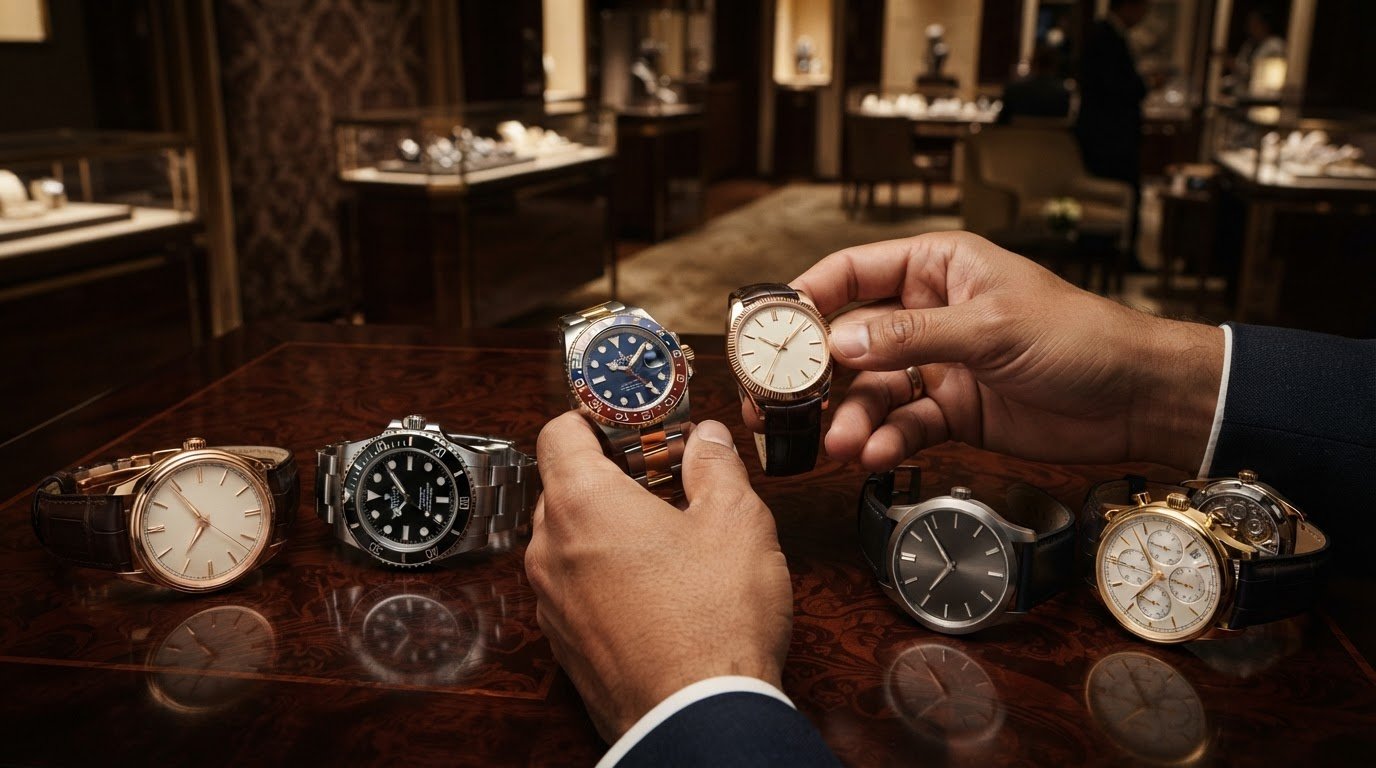
The most prestigious Rolex isn’t automatically the right one for you. Size, style, and intended use matter just as much as the name, especially when the range includes classic dress watches and sport-oriented models.
Choosing can feel daunting: Rolex’s history and reputation are compelling, but its many collections and model names can make the differences hard to pin down. This guide explains the brand’s story and defining watchmaking themes, compares major collections by character and appeal, and helps you decide what suits your wrist and daily routine.
You’ll also find practical points to weigh before buying online, including condition, documentation, warranty terms, authenticity, and delivery. New watches are unworn and in original factory condition; pre-owned Rolex watches are polished, serviced, and presented in mint showroom condition. Luxury of Watches guarantees the authenticity of its watches and has served more than 15,000 customers over more than 25 years in business. With heritage and practical details in view, you can make a considered choice.
Key Takeaways
- Learn how Rolex’s heritage and design themes contribute to its identity without letting prestige decide whether a watch suits you.
- Compare the Datejust, Day-Date, GMT-Master II, Sky-Dweller, and Submariner by their broad character and intended appeal.
- Use your daily routine, preferred style, wrist fit, and condition priorities to narrow your rolex options.
- Compare individual references, not just collection names, to spot differences that matter to your choice.
- Review documentation, condition, warranty scope, and delivery details before buying a watch online.
Rolex: What Makes the Watchmaker So Recognizable?
Rolex is a Swiss watchmaker headquartered in Geneva, known for designing and manufacturing luxury wristwatches. Its name is familiar well beyond watch collecting, but recognition alone won’t tell you whether a particular watch suits your wrist, wardrobe, or daily routine. Start by understanding how the company’s history shaped its identity, then look beyond the name to the individual model.
Rolex’s visibility comes from its long-established brand, recognizable design signatures, and collections associated with different uses and styles. Its history is well documented, although popular retellings can blur the line between verifiable milestones and brand lore. For a broad reference, the Rolex Wikipedia article surveys the company’s history and cultural impact. The key dates below help explain its development.
How Rolex developed from a watchmaking name into a global brand
Hans Wilsdorf and Alfred Davis established a watch business in London in 1905 under the name Wilsdorf & Davis. Wilsdorf registered “Rolex” as a trademark in 1908. The company moved its headquarters to Geneva in 1919, establishing the Swiss setting that remains central to its identity. Together, these milestones trace the shift from a London-based business to a watchmaker closely associated with Geneva.
- 1910: A Rolex wristwatch received a Swiss certificate of chronometric precision from the official rating centre in Bienne.
- 1926: The company introduced the Oyster case, a significant chapter in its design history.
These dates help explain the brand’s development without turning its history into a collection of legends. Rolex’s heritage keeps the name in view, but each watch still deserves to be judged on its own merits.
What Rolex’s reputation means for a first-time buyer
A recognized name can help you make a shortlist, but it can’t decide whether a watch feels comfortable or suits your intended use. Case size, dial layout, bracelet, and design formality all affect how a specific reference wears and works with your everyday style. Details can differ even within one collection, so compare references rather than choosing by family name alone.
For a pre-owned watch, condition and provenance add another layer to the decision. Review the individual listing’s condition description and accompanying documentation, and consider whether the watch’s history aligns with your expectations. Luxury of Watches guarantees the authenticity of its watches, giving online buyers a clear point of reassurance.
Rolex’s heritage explains why its watches remain so visible in luxury watchmaking; your priorities determine which one, if any, is right for you. Next, consider the watchmaking and design details behind that reputation and what they mean in practical terms.
Rolex Watchmaking and Design: The Details Behind the Brand
A watch’s appearance is only part of its character. The movement, case materials, dial layout, and other details shape how a particular reference works and feels on the wrist. Rolex designs share recognizable themes, but specifications vary across models and versions. Use these details as comparison points, not as a promise that every watch offers identical functions, performance, or long-term value.
One useful distinction is between a movement’s power source and the way it’s wound. “Mechanical” describes a movement powered by a wound mainspring rather than a battery. Many current Rolex watches use self-winding mechanical movements, although exact specifications depend on the model and reference. A rotor inside the watch turns with wrist movement and helps wind the mainspring. Some mechanical watches can also be wound manually using the crown.
How to understand Rolex movement terminology
An automatic watch is a mechanical watch that winds itself through a rotor responding to movement. This explains the winding method, not how accurate a particular watch is or how it should be maintained. “Calibre” is the watchmaking term for a movement design. A listing may identify a specific calibre, but the reference’s official specifications are the right place to confirm its functions. Don’t assume every model shares the same movement.
Movement terminology is most useful when it answers a practical question. If you want a date display, a second time zone, or another complication, check the exact reference rather than relying on the words “automatic” or “mechanical.” Those terms describe how the watch is powered and wound; on their own, they don’t tell you which functions appear on its dial. Nor should they be treated as evidence of a particular service interval or guaranteed performance.
Materials, cases, and details vary across Rolex models
Rolex uses a range of materials across its watches, including Oystersteel, gold, and platinum. Some models combine steel and gold, while others use a single metal. The choice affects the watch’s color, visual presence, and feel, so compare the actual reference rather than assuming a collection name specifies one material.
Visible details vary, too. Bezel shape and finish, bracelet style, dial color, markers, and display functions can differ between models and configurations. Two watches from the same family may therefore have distinct looks and practical features. For example, a date display or additional time-zone function matters most when it suits how you’ll wear and use the watch.
For a careful comparison, note the reference, movement description, material, case dimensions, and functions in each listing. Confirm details against the manufacturer’s specifications for that reference, especially when comparing watches from different years. This keeps broad design themes in perspective and helps you focus on what’s actually on offer. To compare available Rolex watches, use those specifics as your guide rather than choosing by appearance alone.
Rolex Collections Compared: Find the Family That Fits Your Priorities
Collection names offer a useful first filter, especially when you connect them to what you want from a watch. Some families lean toward classic everyday styling; others put a particular function or sporting identity at the forefront. Use this comparison to narrow your options, then compare the exact references you’re considering.
| Collection | Broad identity | May interest buyers who |
|---|---|---|
| Datejust | Classic wristwatch with a date display | Want a versatile look with a familiar date function |
| Day-Date | Displays the day of the week and date | Prefer a formal, distinctive calendar display |
| GMT-Master II | Designed to show multiple time zones | Travel often or value tracking another time zone |
| Sky-Dweller | Combines a second time zone with an annual calendar | Appreciate travel-oriented functions and a more involved display |
| Submariner | Professional dive-watch identity | Are drawn to a robust, sport-oriented design |
Dress-oriented Rolex families and everyday styling
The Datejust and Day-Date share a polished, classic character, but their calendar displays give them different identities. The Datejust shows the date, while the Day-Date displays both the day of the week and the date. That difference affects the dial’s visual balance as well as its practical appeal.
Neither is automatically the better choice for formal occasions or daily wear. Consider how prominent you want the calendar display to be, the overall look you prefer, and how a specific reference’s case, dial, and bracelet work with your wardrobe. Configurations vary, so don’t assume every watch in a family has the same materials or appearance.
Professional Rolex families and distinctive functions
The GMT-Master II is built around time-zone functionality, while the Sky-Dweller pairs a second time zone with an annual calendar. Both may appeal to travelers, but their displays and overall character differ. Think about whether you’ll use these functions regularly and whether you prefer a straightforward time-zone readout or a more information-rich dial.
The Submariner’s identity is rooted in diving, giving it a sport-focused profile that may suit buyers drawn to that heritage and look. A dedicated Rolex Submariner buyer’s guide can help with a closer model comparison. Collection identity, however, doesn’t establish an individual watch’s condition, availability, or resale value. Those depend on the specific reference and watch. Use this shortlist as a starting point, then assess each listing on its own details.
How to Choose a Rolex: Match the Watch to Your Life
A clear decision process can keep a familiar name from overshadowing the details that matter once a watch is on your wrist. Work through these five steps, comparing specific references and listings rather than assuming every watch in a collection is the same.
- Define intended wear. Decide whether you want a watch for daily use, formal occasions, travel, or a mix. A function you’ll use regularly may matter more than one that sounds impressive but rarely fits your routine.
- Choose a style direction. Consider whether you prefer a dressier, understated look or a more sport-oriented presence. Dial appearance, bezel design, and bracelet style all contribute to the watch’s character.
- Assess fit. Compare the case dimensions in each listing and think about how the watch’s proportions will feel on your wrist. A dial that’s easy to read and a bracelet that sits comfortably can make a better everyday choice than a model selected for reputation alone.
- Set your condition preference. Decide whether an unworn watch or a serviced pre-owned one better suits your expectations. Read the listing’s condition description carefully, since condition is specific to the individual watch.
- Review purchase details. Before deciding, read the listing for its documentation, warranty terms, and delivery information. Confirm that the reference and stated condition match what you’re looking for.
Start with fit, style, and intended use
Picture the watch in the settings where you’ll wear it most. A more formal design may feel at home with tailored clothing, while a sport-oriented profile may better match casual daily wear. Case size, dial appearance, and bracelet style influence how a watch looks and feels, so compare the exact reference and listing details, not just the collection name.
Understand new and pre-owned Rolex condition
New watches are unworn and in original factory condition, with a box and manuals. Pre-owned Rolex watches are polished, serviced, and presented in mint showroom condition. These are distinct descriptions, not interchangeable labels. For pre-owned watches, band-length options accommodate different wrist sizes. Read each listing closely to understand which condition applies and what accompanies that particular watch.
Luxury of Watches guarantees that its watches are 100% authentic. A five-year in-house warranty applies to select brand watches, so review the terms for the specific listing rather than assuming coverage is identical across all watches. The company has operated for over 25 years and served more than 15,000 customers.
Once you’ve established your priorities, explore Rolex watches and compare the references that align with your intended wear, preferred style, fit, and condition preference.
Buying a Rolex Online: Verify the Details and Know What to Expect
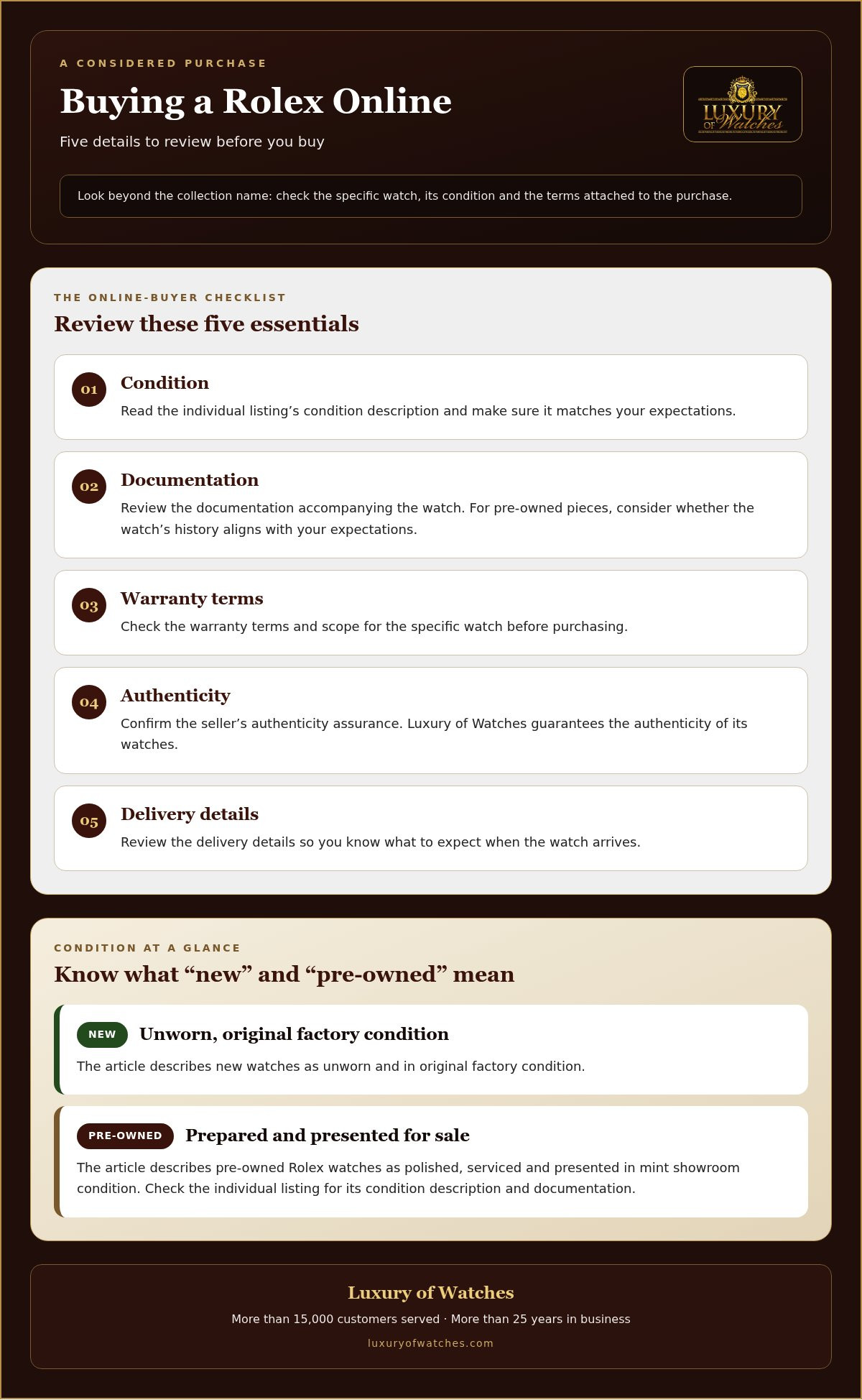
An online purchase should leave you clear about the watch and the terms around it. Before placing an order, review the individual listing and use this checklist to keep the practical details in view:
- Authenticity: Luxury of Watches guarantees that its watches are 100% authentic. The retailer has operated for over 25 years and served more than 15,000 customers.
- Condition: Check whether the listing describes a new or pre-owned watch, and read its condition details closely.
- Documentation: Review the listing for the accompanying box, manuals, and other stated documentation. Don’t assume every watch includes identical items.
- Warranty: Read the terms for the specific watch, including which functions and issues are covered.
- Delivery: Check the shipping method, estimated timing, and any applicable international charges before completing your purchase.
Review authenticity, condition, and warranty before purchase
Luxury of Watches’ 100% authenticity guarantee gives buyers a clear assurance. The condition description is just as important: new watches are unworn and in original factory condition, while pre-owned Rolex watches are polished, serviced, and presented in mint showroom condition. These are distinct descriptions, so use the listing to understand the status of the particular watch you’re considering.
A five-year Luxury of Watches warranty applies only to select brand watches, not every watch. Where it applies, the stated coverage includes movement, functionality, and manufacturing defects; it doesn’t cover the battery. Review the warranty terms shown for the individual watch to understand the applicable scope rather than assuming all listings share the same coverage.
Documentation also helps you understand what comes with the watch. Compare the listing’s stated contents with your expectations, and retain the purchase records and documents provided with the order. Reviewing these details before checkout can prevent misunderstandings about condition, included items, or warranty terms.
Understand shipping, tax, and the next purchase step
Standard shipping is two to seven days, excluding holidays and weekends. Some specialty pieces may take longer; Rolex DLC models have a stated delivery time of two to three weeks. For international orders, shipping is $95 for orders under $1,499 and $195 for orders of $1,500 and above. Insurance is included in international shipping fees, while customs and duties are buyer-paid. Sales tax is charged only on shipments to California.
Before checkout, match the reference and condition description to your selection, review the warranty scope and documentation, and account for the delivery details. Once those points align with your priorities, Browse the Rolex selection at Luxury of Watches to compare available listings.
Make Your Shortlist a Personal One
The right Rolex choice isn’t simply the most recognizable name or the most talked-about model. It’s the reference whose proportions, design, and functions make sense for the way you expect to wear it. Before deciding, narrow your options to a small shortlist and compare the specific watches side by side. A few minutes spent checking details can help you move from admiring a watch to feeling confident it belongs in your routine.
Give each contender a practical test: can you picture wearing it often, does its style feel natural with your wardrobe, and do the listing details match what you want? If one option stands out for reasons beyond prestige, you’re closer to a considered choice. There’s no need to rush; a well-chosen watch should feel right on your terms.
Ready to take the next step? Explore authentic Rolex watches at Luxury of Watches and compare available references against your shortlist. Let your priorities lead and choose with confidence.
Frequently Asked Questions
How much does a Rolex cost?
There isn’t one price for every Rolex: the amount depends on the model, reference, condition, and individual listing. Compare the exact price shown on the product page with the specific watch you’re considering. The listing price applies to that watch; general market commentary isn’t a quote or a promise of what another reference will cost.
Is Rolex a Swiss watch brand?
Yes. Rolex is a Swiss watchmaking brand headquartered in Geneva. Its early business began in London before the company established its Geneva base, so its history and present-day identity have different geographic chapters. Luxury of Watches, by contrast, is a US-based online retailer. A retailer’s location doesn’t change the Swiss identity of the watchmaker or establish where a particular watch was manufactured.
What does the name Rolex mean?
Rolex isn’t generally presented as an acronym with a literal expansion. Company history attributes the name’s selection to Hans Wilsdorf, who wanted a short word that would be easy to say and remember across languages and look balanced on a watch dial. Accounts of exactly how he arrived at the word are historical explanations, not a literal definition of the name.
Does Rolex make watches for women?
Yes. Buyers can choose among Rolex watches according to case dimensions, design, and personal fit rather than assuming a collection is exclusively for one gender. If you prefer a more compact wrist presence, compare the measurements of individual references across collections. Check the exact reference’s specifications and presentation, then consider how its proportions and style feel on your wrist.
Are Rolex watches automatic?
Many Rolex watches use automatic mechanical movements, but the answer depends on the particular model and period. An automatic watch is mechanical and uses a rotor responding to wrist movement to wind its mainspring; a manual-winding mechanical watch is wound by hand. Rolex has also produced quartz watches historically, so don’t assume every Rolex ever made has the same movement type. Check the exact reference specifications.
What is the Rolex crown logo meant to represent?
The crown is Rolex’s recognizable emblem, helping identify the brand across watch dials, clasps, and other brand materials. Its familiarity contributes to visual recognition, but the symbol alone doesn’t establish a watch’s condition, specifications, or suitability for a buyer. Explanations that assign a particular official meaning to the crown should be treated cautiously unless supported by a reliable brand-history source.