
Pre-Owned Luxury Watch Inspection: Collector's Checklist
Posted by Luxury of Watches on 14th Oct 2026
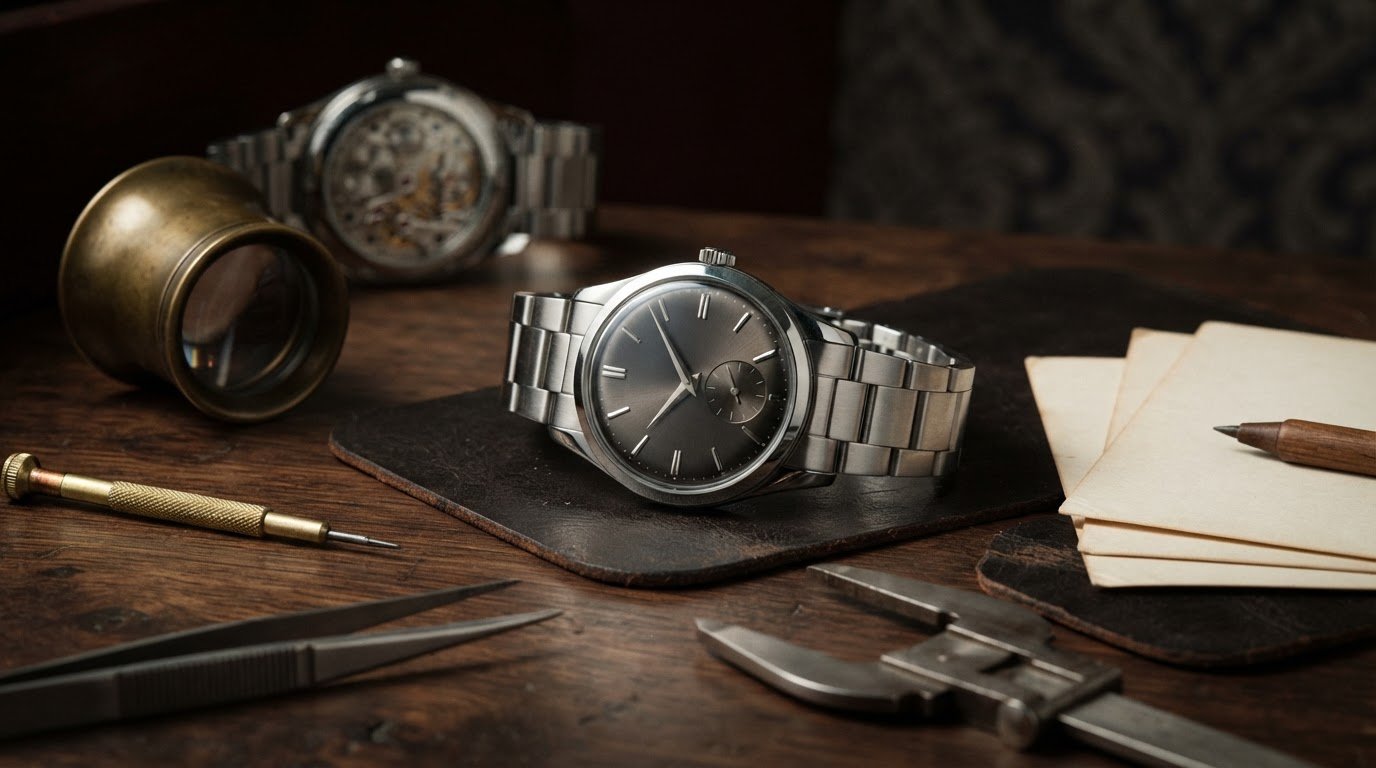
What if the box and papers aren’t the strongest evidence that a luxury watch is right for you? Knowing how to inspect a pre owned luxury watch means looking beyond a seller’s description to the watch itself: its condition, operation, documentation, and ownership history. Even an immaculate appearance or a convincing set of papers deserves careful context.
It’s reasonable to feel uncertain about which marks signal ordinary wear, which mechanical symptoms need attention, and when an expert should weigh in. This checklist gives you a repeatable way to assess the details without treating any single clue as proof. You’ll learn what to examine on the case, dial, hands, and bracelet; what to observe when the watch is running and being wound; and how to consider records and provenance alongside the seller’s assurances.
Documentation can support a watch’s history, but it should be evaluated alongside its physical details and overall consistency. At Luxury of Watches, pre-owned Rolex watches are polished and serviced, and each watch is backed by a full authenticity guarantee. Read on for a practical inspection sequence, including observations you can make yourself and questions best left to qualified interpretation.
Key Takeaways
- Use a consistent visual sequence to document wear on the case, dial, crystal, hands, and bracelet without treating every mark as a defect.
- Learn how to inspect a pre owned luxury watch by separating what you can observe from what requires supporting records or expert interpretation.
- Compare the watch’s reference and ownership information with its documentation, and give discrepancies careful attention.
- Group findings as consistent, unclear, or in need of technical assessment to make your next steps easier to decide.
- Understand how Luxury of Watches’ full authenticity guarantee and preparation of pre-owned Rolex watches support a more informed purchase.
Why Inspect a Pre-Owned Luxury Watch Before You Buy?
A pre-owned luxury watch can offer the appeal of fine design and established watchmaking with a history already underway. That history is part of the interest, but it also makes a measured inspection worthwhile. Reviewing the condition, records, and ownership information helps you decide whether the specific watch aligns with your expectations.
Inspection means reviewing four related areas: visible condition, basic operation, documentation, and available ownership information. None tells the whole story on its own. A scratch may be cosmetic rather than functional; a watch that appears to run during a brief check still hasn’t demonstrated long-term accuracy. Record what you can observe, then distinguish it from questions that need technical interpretation.
What a buyer can assess during an initial inspection
You don’t need to open the case or attempt a repair to make useful observations. Set the watch on a clean surface in consistent, bright lighting, and view it from different angles. Note visible marks, loose components, or details that don’t match the written description. If you’re unfamiliar with movement terminology, Understanding the fundamentals of watchmaking can help provide context for the components you encounter.
A practical answer to how to inspect a pre owned luxury watch begins with separating facts from interpretations. Write down what you see, such as a mark on the clasp, then record the question it raises without assuming what caused it. Keep notes on basic operation and the documents provided, too. This makes it easier to compare watches fairly, while questions about internal wear or service needs remain matters for qualified assessment.
How to keep condition separate from personal preference
Functional condition and cosmetic condition are different considerations. A watch may show signs of wear while operating, and an unmarked exterior alone can’t establish its mechanical state. Decide which visible signs matter for your intended use. A collector focused on originality may weigh refinishing differently from someone choosing a watch for regular wear. Neither preference is a technical verdict.
Describe observations neutrally before deciding how much they matter to you. A polished, serviced pre-owned Rolex is still pre-owned, not new; its preparation and ownership history are separate parts of its story. Compare the stated condition with what you can see and what the accompanying information says. A mismatch is a reason to seek clarification, not proof of a specific fault.
Keep the process deliberate and proportionate. Observe the exterior, note whether basic functions respond as expected, review available records, and compare those details with the written description. Avoid forcing a crown or bracelet component, opening the case, or treating a brief check as a diagnosis. This first pass gives you a clearer basis for deciding what appears consistent, what remains uncertain, and what deserves expert interpretation before you buy.
Inspecting a Luxury Watch Case, Dial, and Bracelet
A methodical exterior check helps you describe what’s present without turning a visible mark into a diagnosis. Work in good, even light and compare the watch with its written condition description and available photographs. Images help establish what was represented, although angle and lighting can change how details appear. Record specific observations and questions rather than guessing at their cause.
Check the case, crystal, and dial in good light
Follow the watch from the outside in. A useful approach to how to inspect a pre owned luxury watch is to view each component in the same order and note details that may need clarification:
- Case and lugs: Look for scratches, dents, edge wear, and visible differences in finishing across the case. Note whether marks cluster around edges or contact points, but don’t assume appearance alone explains how they occurred.
- Dial and hands: Observe the dial printing, markers, and hands for visible damage, apparent misalignment, or details that differ from the available photographs. Check the date display, if present, for an appearance that seems out of place. Record what you see. Determining whether a detail is correct for a particular watch may require specialist knowledge.
- Crystal: Look across the surface for scratches, chips, or other visible damage. If anything appears beneath the crystal, describe its location and appearance rather than attempting to remove or investigate it.
Compare each observation with the condition description. For example, if a photograph appears to show an unmarked lug but the watch has a visible dent there, note the difference and seek an explanation. A discrepancy deserves attention, but it isn’t a complete assessment of the watch.
Assess bracelet fit, clasp, and visible wear
Inspect the bracelet separately from the case. Look for visibly damaged or uneven links, a clasp that appears loose or misaligned, and excessive looseness as the bracelet moves naturally in your hands. Don’t pull links apart or force the clasp. Describe a concern precisely, such as “clasp does not sit flush,” instead of guessing at the cause or repair needed.
Consider whether the bracelet appears consistent with the watch and its stated configuration. Photographs and the written description can help you identify details to clarify, while determining originality or suitability for a specific reference may call for expert interpretation. Fit is separate from condition: a bracelet can appear well kept yet still not suit your wrist. Pre-owned Rolex band lengths can vary, so account for fit when assessing the overall match.
Keep the inspection non-invasive. Don’t force the crown, remove components, or open the case during a casual review. Luxury of Watches’ pre-owned Rolex watches are polished, serviced, and presented in mint showroom condition. Explore pre-owned Rolex watches and use the same visual checklist to compare the details that matter to you.
How to Check a Watch’s Operation, Reference, and Service Records
A watch’s movement, identifying details, and records each provide a different kind of evidence. A brief functional check can show whether basic features respond, while documents may help explain service and ownership history. Neither is a complete verdict on its own. Use the comparison below to separate what you can observe from what needs closer interpretation.
| Area | What you can check | What may need expert interpretation |
|---|---|---|
| Basic operation | Whether the watch is running and its crown or displayed functions respond during gentle use | Long-term accuracy, movement condition, and the cause of any irregular behavior |
| Reference and serial details | Information visible on the watch and details shown in accompanying documents | Whether those details are correct for the specific watch and its components |
| Service records | Dates, stated work, and consistency with the seller’s description | The quality or completeness of work and the watch’s present internal condition |
Observe basic operation without overstating what it proves
Start with a gentle check. Notice whether the watch is running and whether the crown and displayed functions respond as expected. Don’t force the crown or continue if something feels resistant. If the watch has a date display, observe its operation without assuming that one successful change establishes the movement’s condition.
For timekeeping, note the time shown and observe the watch again later under similar conditions. Record any apparent change or inconsistency rather than applying a universal accuracy threshold. A short observation can’t establish how the watch will perform over time. A closer movement assessment may require specialist equipment and opening the case, so leave diagnosis beyond a basic check to a qualified watchmaking professional.
Review reference details, records, and ownership information
Compare reference and serial information visible on the watch, where accessible without removing parts, with the numbers or descriptions in its accompanying documents. Record any mismatch or missing detail. Don’t try to access information by opening the case. A match is useful evidence, but it isn’t by itself a full assessment of authenticity or originality.
Read service documentation for the date, the work it says was completed, and whether that account fits the written description. For instance, if the description states that the watch was serviced but the provided record refers to different work, note the distinction and seek clarification. Missing service records alone don’t establish the watch’s current condition; they simply leave part of its history undocumented.
As you learn how to inspect a pre owned luxury watch, keep your notes precise: what you observed, what the documents state, and what remains unresolved. Ownership information and service records can add valuable context, but their meaning depends on how well they align with the watch and its described history. Use that combined picture to decide which findings are clear and which deserve further interpretation.
How to Weigh Inspection Findings and Decide What Needs Clarifying
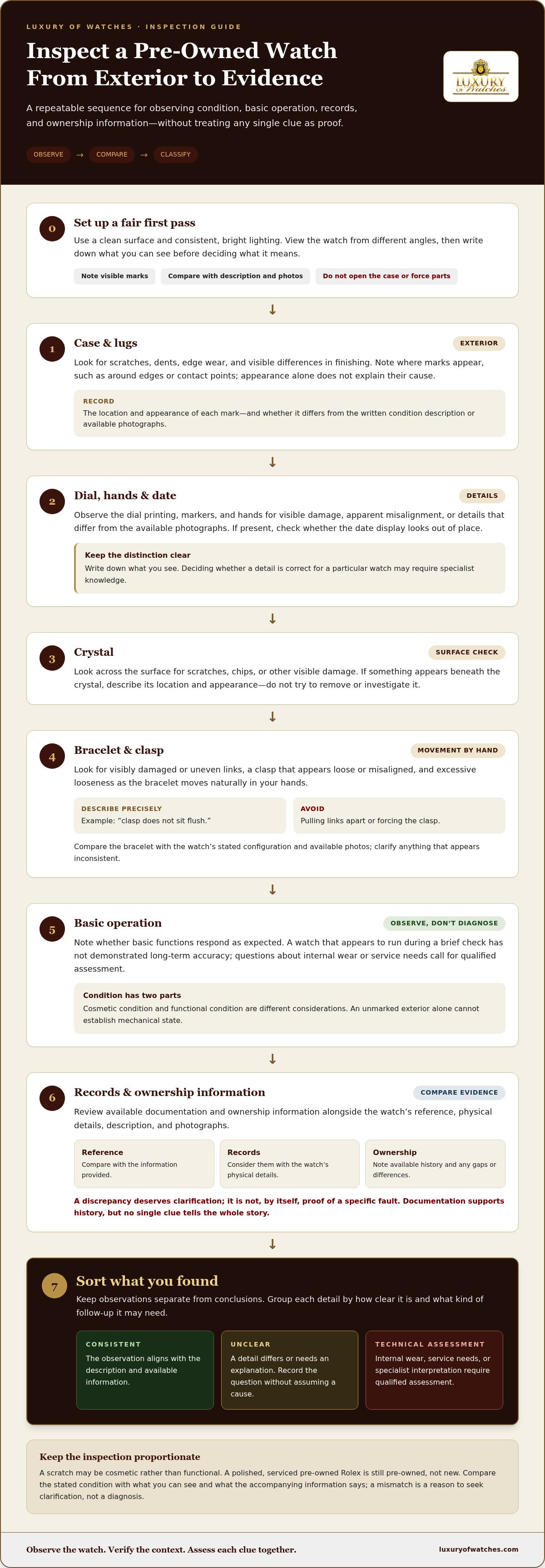
Once you’ve recorded what you can see and what the documents state, bring those details together before deciding. A single scratch, absent service record, or brief timekeeping observation rarely tells the whole story. Sort each finding by how clearly it’s supported and whether it needs technical interpretation.
Use an evidence hierarchy instead of one decisive clue
Give the most weight to details that agree across the watch, its documentation, and the written condition description. Treat visual impressions as observations, not authentication conclusions. If a reference detail appears inconsistent, note the exact discrepancy rather than deciding what it means. Questions about the movement or internal condition may require a specialist’s assessment.
- Consistent: The visible condition aligns with the description, and available records support the stated history.
- Unclear: Information is missing or imprecise, such as an unexplained gap in service records or a mark not visible in the listing photographs.
- Needs technical assessment: A concern involves internal condition, movement behavior, or whether a component is appropriate for the specific watch.
This framework keeps uncertainty in proportion. A missing service record means you have less documented history, not that the watch is necessarily in poor condition. Likewise, an isolated mark is a detail to weigh against your preferences and the overall description, not proof of a mechanical problem.
Build a practical decision summary
Before moving forward, make a short written summary in three parts: confirmed strengths, unresolved questions, and condition details that matter personally. For instance, a watch may have consistent reference information and a condition that suits your intended use, while its service history remains unclear. That’s more useful than a simple “good” or “bad” label.
Then consider whether the asking price makes sense in context. Compare watches with the same reference where possible, paying attention to condition, configuration, included documentation, and service information. For Rolex, a market-value guide can offer useful context for interpreting asking prices, but market comparisons don’t guarantee future value or investment performance. Your decision should still reflect the specific watch and what you want from ownership.
Use your summary to identify which unanswered questions would change your decision. If an unresolved detail concerns a technical issue, seek qualified interpretation rather than trying to diagnose it from appearance alone. If it concerns the written description, request a clear explanation before proceeding. This makes how to inspect a pre owned luxury watch a practical decision process, not a search for one perfect clue.
When you’re ready to compare watches using condition details and seller assurance together, explore pre-owned luxury watches at Luxury of Watches.
From Inspection to a Confident Pre-Owned Watch Purchase
A careful inspection is most useful when you bring the evidence together. Before deciding, compare your notes with the watch’s written condition description, available records, and stated purchase assurances. Separate details that align from questions still unresolved. If an unanswered technical concern could affect your decision, seek a qualified assessment rather than treating a visual impression as a diagnosis.
Understand the retailer’s stated condition and purchase assurances
At Luxury of Watches, pre-owned Rolex watches are polished, serviced, and presented in mint showroom condition. They remain pre-owned watches, with an ownership history distinct from their preparation. Luxury of Watches also provides a full authenticity guarantee. These assurances complement, rather than replace, your review of the specific watch’s description and documentation.
A 5-year in-house warranty applies to select brand watches, not every watch. It covers movement, functionality, and manufacturing defects; the battery is excluded. Read the applicable warranty terms as part of your decision, and don’t assume coverage extends beyond those stated areas.
Take the next step with clear expectations
Before purchasing, make a concise final record:
- What aligns: Note condition details that match the description and any supporting records.
- What remains unclear: Identify discrepancies or missing context that could change your decision.
- What matters to you: Weigh wear, fit, documented service, and intended use according to your own priorities.
Luxury of Watches has operated for over 25 years and has served more than 15,000 customers, offering established business context alongside its authenticity guarantee. Standard shipping takes 2 to 7 days, excluding holidays and weekends. Shipping is $95 for orders under $1,499 and $195 for orders of $1,500 and above. Insurance is included, customs duties are buyer-paid, and sales tax applies only to shipments to California.
Knowing how to inspect a pre owned luxury watch helps you make a decision based on the watch, its records, its described condition, and the assurances provided together. When those details give you a clear picture, you can move forward with considered expectations. Explore Luxury of Watches’ selection of luxury watches to find a timepiece that suits your preferences.
Choose Your Next Watch with Clarity
Before you choose, decide what you want the watch to bring to your collection or daily routine. A clear sense of your priorities can help you distinguish a detail you can accept from an unanswered question that still affects your confidence. There’s no need to force a decision while an important point remains unresolved.
Learning how to inspect a pre owned luxury watch is ultimately about making a considered choice, not finding a flawless timepiece or interpreting every technical detail alone. Let your own preferences guide the final decision, and leave specialist questions to qualified interpretation. When the evidence and your expectations feel aligned, you can move forward with greater assurance.
Explore authentic pre-owned and new luxury watches and take the next step toward a timepiece that feels right for you.
Frequently Asked Questions
Can I check a pre-owned luxury watch’s water resistance at home?
No. A visual check or simple home test can’t confirm water resistance, and exposing a watch to water as a test could cause damage if its seals aren’t sound. Water resistance can change over time and may depend on the watch’s condition. Treat any stated rating as information to verify through appropriate testing, not as a reason to conduct an at-home experiment.
Is a small timekeeping difference automatically a sign of a problem?
No. A brief timing difference alone doesn’t identify a fault. A watch’s observed rate can be affected by factors such as how long it has been running and how it has been positioned, so one short comparison isn’t conclusive. Note what you observe and over what period, then consider a technical assessment if the variation persists or concerns you.
What happens if the watch’s serial or reference details differ from its paperwork?
Pause and resolve the discrepancy before proceeding. First, check that you’re comparing the correct details and that the number hasn’t been misread or transcribed incorrectly. Don’t alter, remove, or access components to investigate it yourself. A mismatch may have an explanation, but it needs to be addressed clearly and assessed in context before you rely on the documents.
Does a pre-owned luxury watch always need servicing immediately?
No. Pre-owned status alone doesn’t establish that a watch needs immediate service. Consider its behavior, available service information, and any specific concerns together. If it runs inconsistently, has a resistant crown, or shows moisture beneath the crystal, avoid further testing and seek qualified assessment. Don’t schedule work solely because records are absent; missing documentation isn’t a diagnosis of the movement.
Can a pre-owned watch be considered without its original box?
Yes. The absence of the original box doesn’t, by itself, determine whether a watch is suitable to buy. Consider the watch, its available records, and the seller’s description as separate pieces of evidence. Check what the listing says is included, then decide how much the box matters to your collecting preferences, presentation plans, or future resale considerations.
How long does a pre-purchase inspection of a luxury watch take?
There isn’t one fixed duration. A first visual review may be brief, but comparing photographs, condition details, reference information, and service records takes longer, especially if documents need careful reading. Observing operation over time also extends the process. Set aside enough time to review the evidence without rushing, and allow additional time if a technical question needs specialist interpretation.
Can I assess a watch’s movement without opening the case?
You can observe external signs of operation, such as whether the watch runs and whether its functions respond, but you can’t fully assess the movement’s internal condition this way. A short check also can’t establish long-term accuracy. Don’t open the case yourself; internal examination may require specialist tools and expertise. Use your observations to identify questions, not to make a mechanical diagnosis.