
How to Travel Safely with Expensive Watches: The 2026 Collector’s Guide
Posted by Luxury of Watches on 10th Jul 2026
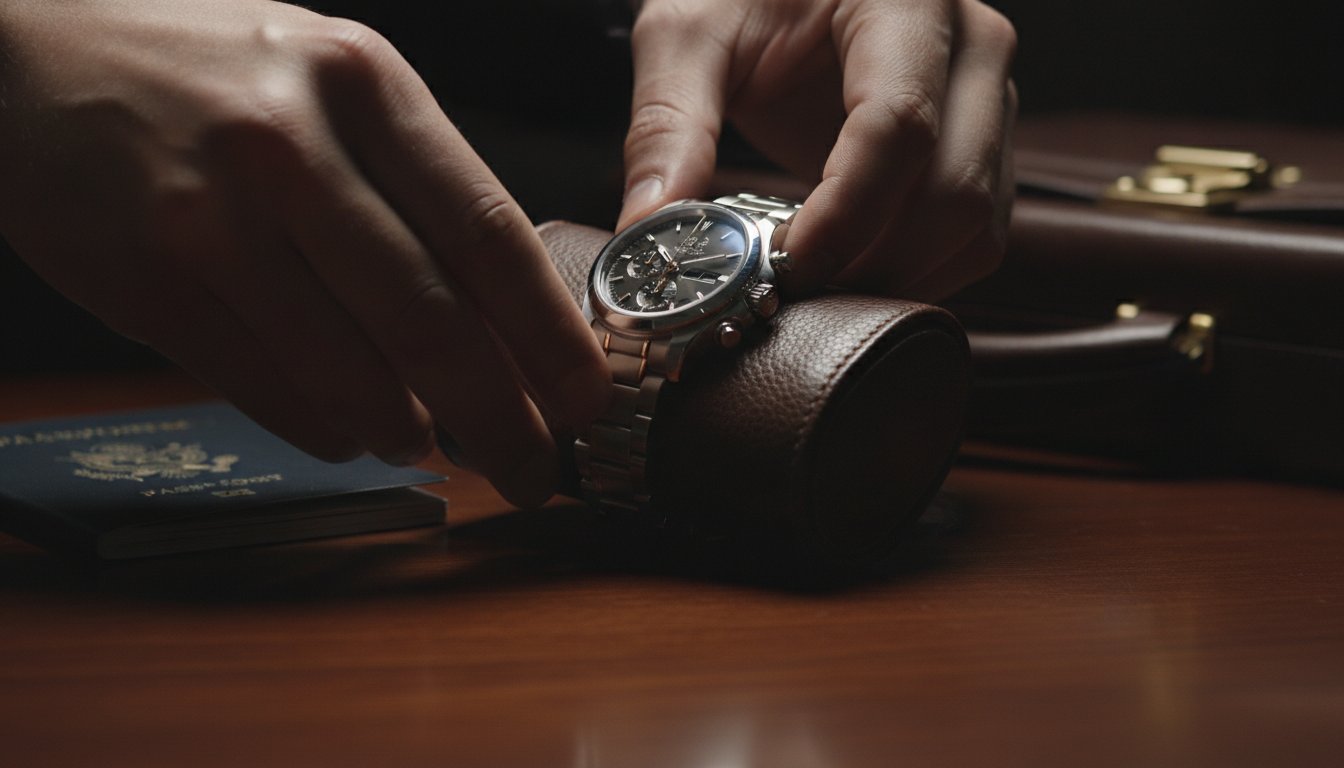
Your Rolex or Audemars Piguet is more than a timepiece; it's a significant asset that requires a sophisticated protection strategy the moment you leave your front door. With the 2026 suspension of the $800 de minimis exemption and the implementation of temporary 15% global tariffs, the stakes for international collectors have reached a critical peak. Learning how to travel safely with expensive watches is no longer just about physical security. It now requires a meticulous understanding of modern customs enforcement and digital documentation to avoid unexpected financial penalties.
We recognize that the anxiety of a potential customs dispute or the fear of airport security theft can easily overshadow the joy of wearing a world-class watch abroad. You shouldn't have to choose between enjoying your collection and protecting your investment. This guide provides the expert strategies you need to move through international hubs with total peace of mind. We will examine the essential insurance "mysterious disappearance" clauses, the necessity of U.S. Customs Form 4457 in the current regulatory climate, and the discreet transit protocols used by seasoned collectors to ensure every journey remains as seamless as a precision movement.
Key Takeaways
- Learn why scheduling your luxury timepieces on a dedicated insurance rider is essential for "mysterious disappearance" coverage before you depart.
- Master the professional transit protocols for how to travel safely with expensive watches, including why you should never place your timepiece in a plastic security tray.
- Understand the psychology of theft-by-distraction and how to perform a destination-based risk assessment for your specific itinerary.
- Shield your watch's movement from the technical hazards of travel, such as magnetic fields in airport scanners and environmental degradation in tropical climates.
- Discover why curating an "under-the-radar" travel roll with stainless steel models provides a sophisticated balance of prestige and personal security.
Administrative Foundation: Securing Your Watch Before Departure
Traveling with a high-end timepiece starts months before you reach the departure gate. While physical security is vital, administrative security creates the legal and financial framework that allows for recovery or reimbursement. It's about building a digital and physical dossier that proves ownership and value beyond any doubt. This rigorous preparation is the cornerstone of how to travel safely with expensive watches. Without a clear paper trail, you are vulnerable to both predatory theft and aggressive customs enforcement.
Insurance Audit: Verifying Your Coverage for Global Transit
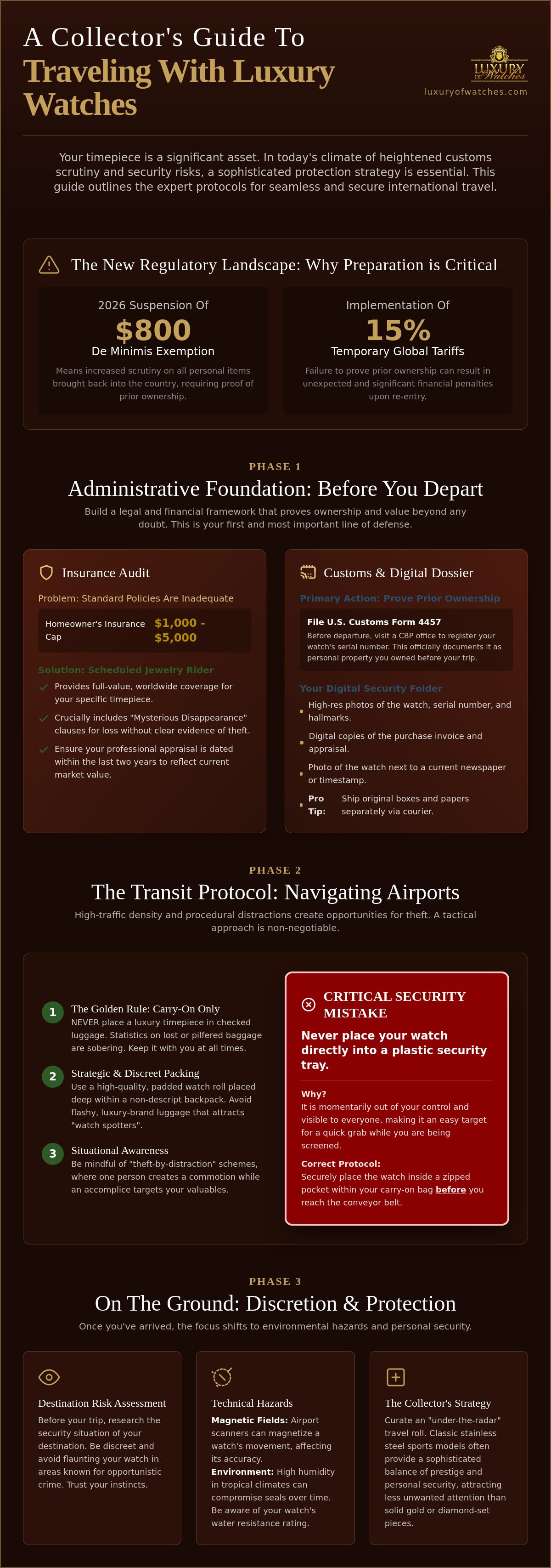
Many collectors mistakenly rely on standard homeowner's insurance. These blanket policies often cap jewelry coverage at a low amount, typically between $1,000 and $5,000. This is wholly insufficient for a Rolex, Cartier, or Patek Philippe. Instead, you require a scheduled jewelry rider. A professional rider provides worldwide coverage and, crucially, includes mysterious disappearance clauses. These clauses protect you when a watch is lost or missing without clear evidence of theft, a common scenario in busy transit hubs.
Ensure your appraisal is dated within the last two years. The market for pre-owned luxury watches is dynamic; an outdated valuation could leave you significantly underinsured. At Luxury of Watches, our 5-year in-house warranty serves as an additional layer of security, ensuring the mechanical integrity of your investment is verified and documented long before you enter a foreign jurisdiction.
Customs Compliance: Proving Ownership to Border Authorities
In the 2026 regulatory environment, border agents have increased their scrutiny of luxury imports. The indefinite suspension of the $800 de minimis exemption and the current 15% global tariff mean you must be able to prove you didn't purchase the watch during your trip. Before leaving the country, visit a Customs and Border Protection office to file Form 4457. This official document registers your specific serial number as property you owned prior to departure.
If you are traveling with multiple pieces, ship your original boxes and papers separately via a secure courier rather than carrying them in your luggage. Carrying the original packaging often signals an intent to sell, which can lead to hefty VAT and duty assessments. Maintain a digital security folder that includes:
- High-resolution macro photography of the watch from every angle.
- Clear images of the serial number and any unique hallmarks.
- A digital copy of your original purchase invoice and appraisal.
- A photo of the watch next to a current newspaper or digital date stamp.
This ensures that if you face scrutiny while understanding airport security protocols or crossing international borders, your documentation remains as flawless as the movement on your wrist. Proactive documentation is the only way to navigate 2026's increased vetting and data requirements with absolute confidence.
The Transit Protocol: Navigating Airports and Security Safely
The physical journey begins with a non-negotiable "Golden Rule": never place a luxury timepiece in checked luggage. Statistics on lost or pilfered baggage are sobering, and once a watch enters the hold, you lose all control over its security. Understanding how to travel safely with expensive watches requires a tactical approach to the airport environment, where high-traffic density and procedural distractions create opportunities for theft. While the U.S. Department of State's Traveler's Checklist provides a baseline for general safety, horological assets demand a more specialized protocol.
Strategic packing is your second line of defense. Use a high-quality, padded watch roll that secures the watch's position and protects the movement from vibration. This roll should be placed deep within a non-descript carry-on backpack or messenger bag. Avoid using luggage that screams luxury; a flashy designer duffel bag is a beacon for "watch spotters" who frequent international hubs to identify high-value targets. Securing a professionally verified timepiece is only the first step; keeping it safe during transit requires constant situational awareness.
The 'Jacket Pocket' Security Maneuver
The plastic security tray is the highest-risk zone for theft. It's easy for a sophisticated thief to grab a Rolex Submariner from an open tray while you're delayed by a secondary screening or a metal detector chime. If an agent insists you remove your watch, don't place it in the tray. Instead, secure it in a zipped internal pocket of your jacket before the jacket goes onto the X-ray belt. This keeps the watch concealed and physically attached to a larger item. Always maintain a direct line-of-sight with your belongings. If you're pulled aside for a pat-down, politely insist on waiting until your bag has cleared the scanner before proceeding.
Discreet Transit: When to Wear and When to Stow
Deciding whether to wear your watch or stow it depends on your immediate environment. On the plane, a long-haul flight presents unique risks. It's tempting to remove a heavy watch for comfort, but never place it in a seat-back pocket or on a side table while you sleep. If you aren't wearing it, it must be in your zipped carry-on under your feet.
On-the-Ground Discretion: Wearing Your Watch at the Destination
Arrival at your destination marks a shift in your security posture. While the airport represents a controlled environment, the city streets are unpredictable. Mastering how to travel safely with expensive watches requires a dynamic risk assessment of your surroundings. A collector dining in a high-security district in Singapore faces different variables than one walking through certain European capitals where "moped grabs" are documented trends. Discretion isn't just about hiding your watch; it's about controlling the narrative of your ownership.
Social media "check-ins" are a modern security liability. Posting a high-resolution shot of your Audemars Piguet or Patek Philippe with a live geotag signals your location and the value of your assets to anyone monitoring the platform. You shouldn't broadcast your inventory to the world in real-time. Wait until you have returned home or at least left the city before sharing your travel horology. This delay breaks the link between your digital presence and your physical location.
The "Sleeve Rule" is a simple yet effective tactic for evening wear. In unfamiliar cities, keep your timepiece tucked beneath a shirt or jacket cuff. This prevents a flash of light from reflecting off a polished bezel and catching the eye of a spotter across a crowded room. Visibility should be a choice, not a constant state. If you feel you are in a high-risk area, simply don't reveal the watch until you are within the secure confines of your venue.
Hotel Security: Safes and Staff Discretion
Standard hotel safes are often vulnerable to master override codes known by multiple staff members. They are deterrents, not absolute barriers. They don't provide the same level of protection as a bank vault or a high-end home safe. For higher security, consider a portable travel safe or a cable-locked pouch that can be secured to a structural fixture in the room. Always keep the "Do Not Disturb" sign on your door to minimize the number of people entering your private space. This simple step reduces the exposure of your belongings to the housekeeping cycle.
Situational Awareness in Public Spaces
Theft-by-distraction is a common tactic used against watch owners. This often involves a stranger "accidentally" spilling a drink on you or engaging you in a physical "hug" under the guise of a friendly greeting. These interactions are designed to mask the tactile sensation of a pin being pushed or a clasp being released. "Watch spotters" often operate in high-end restaurants and hotel lobbies, identifying valuable pieces before signaling accomplices outside. Never leave a watch in a rental car glovebox; vehicle break-ins are rapid and common in tourist districts. Your watch is safest when it's either on your wrist or secured in a way that requires significant time and tools to bypass.
Technical Hazards: Protecting the Movement and Aesthetics
While administrative and physical security are paramount, environmental factors pose a silent threat to your collection. Learning how to travel safely with expensive watches involves understanding how shifts in climate, magnetism, and exposure to the elements can compromise a high-precision movement. Whether you are carrying heritage pieces or modern pre-owned luxury watches, technical vigilance is essential to maintaining both the aesthetic appeal and the chronometric performance of your investment.
Extreme temperature fluctuations are a common travel hazard. Moving from a sub-zero airplane hold or a heavily air-conditioned hotel room to tropical humidity can cause internal condensation if gaskets are compromised. This moisture is the primary cause of movement oxidation. Additionally, sand and salt are highly abrasive. A single grain of sand lodged under a rotating bezel can cause permanent scratching, while dried salt crystals can degrade rubber seals over time. Protecting your watch requires a proactive maintenance schedule that begins before you pack your bags.
Water Resistance and Gasket Integrity
A professional pressure test is mandatory before any trip involving water. You shouldn't assume a watch remains water-resistant just because it was rated for it years ago. Gaskets dry out and lose their elasticity over time. Once abroad, adopt the "Freshwater Rinse" protocol. After every swim in the ocean, rinse your timepiece thoroughly under a tap to remove salt and minerals. The most frequent cause of water damage is the failure to fully engage a screw-down crown. Always verify the crown is tight before entering the water. A simple oversight can lead to a costly service. For guaranteed peace of mind, browse our collection of water-resistant luxury watches that have undergone our absolute verification process.
Magnetism: The Silent Movement Killer
Modern travel is saturated with magnetic fields that can wreak havoc on a mechanical balance spring. Airport scanners, iPad covers, and even the high-powered magnets used in hotel safes can magnetize a movement. A magnetized watch will suddenly begin gaining or losing several minutes a day, a frustrating occurrence when you're relying on your timepiece for tight travel schedules. You can recognize the signs if your watch's accuracy deviates significantly from its manufacturer specifications. While carrying a portable demagnetizer is often overkill, being mindful of where you place your watch is not. Never rest your timepiece directly on top of a tablet or next to a hotel safe's electronic locking mechanism. These small adjustments ensure your movement remains as accurate as the day it left the manufacture.
The Collector's Conclusion: Curating a Travel-Safe Collection
For the frequent flyer, the GMT complication is more than a technical flourish; it's a functional necessity. Tracking home time and local time simultaneously provides a level of utility that justifies the investment. When you acquire your timepiece from a source that prioritizes absolute verification, you ensure that your travel documentation is grounded in legitimacy. We believe that travel security starts at the point of sale. Our 5-year in-house warranty acts as a permanent safeguard for your adventurous lifestyle, ensuring that your watch remains as reliable as it is prestigious.
Choosing Your Travel Companion
Versatility is the primary metric for a travel watch. You need a model that transitions seamlessly from a morning swim to a formal boardroom presentation. A stainless steel Breitling Navitimer offers this exact balance of heritage and rugged performance for aviation enthusiasts. These pieces are designed to withstand the rigors of transit while maintaining a sophisticated silhouette. Choosing a watch with a robust movement and a proven track record of durability allows you to focus on your itinerary rather than your wrist. This selection process is the first step in learning how to travel safely with expensive watches.
Post-Travel Inspection and Care
The journey doesn't end when you clear customs. Once home, perform a meticulous inspection of your timepiece. Check for micro-scratches on the lugs or any misalignment of the bezel that might have occurred during the hustle of airport security. A professional cleaning is essential to remove any residual salt, grit, or sunscreen that can compromise the integrity of the gaskets over time. If you find that your current model felt too conspicuous or delicate during your trip, consider updating your collection. Trading in for a more travel-robust model ensures that your next excursion is even more secure. By following these protocols, you master the art of high-end horological travel with total confidence.
Mastering the Global Horological Journey
Protecting your collection abroad requires a blend of administrative precision and tactical discretion. By establishing a robust paper trail with Form 4457 and prioritizing "under-the-radar" steel models, you've already mitigated the most significant risks of international transit. Understanding how to travel safely with expensive watches isn't just about avoiding theft; it's about ensuring your investment remains technically sound and legally documented across every border you cross. Whether you're navigating the complexities of 2026 customs regulations or shielding your movement from magnetic interference, your preparation is what guarantees peace of mind.
At Luxury of Watches, we've provided expert support since 1999 to help collectors find timepieces that withstand the rigors of global travel. Every piece in our inventory comes with an Absolute Verification Guarantee and an industry-leading 5-year in-house warranty, ensuring your next acquisition is as secure as it is prestigious. Secure your next travel companion from our authenticated Rolex collection and move through the world with the confidence that only a fully documented, expertly verified timepiece can provide. Your next adventure deserves a companion that's as resilient as your passion for horology.
Frequently Asked Questions
Should I wear my luxury watch through airport security?
You should ideally stow your watch in a secure, zipped pocket within your carry-on luggage before reaching the checkpoint. While some agents allow you to wear it, others insist on removal. Placing a high-value timepiece in an open plastic tray creates an unnecessary theft risk during the chaos of screening. By concealing it in your bag or a zipped jacket pocket, you maintain better control over your asset.
Is it safe to use the hotel safe for an expensive watch?
Hotel safes provide a basic level of protection against opportunistic theft but aren't impervious to sophisticated breaches. These units often have master override codes accessible by various staff members. If you must use one, consider placing your watch inside a cable-locked pouch or a portable travel safe first. Keeping the "Do Not Disturb" sign on your door also limits the number of people who enter your room.
Do I need to declare my luxury watch at customs if I already own it?
You don't need to pay duties on items you already own, but you must be able to prove prior ownership to avoid 2026's stricter import tariffs. Carrying a copy of your original invoice or a stamped U.S. Customs Form 4457 is the most effective way to demonstrate that the watch was not purchased abroad. This documentation is vital when learning how to travel safely with expensive watches across international borders.
What happens if my watch is stolen while I'm abroad?
File a formal police report in the local jurisdiction immediately and obtain a physical copy of the report. You'll need this document to file a claim with your insurance provider. Contact your insurer as soon as possible to initiate the process. Having "mysterious disappearance" coverage is crucial here, as it covers losses where the exact circumstances of the theft might be unclear or undocumented by witnesses.
Can airport X-ray machines damage a mechanical watch movement?
X-ray radiation itself won't harm a mechanical movement, but the powerful magnetic fields generated by the scanner's motors can cause issues. A magnetized balance spring will cause the watch to run significantly fast or slow. While modern movements are increasingly resistant, it's best to keep your timepiece away from the sides of the scanning tunnel where magnetic interference is often strongest.
Is it better to travel with a 'decoy' watch?
Traveling with a less expensive "travel watch" is a common strategy, but many collectors prefer the "stealth wealth" approach instead. This involves wearing a high-end stainless steel model rather than a flashy gold piece. A steel Rolex or IWC provides the pleasure of a luxury movement without attracting the same level of attention as a precious metal timepiece. Authentic verification of your primary watch remains the best foundation for any travel collection.
How do I insure my watch for an international trip?
Verify that your policy includes a "scheduled" jewelry rider with specific worldwide coverage. Standard homeowner's policies often have geographic limits and low coverage caps that won't reflect the true market value of a luxury timepiece. Ensure your appraisal is current, typically within the last two years, so that any reimbursement reflects the current replacement cost in the secondary market.
What is the best way to pack multiple watches for a flight?
Use a dedicated, padded watch roll and place it deep within your carry-on bag. Never pack multiple timepieces in checked luggage, as the risk of loss or theft is significantly higher. A high-quality roll prevents the watches from touching each other, which avoids scratches to the cases and crystals. This method is a key part of how to travel safely with expensive watches when your itinerary requires different styles for different occasions.