
Buying a Watch Without Box and Papers: The Collector’s Guide to Value and Risk
Posted by Luxury of Watches on 19th Jul 2026
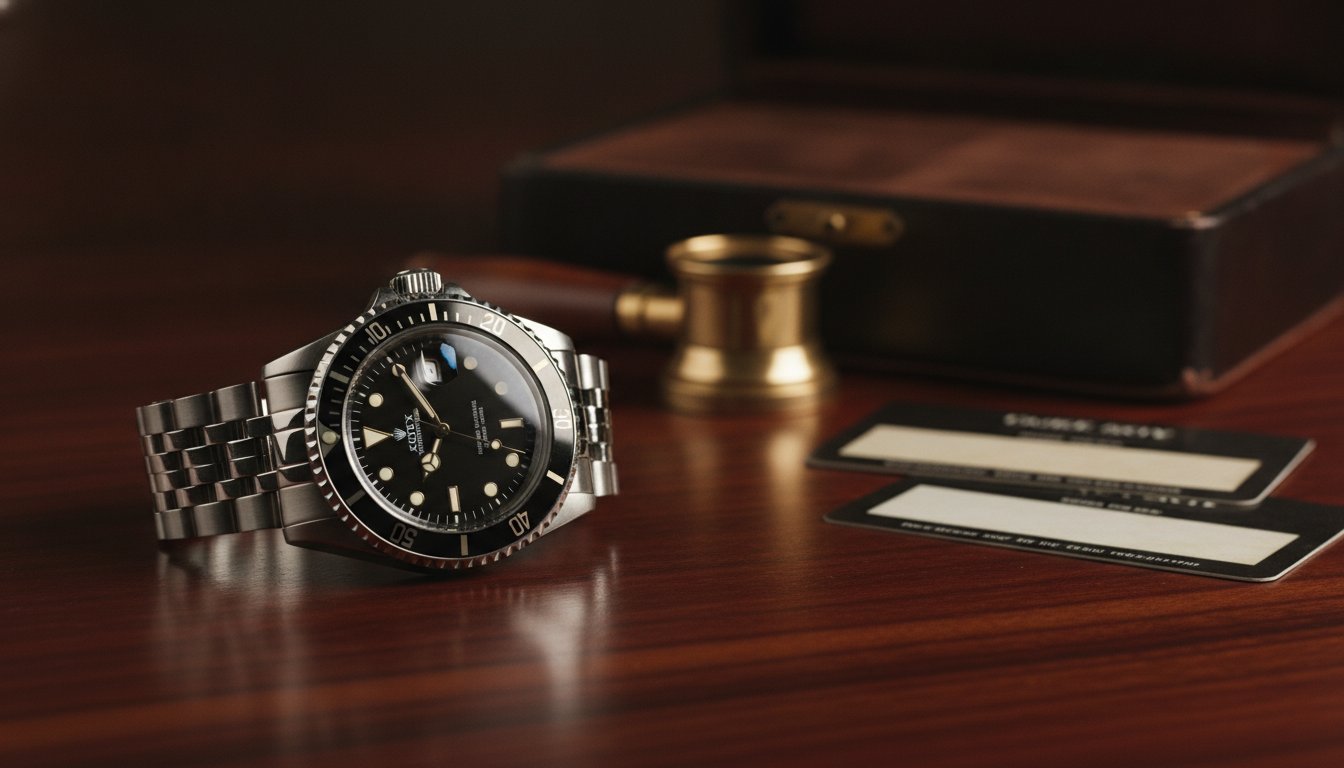
Would you walk away from a pristine Rolex Submariner simply because the original owner misplaced a piece of green cardboard a decade ago? For many enthusiasts, the prospect of buying a watch without box and papers feels like a calculated risk that borders on reckless. You've likely been told that missing documentation is a definitive red flag for counterfeits or a guarantee of poor resale value in the future. It's a valid concern in a market where authenticity is everything.
However, for the informed collector, these "naked" timepieces represent one of the most significant opportunities in the secondary market. This guide will teach you how to safely capitalize on the 10% to 20% discounts often found when original packaging is absent. We'll provide a clear checklist for verifying a watch's legitimacy and explain why a robust 5-year in-house warranty provides more practical security than a weathered paper slip. You'll soon understand exactly when the documentation matters and when it's merely an expensive distraction from a high-quality investment.
Key Takeaways
- Identify the significant financial opportunities available by capitalizing on the 10% to 25% price reductions found on "naked" luxury timepieces.
- Master the professional verification framework to ensure authenticity and avoid the risks associated with buying a watch without box and papers.
- Learn to distinguish between essential documentation and mere presentation items to determine when papers truly impact a watch's long-term value.
- Discover why a specialized 5-year in-house warranty offers more practical protection and peace of mind than original manufacturer documentation.
- Utilize specialized tools and registries to verify provenance, ensuring your acquisition is free from legal or ethical concerns.
Understanding the "Full Set" Concept in Luxury Horology
A "full set" represents the complete original presentation of a high-end timepiece. This typically includes the outer cardboard box, the ornate inner presentation box, and the manufacturer's warranty papers or cards. For many, these items are the birth certificate of a timepiece, documenting its origins and confirming its legitimacy within the brand's ecosystem. They provide a sense of completeness that appeals to the meticulous nature of serious collectors.
These documents are critical because they link a specific serial number to a precise date of sale and a recognized authorized dealer. This chain of custody is essential to understanding watch provenance, as it provides a historical record that many enthusiasts find reassuring. However, the reality of the secondary market is that many exceptional pieces are sold "naked." Buying a watch without box and papers doesn't inherently mean the watch is illegitimate; it simply means the physical trail of its origin has been interrupted by time or circumstance.
The Anatomy of Watch Documentation
Documentation has evolved significantly over the decades. Older vintage models often feature "punched papers," where the serial number was physically perforated into a paper certificate. Modern iterations from brands like Rolex or Patek Philippe utilize plastic warranty cards with magnetic strips or embedded chips. While instruction manuals and hang tags add a layer of collector swag, they're secondary to the warranty card itself. Interestingly, a contemporary service record from a reputable facility can often be more valuable than an original paper from twenty years ago. It proves the watch has been maintained and verified recently. This offers a level of technical security that a decades-old, expired warranty card cannot provide.
Why Do Papers Go Missing?
Papers frequently disappear for reasons that have nothing to do with the watch's authenticity. Many original owners weren't collectors; they were individuals who purchased a luxury item to wear and enjoy. For them, the bulky box was an inconvenience to be discarded or tucked away in an attic. In cases of estate settlements or inheritance, watches are often kept in jewelry boxes while the original packaging remains forgotten in a safety deposit box or a basement. This separation is common. It creates a distinct pricing advantage for savvy buyers who prioritize the mechanical integrity of the watch over the presence of a cardboard box. When buying a watch without box and papers, you're often simply benefiting from the previous owner's lack of foresight regarding future resale trends.
The Financial Advantage: Calculating the Discount for Missing Papers
The primary motivation for buying a watch without box and papers is, undeniably, the financial leverage it provides. In a market where a full set is often treated as the gold standard, the absence of original packaging creates a distinct pricing tier. On average, you can expect a discount ranging from 10% to 25% compared to an identical model with its documentation intact. This price gap isn't a reflection of the watch's mechanical quality. Instead, it's a concession to the collector's preference for completeness.
For the pragmatic buyer, this discount represents an opportunity to acquire a superior timepiece that might otherwise sit just outside their budget. The capital saved by opting for a "naked" watch can be significant. It allows you to prioritize the physical condition of the case and the health of the movement over the presence of ephemeral cardboard and plastic.
Price Impact by Brand
Brand sensitivity plays a major role in how deep these discounts run. For a Rolex, a missing warranty card can result in a price reduction between $1,000 and $3,000, depending on the model's rarity and demand. You can explore how these factors influence current market trends in our guide to Rolex Prices 2026. High-tier manufacturers like Patek Philippe and Audemars Piguet see even sharper declines. While an "Extract from the Archives" can sometimes be requested from the manufacturer, the process is often costly and time-consuming; this friction is factored into the initial asking price. Conversely, brands like TAG Heuer, Omega, or Breitling experience smaller, though still meaningful, price adjustments.
When the Discount Is Worth the Trade-off
The "sweet spot" for value often lies in modern pre-owned timepieces where the original manufacturer warranty has already expired. If the factory coverage is no longer active, the physical card serves little functional purpose beyond historical record. This makes a "naked" watch the superior choice for a daily wearer. Why pay a premium for a box that will sit in a closet? This approach is particularly effective for entry-level luxury buyers looking to step up into a higher-tier brand or for those seeking discontinued models where movement health is the priority.
While there is official guidance on counterfeit risks that every second-hand buyer should review, working with a reputable specialist ensures these risks are managed through professional verification. If you value the engineering on your wrist more than the storage in your drawer, exploring our collection of pre-owned luxury watches is the most efficient way to maximize your investment without compromising on prestige.
Navigating the Risks: Authenticity, Theft, and Resale Value
While the financial upside is compelling, the psychological barrier to buying a watch without box and papers often stems from a fear of the unknown. The primary concern is the authenticity gap. In the high-end horological world, a "Frankenwatch" represents a significant risk. These are timepieces that contain a mix of genuine parts from different models or periods, or aftermarket components hidden within a legitimate case. Professional authentication goes beyond a surface glance; it requires a deep technical inspection of the movement's finishing and serial number consistency to ensure every component belongs to that specific reference.
A common misconception is that prestigious manufacturers will refuse to service a watch that lacks its original warranty card. In reality, once a brand like Rolex or Audemars Piguet confirms a watch is genuine, they are typically happy to perform maintenance. In many ways, a modern service receipt from the manufacturer provides a fresh, verifiable layer of provenance. This document acts as a contemporary substitute for the lost original paperwork, confirming the watch's legitimacy in the eyes of the brand itself.
The Stolen Watch Concern
Stolen property is a legitimate anxiety when documentation is missing. To mitigate this, professional intermediaries utilize international databases like The Watch Register to check serial numbers against police reports and insurance claims. This process filters out items with a compromised history before they ever reach the showroom floor. When you purchase from an established, US-based dealer, that business assumes the legal burden of provenance. They perform the necessary due diligence on every acquisition, ensuring your investment is ethically sound and legally secure.
The Impact on Future Resale
It is vital to understand that resale liquidity operates on a different, yet stable, scale for "naked" watches. While you secure a lower entry price today, you should expect to pass that same discount along to the next owner in the future. These pieces are often easier to sell as "daily wearers" because the next buyer isn't paying a premium for a pristine box they don't intend to use. This makes them highly liquid among practical enthusiasts. For a deeper look at how to position your timepiece for the secondary market, consult our Guide to Pre-Owned Luxury Watches. This strategic perspective ensures you view your acquisition as a functional piece of engineering rather than a fragile museum relic.

The Professional Verification Framework: How to Buy with Confidence
Successfully buying a watch without box and papers hinges on moving from emotional desire to clinical verification. While the missing documentation creates a financial entry point, your security rests on a structured vetting process. This framework shifts the focus from a piece of cardboard to the mechanical integrity of the timepiece and the reputation of the entity selling it. In this context, the invoice from a premier dealer effectively becomes your new set of papers, backed by professional liability and expert scrutiny. It's about establishing a new chain of custody that prioritizes current condition over historical packaging.
Inspecting the Watch Itself
Luxury timepieces possess a distinct tactile quality that is difficult to replicate. A physical inspection begins with the serial number, typically engraved between the lugs or etched into the rehaut on modern models. This number must be crisp, uniform, and consistent with the brand's production era. Beyond the engravings, the weight and "feel" of the movement provide immediate feedback. High-end calibers operate with a rhythmic precision that feels substantial and smooth. We also verify that the dial, bezel, and hands are period-correct. A vintage Rolex with modern service hands might be genuine, but it shouldn't be priced the same as a piece with all original components.
The Dealer Advantage
The "Buy the Seller" rule is the cornerstone of the secondary market. While an anonymous online rating offers some insight, it cannot replace the security of an established business with a physical presence and a legacy of high-value transactions. A reputable specialist assumes the risk on your behalf by performing rigorous due diligence before a watch ever enters their inventory. This includes verifying the movement's finishing against manufacturer standards and checking serial numbers against global registries. Absolute Verification is the gold standard for secondary market dealers. It's a commitment that every component is authentic and every timepiece is legally sourced, providing a level of transparency that individual sellers simply cannot match.
A clear, written return policy and a comprehensive in-house warranty serve as far better protection than a twenty-year-old expired warranty card. When documentation is absent, these professional safeguards provide the long-term security required for a confident purchase. If you're ready to secure your next timepiece with total peace of mind, you can browse our authenticated collection to find high-tier models backed by our industry-leading 5-year warranty.
Securing Value at Luxury of Watches: Beyond the Original Papers
Luxury of Watches was established in 1999 to bridge the gap between high-tier prestige and pragmatic market value. While the process of buying a watch without box and papers requires diligence, it shouldn't be a source of stress. The final step for any collector is finding a partner who eliminates the residual anxiety of the secondary market through professional accountability. We don't just facilitate transactions; we provide a comprehensive security infrastructure that replaces the need for original documentation. Every timepiece in our inventory undergoes a rigorous authentication protocol that scrutinizes the movement, serial numbers, and physical components to ensure absolute legitimacy.
Our approach to pricing is rooted in transparency. When we acquire a "naked" watch, the financial advantage we secure is passed directly to you. This allows you to own a masterpiece from manufacturers like Patek Philippe or Audemars Piguet without the traditional retail premiums. Our experts act as knowledgeable intermediaries, helping you choose the right model based on its mechanical heritage and long-term value potential. This level of support ensures that your focus remains on the craftsmanship of the watch rather than the absence of its original packaging.
Why Our 5-Year Warranty is the New Standard
An original manufacturer warranty typically lasts only two years and is often long expired by the time a watch reaches the pre-owned market. In contrast, our 5-year in-house warranty provides a modern standard of mechanical reliability that a decades-old paper slip cannot match. It covers the movement and essential functions, offering a level of peace of mind that is actually functional rather than just symbolic. Buying from a business with a legacy dating back to 1999 means you're supported by decades of technical expertise. We assume the responsibility for the watch's performance, ensuring that your investment remains as precise as the day it was crafted.
Curating Your Collection with Luxury of Watches
Building a world-class collection requires access to a diverse and vetted inventory. Our selection features iconic models from brands like Rolex, Cartier, and Breitling, each verified for quality and provenance. We understand that a high-value purchase requires more than just a digital storefront. Our specialists are available to discuss the specific allure of individual models and guide you through the nuances of different technical movements. Every transaction is handled with the utmost security, including fully insured global shipping to ensure your timepiece arrives in pristine condition. If you're ready to capitalize on the unique value of the pre-owned market, you can Browse our certified pre-owned collection today.
Elevating Your Collection with Strategic Acquisitions
The decision of buying a watch without box and papers shouldn't be viewed as a compromise. Instead, it's a sophisticated entry point into the world's most prestigious manufacturers. By prioritizing the mechanical integrity of the movement and the reputation of a trusted dealer, you can secure high-end timepieces at significant market discounts. While original documentation provides a historical snapshot, a current professional verification and a robust warranty offer the practical security required for modern ownership.
At Luxury of Watches, we've spent decades refining a process that prioritizes your peace of mind. Our rigorous authentication standards ensure every piece is genuine, while our five-year in-house warranty provides mechanical protection that far exceeds original manufacturer terms. We combine this expertise with A+ rated customer support and secure, insured global shipping to ensure your acquisition is as seamless as it is rewarding. It's time to shift your focus from the packaging to the precision of the engineering on your wrist.
Explore Authentic Pre-Owned Luxury Watches with a 5-Year Warranty and discover how accessible true prestige can be when you have the right partner by your side.
Frequently Asked Questions
Does a missing box and papers mean a watch is fake?
No, a missing box and papers doesn't automatically indicate a counterfeit timepiece. Documentation is frequently lost during household moves, estate settlements, or simple neglect over several decades. While papers are a helpful tool for verification, their absence is a common reality in the pre-owned market. Professional authenticators rely on technical movement inspections and serial number verification rather than cardboard packaging to determine a timepiece's legitimacy.
How much of a discount should I get for a watch without papers?
You should typically expect a discount between 10% and 25% when buying a watch without box and papers. This range depends heavily on the brand's market sensitivity and the model's desirability. For high-demand brands like Rolex or Patek Philippe, the price reduction is often more significant than for entry-level luxury brands. Savvy buyers use this pricing gap to acquire a higher-tier model that would otherwise exceed their budget as a full set.
Can I get replacement papers for a Rolex or Omega?
No, manufacturers like Rolex and Omega do not issue replacement warranty papers or cards. These documents are unique to the original point of sale and cannot be recreated by the brand. However, you can often obtain a service card after a successful factory maintenance appointment. While this isn't an original birth certificate, it provides official brand confirmation of the watch's authenticity and its current mechanical health.
Will a manufacturer still service my watch if I don’t have the papers?
Yes, luxury manufacturers will service your timepiece regardless of whether you possess the original paperwork. Once the service center verifies the watch is genuine, they'll proceed with the necessary maintenance. In fact, receiving a service invoice from the brand is an excellent way to establish new provenance. it acts as a contemporary document that proves the watch is authentic in the eyes of the manufacturer itself.
What is the best way to prove a watch is authentic without documentation?
The most reliable way to prove authenticity is through a technical inspection by a qualified horological specialist. Experts examine the movement's finishing, the precision of the engravings, and the consistency of the serial numbers against known production records. When buying a watch without box and papers, a professional appraisal or a detailed invoice from a reputable dealer serves as your primary proof of legitimacy and legal ownership.
Is a watch without papers a bad investment?
A watch without papers isn't a bad investment if you pay the appropriate market price at the time of purchase. While the future resale value will be lower than a full set, your initial acquisition cost is also significantly reduced. The market for naked watches remains stable and liquid, especially for enthusiasts who intend to wear their timepieces daily. You're simply trading a collector's premium for immediate financial value.
What is the difference between original papers and an Archive Extract?
Original papers are the specific sales records from an authorized dealer, while an Archive Extract is a document issued later by the manufacturer's heritage department. Brands like Patek Philippe provide extracts that confirm the watch's production date and original configuration based on their internal ledgers. While an extract doesn't replace the original warranty card, it's a highly respected substitute that verifies the watch's historical specifications and authenticity.
Why do some collectors refuse to buy watches without a full set?
Some collectors insist on a full set because they value historical completeness and maximum resale potential within the collector community. For those treating watches as safe-bound assets, the original packaging is a vital component of the item's collector-grade status. However, this preference creates a significant opportunity for practical buyers. If you prioritize the engineering on your wrist over the storage in your closet, missing papers represent a logical financial discount.