
A Guide to Different Watch Lume Types: How They Glow and Age
Posted by Luxury of Watches on 16th Oct 2026
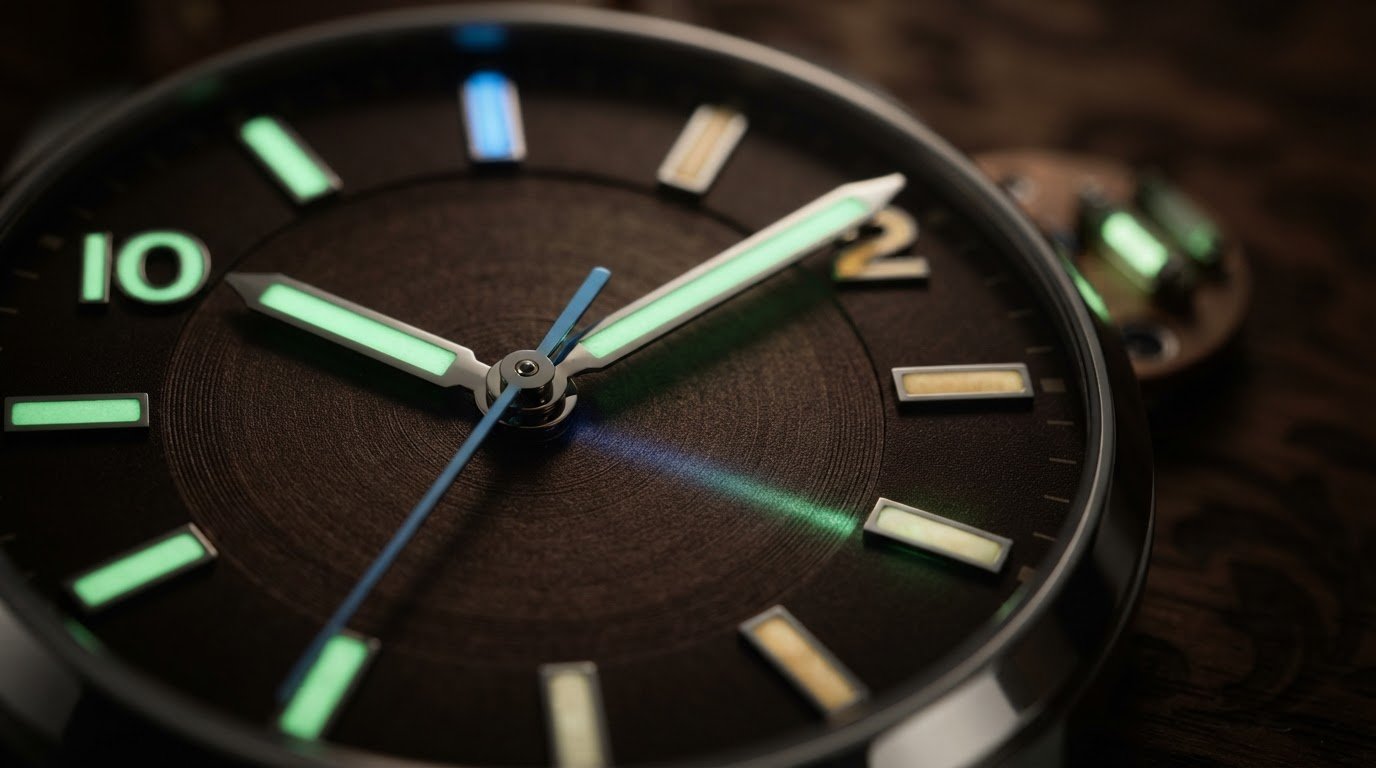
What if the brightest-looking watch isn’t the one whose lume works the way you expect? A watch’s glow is only part of the story: the key difference is how that light is produced. This guide to different watch lume types explains the distinction, so unfamiliar terms don’t make it harder to compare luminous details.
It’s easy to confuse vintage radioactive materials with modern glow-in-the-dark pigments, or to expect every luminous dial to stay bright all night. In practice, some lume needs to absorb light before it glows, while other types produce a continuous glow through a different mechanism. Appearance and performance also vary with the material, its condition, and the watch’s design.
Here, you’ll learn how photoluminescent and radioluminescent lume work, how radium and tritium fit into watchmaking history, and why tritium gas tubes differ from older luminous paint. You’ll also see what charging, fading, and aged-looking lume can tell you, and what they can’t. With that context, you can assess lume as one detail in a watch’s overall design and condition, whether you’re exploring a contemporary timepiece or a pre-owned classic.
Key Takeaways
- Use the guide to different watch lume types to compare how lume is energized, rather than judging it by brightness alone.
- Learn why vintage lume materials and modern luminous pigments shouldn’t be confused when considering a watch’s history.
- Assess lume by observing its appearance, comparing details, and documenting what you see, while treating it as one clue among many.
- Consider how color, glow, and dial design fit your legibility needs and personal style; no lume type is ideal for every wearer.
- Place luminous details in the context of the watch’s overall condition and design before drawing conclusions about its age or authenticity.
What Is Watch Lume, and Why Do Watches Glow in the Dark?
Watch lume is luminous material applied to or incorporated into watch components to make them easier to read in low light. It’s most often found on the hands and hour markers, where a visible glow helps you distinguish the time when the dial is dim or surrounding light is limited. Some watches also use lume on selected dial details. Others have no lume, relying instead on ambient light, contrast, or other design features.
Lume isn’t a single material. The key distinction is how it produces light: some types need to absorb light before glowing, while others generate a continuous glow through a different mechanism. That difference helps make sense of descriptions in a guide to different watch lume types. Photoluminescent materials, for example, absorb energy from light and then release it as a visible glow. Super-LumiNova is a prominent example used in modern watchmaking.
Where Is Lume Found on a Watch?
Look first at the hands and hour markers. Luminous material may appear as filled sections or small applied markers, positioned to help you identify the hands and read the hours at a glance. A watch may illuminate only some components, and the placement and amount of lume vary by design.
Not every bright-looking detail is luminous. Polished metal can catch and reflect available light, while a decorative dial element may be there for visual interest rather than low-light legibility. Lume emits visible light; reflective surfaces redirect light that is already present. In a lit room, both can appear bright, so observing the watch in reduced light can help you tell which details actually glow.
How Does Lume Make a Watch Easier to Read?
In low light, luminous hands and markers create visible points against the dial. Their position and contrast help the eye distinguish the hands and read the time without relying entirely on surrounding illumination. A clearly placed hour marker, for instance, can provide a useful reference for interpreting where a hand falls.
Legibility depends on more than glow alone. The arrangement of markings, contrast between luminous material and dial, and viewing conditions all matter. A strong glow right after exposure to light doesn’t necessarily mean it will remain equally visible later. Nor does a luminous dial guarantee that every detail will be easy to distinguish in every environment.
- Placement: Hands and hour markers are useful only if their positions are easy to distinguish.
- Contrast: Luminous details stand out more clearly when they’re visually distinct from the dial.
- Viewing conditions: Ambient light and how much the watch has been exposed to light can affect what you see.
Start by identifying which components glow, then consider how their placement and contrast support reading the dial. The material behind that glow explains why watches can behave differently, even when their lume looks similar at first glance.
The Main Watch Lume Types: Radioactive Paint, Tritium, and Photoluminescent Pigments
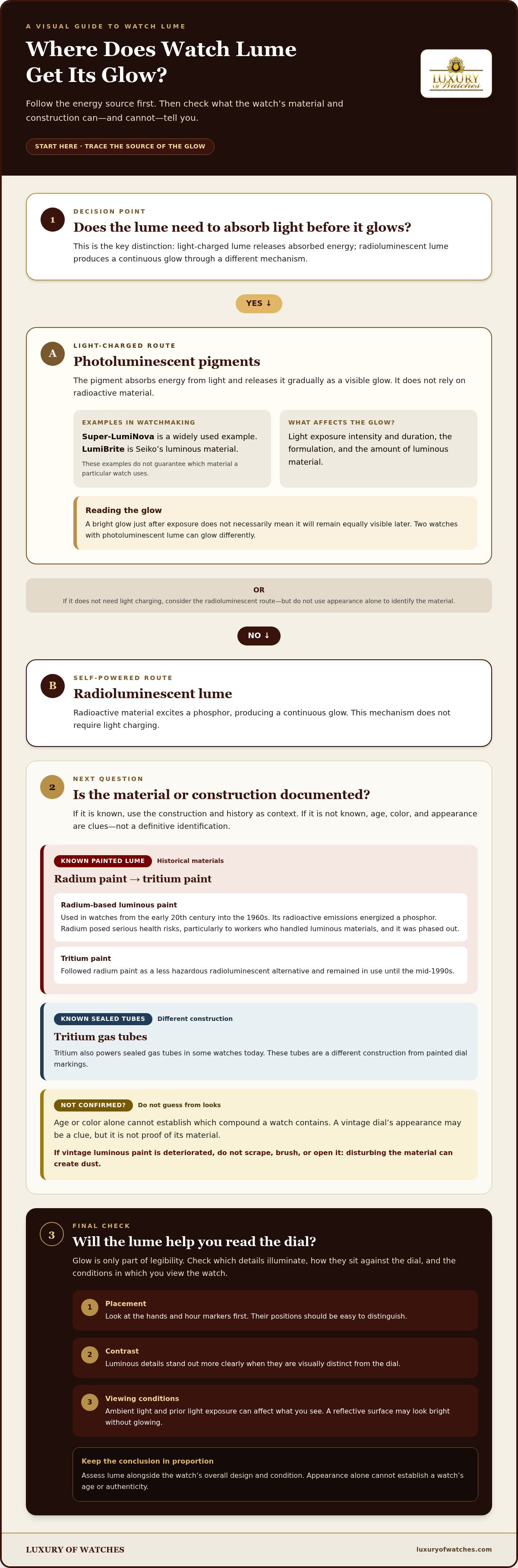
The clearest way to compare lume is to ask where its energy comes from. Radioluminescent lume is self-powered: radioactive material excites a phosphor, producing a continuous glow. Photoluminescent lume is light-charged: its pigment absorbs light and releases it gradually. This difference tells you whether a watch needs exposure to light before its markings glow, but it doesn’t determine by itself how bright or long-lasting that glow will appear.
Radium and Tritium: Earlier Generations of Luminous Material
Radium-based luminous paint appeared in watches in the early 20th century and was used into the 1960s. Its radioactive emissions energized a phosphor in the paint. Because radium posed serious health risks, particularly to workers who handled luminous materials, it was phased out. Tritium paint followed as a less hazardous radioluminescent alternative and remained in use until the mid-1990s. Tritium also powers sealed gas tubes in some watches today, a different construction from painted dial markings.
These materials are not simply older versions of modern light-charged lume. A vintage dial with deteriorated radioactive paint calls for care: don’t scrape, brush, or open it, since disturbing the material can create dust. Age or color alone can’t establish which compound a watch contains, so treat appearance as a clue, not a definitive identification.
Photoluminescent Pigments: Modern Light-Charged Lume
Modern photoluminescent pigments absorb energy from light, then emit a visible glow as that energy is released. They don’t rely on radioactive material. Super-LumiNova is a widely used example, while LumiBrite is Seiko’s luminous material. These are industry examples, not a guarantee that a particular watch uses either one.
Performance depends on more than the name of the pigment. The intensity and duration of light exposure, the formulation, and the amount of luminous material can all affect what you observe. Two watches can therefore glow differently even if both use photoluminescent lume. A quick look immediately after exposure won’t necessarily show how their glow compares later.
| Lume category | Energy source | Needs light charging? | Broad historical context |
|---|---|---|---|
| Radium paint | Radioactive decay energizes phosphor | No | Early 20th century to the 1960s |
| Tritium paint or gas tubes | Tritium energizes phosphor | No | Paint used into the mid-1990s; sealed tubes remain in use |
| Photoluminescent pigments | Absorbed light energy | Yes | Modern non-radioactive lume |
This guide to different watch lume types gives you a useful starting point for interpreting luminous details, without treating a glow as proof of age or condition. As you compare luxury watches, consider lume alongside the dial’s design and the timepiece’s broader history.
How Watch Lume Types Compare in Color, Glow, and Aging
A lume sample has two appearances to consider: its color in ordinary light and the glow it emits in darkness. Neither color nor brightness tells the whole story. Different materials, formulations, application thicknesses, and watch conditions can all affect what you see. Lume performance varies with its formulation, application, condition, and exposure to light.
Why Do Lume Color and Glow Differ?
The material can look one color on the dial and emit another when glowing. Photoluminescent pigments, for example, are available in different glow colors, including yellowish-green and bluish-white. Their daytime appearance may be more subdued, and the hands, markers, dial color, and surrounding finishes influence how those tones look on the watch.
Some modern designs deliberately use cream or beige lume to evoke the patina associated with older watches. This vintage-inspired look is sometimes called “fauxtina,” but a warm daytime hue alone doesn’t show whether lume is old or newly applied. Nor does a particular glow color establish a specific brand or production era. Treat color as a design and observation detail, not identification evidence.
Does Watch Lume Fade or Lose Its Glow?
Photoluminescent lume gradually dims after absorbing light as its stored energy is released. That temporary fading is part of how it works, not by itself evidence of damage. The result can vary with the light exposure before viewing, pigment formulation, the amount and placement of material, and the viewing environment. A single brightness check, especially right after charging, can’t establish how the watch will look later.
Long-term changes are a separate matter. Aging, storage, and the condition of the luminous material can affect its appearance and performance. In tritium-based lume, radioactive decay also reduces the energy available to excite the phosphor over time; tritium’s half-life is approximately 12.3 to 12.5 years. That figure describes radioactive decay, not a guaranteed schedule for a watch’s visible glow, which also depends on the construction and condition of its luminous components.
| What you observe | What it may reflect | What it can’t prove alone |
|---|---|---|
| Daylight color | Pigment, application, age, or design choice | Exact material or production date |
| Glow color | The luminous formulation and its appearance in darkness | Brand, authenticity, or overall condition |
| Dimmer glow after exposure | Energy release, charging conditions, or material condition | That the lume is defective or original |
When comparing watches, note the lighting conditions and whether each dial had similar exposure before judging brightness. Photographing the same details in ordinary light and darkness can help distinguish surface color from emitted glow. Still, lume condition is only one piece of context. It can’t independently establish a watch’s age, originality, or authenticity; those judgments require a broader assessment of the timepiece.
In this guide to different watch lume types, the most useful comparison is not simply “bright” versus “dim.” Look at color, behavior after exposure, and visible condition together, then interpret those observations alongside the watch’s design and history.
How to Assess Watch Lume Without Misreading Its Age or Condition
Lume can offer useful clues about a watch, but a visual check has limits. Differences in color, brightness, and placement may reflect the material, the design, or changes over time. Use a consistent, non-invasive approach, and treat what you observe as one part of a broader assessment, not a shortcut to dating or authenticating a timepiece.
A Non-Invasive Visual Check for Lume
Start with the dial and hands under ordinary light. Note the lume’s visible color, whether it appears consistent across components, and whether any areas look uneven or deteriorated. Don’t touch, scrape, open, or dismantle the watch to inspect luminous material. Older paint may be fragile, and disturbing it can create dust.
If you compare glow, keep the conditions as consistent as possible: use similar light exposure, viewing distance, and surroundings. A glow observed after strong light exposure shouldn’t be compared directly with one seen after shorter or different exposure. Record what you see rather than treating a single observation as a definitive test.
- Observe: View the hands and dial details in ordinary light, noting color, placement, and visible condition without handling the lume.
- Compare: If assessing glow, keep light exposure and viewing conditions consistent across observations.
- Document: Write down observations or take photographs in both ordinary light and darkness, noting the conditions.
- Consider context: Compare the lume with the dial, hands, known history, and the watch’s overall condition.
What Lume Can, and Cannot, Tell You About a Watch
The type and appearance of lume may suggest a broad period of manufacture. For example, a luminous material associated with an earlier era can be a helpful clue when it fits the watch’s known history. But watches can be altered, repaired, or fitted with replacement components, and similar-looking lume can have different explanations. Color or glow alone doesn’t establish a precise production date.
Look at the whole picture. The dial, hands, case, documented provenance, and consistency between components all add context. A mismatch between the lume and other details may prompt further research, but it isn’t proof of a problem by itself. Likewise, even lume that appears consistent with a watch’s era can’t establish authenticity. A guide to different watch lume types helps explain what you’re seeing; it can’t replace a careful assessment of the complete timepiece.
For a broader view of condition, consider how luminous details fit with the dial, case, and other features described in a guide to pre-owned luxury watches. Explore authentic pre-owned luxury watches with the full timepiece in mind, rather than judging a watch by lume alone.
Choosing a Watch With Lume: Match Legibility, Style, and Collecting Priorities
The right lume depends on what you expect from a watch. If you often need to check the time in dim conditions, luminous hands and markers may be a practical priority. If you mainly wear a watch in well-lit settings, the dial’s overall design, proportions, and finish may matter more. Neither radioluminescent nor photoluminescent lume is automatically the better choice for every wearer or timepiece.
When Is Lume a Meaningful Feature?
Think about your routine. A quick glance in a darkened room or outdoors after sunset can be easier with clearly defined luminous hands and hour markers. Consider whether you prefer an always-visible glow or are comfortable with lume that needs prior light exposure. The placement and contrast of luminous details matter as much as the material category.
There’s a design trade-off, too. A dial with prominent luminous markings can emphasize utility, while a restrained dial may better suit someone who values a clean, dress-oriented appearance. These are preferences, not rules: a watch can balance legibility and elegance in different ways. No brand name alone tells you how a specific watch’s lume looks or performs, so evaluate the individual timepiece rather than relying on assumptions.
Explore Luxury Watches With Confidence
Before deciding, consider four points together: how you’ll wear the watch, how its lume behaves, whether its design appeals to you, and how the luminous details fit the watch’s overall condition and history. For a pre-owned timepiece, the condition and consistency of the dial and hands are part of that broader picture. Lume can support a choice, but it shouldn’t outweigh every other consideration.
- Intended use: Decide how often low-light legibility will matter in your daily routine.
- Lume behavior: Consider whether you prefer light-charged glow or a continuous glow from a self-powered system.
- Visual preference: Look at the color and placement of luminous details in the context of the entire dial.
- Watch context: Consider lume alongside condition, design, and relevant history rather than treating it as a standalone verdict.
This guide to different watch lume types can help you describe what you value, but the final choice is personal. Choose lume according to intended use, visual preference, and the context of the watch as a whole. For broader brand context, a luxury watch brands guide can help frame your research across established manufacturers.
Luxury of Watches guarantees the authenticity of its watches, offering reassurance as you consider a timepiece. Explore its selection of authentic new and pre-owned luxury watches with your priorities in mind, and let lume be one considered detail in a decision shaped by the complete watch.
Choose the Details That Make a Watch Yours
As you consider your next timepiece, think beyond how its dial looks at first glance. The right choice should suit the way you wear a watch, the design you’re drawn to, and the details you’ll appreciate over time. This guide to different watch lume types can help you approach that decision with a more informed eye, while leaving room for personal taste.
Luxury of Watches brings more than 25 years of experience and has served over 15,000 customers. Explore its selection of authentic luxury watches to find a timepiece that reflects your priorities, from its overall character to the details that matter in daily wear.
Explore authentic luxury watches and take the next step toward a watch that feels right for you.
Frequently Asked Questions
What are the main types of lume used on watches?
The main types are radioactive lume, including historic radium paint and tritium-based systems, and non-radioactive photoluminescent pigments. Tritium may appear as painted markings on older watches or inside sealed gas tubes on some modern designs. To compare a specific watch, look for its lume material in reliable model documentation rather than inferring it from the dial’s color. This guide to different watch lume types explains the distinctions.
Is watch lume radioactive?
Some lume is radioactive, but not all. Radium and tritium-based lume use radioactive materials, while photoluminescent pigments such as Super-LumiNova are non-radioactive. If you’re examining a vintage watch and don’t know what its luminous markings contain, keep the watch intact and don’t disturb the dial or hands. A dial’s appearance alone can’t reliably identify its material, especially if components have been replaced.
How does photoluminescent watch lume charge?
Photoluminescent lume charges by absorbing light, whether from daylight or an indoor source. For example, leaving a watch in a dim room may provide less charging light than placing it near a bright window. The result depends on exposure conditions and the material, so ordinary indoor lighting may not produce the same glow as stronger illumination. Avoid using heat as a way to charge a watch.
How long does watch lume glow after exposure to light?
There isn’t one reliable glow time for every watch. The visible glow changes as stored energy is released, and the result depends on the lume formulation, the amount of light absorbed, and how well the markings can be seen in the surrounding darkness. A phone photo can also misrepresent brightness because camera exposure varies. For a meaningful comparison, assess watches under similar lighting and viewing conditions.
Why do some watches glow blue while others glow green?
The glow color comes from the luminous material’s formulation, not necessarily the watch’s brand or age. For instance, Super-LumiNova C3 glows yellowish-green and is used as a brightness benchmark; BGW9 glows light bluish-white and is listed at about 95% of C3’s relative brightness. Those figures describe specific grades, not every green or blue lume application, so color alone isn’t a dependable performance measure.
Can lume help identify how old a vintage watch is?
Lume can contribute to an estimate of a watch’s era, but it can’t date a watch on its own. A material or application style may be consistent with a broad period, while replacement hands, a refinished dial, or later servicing can complicate the picture. Compare the luminous details with the model’s documented specifications, serial information, and service history before drawing conclusions about originality or age.
Does watch lume wear out over time?
Yes, lume can change as it ages, and its glow or physical condition may become less consistent. Photoluminescent lume can also appear dim simply because it hasn’t absorbed much light before viewing. Uneven color or brightness between hands and markers might reflect age, different components, or past work; it isn’t proof of a defect by itself. Don’t scrape or open a watch to investigate lume changes.