
What Wrist Do You Wear a Watch On?
16th Mar 2021
When it comes to luxury watches, it’s critical to treat them with the utmost care. A common question among customers is “What wrist do you wear a watch on?” It may surprise you to know that how and where you wear your watch can affect its longevity.
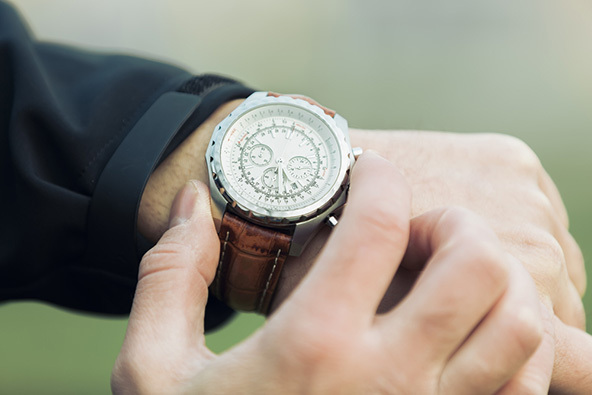
The Non-Dominant Theory
Typically, the accepted rule is that you should wear your watch on your non-dominant wrist. This means that for most people being right-handed, you’ll wear your watch on the left arm. The logic behind this practice is that your non-dominant hand is used less frequently throughout the day, so when it’s on that wrist, your valuable watch is less likely to sustain damages from dings or scratches. Wearing the watch on your non-dominant hand also means it’s less likely to get in the way of whatever you’re doing. But what if you’re in the 10% of the population that is left-handed? The obvious choice would be to wear the watch on your right wrist. While you can, it’s not always this straightforward.
What If You’re Left-Handed?
Left handed people face unique challenges when choosing how to wear watches. The majority of watches are made for right-handed individuals so that they can wear them on the left wrist. This means the crown sits in the right position for the dominant hand to adjust it. However, left-handed wearers can still find great watches for their needs.
Many manufacturers design their watches with the crown located at the left hand side. Those are sometimes referred to as “destro” watches. They are perfect to wear on your right wrist. The crown faces the correct direction for easy adjustment with your dominant hand.
Personal preference plays a big role in this decision. Some left handed individuals choose to follow tradition and wear their watch on the left wrist anyway. They simply take extra care to protect it during daily activities. Some, for their own comfort, wear it on the right wrist even when this isn’t ideal in terms of where the crown is located.
When you’re engaging in a physical activity, such as swimming or snorkeling, wearing a dive watch or sport watch will be uncomfortable on your dominant hand. Consider your lifestyle when deciding which wrist works best. Those who are left handed and work with their hands usually prefer having their dominant hand free. This helps in avoiding damage to the watch and also keeps the wrist comfortable while at work.
Modern watch straps make it easier to wear watches on either wrist comfortably. Adjustable straps and clasps make it just as effective, regardless of the hand you use. The trick is finding something that feels natural and protects your watch. Don't let traditional rules limit your personal style and comfort.
Watch Design and the Wearer
Many people say that you can buck tradition and wear the watch on whichever wrist is most comfortable for you. Of course you can, but that may not be the way the designer intended it.
When you look at a watch, you’ll notice that the crown sits at either the three o’clock position or the nine o’clock position. The latter is less common because most watches are designed to be worn on the left wrist by the 90% of people who are right-hand dominant. The watch’s crown should always face down toward your hand rather than up toward your shoulder when it’s on your wrist because this makes it easier to adjust the time on the watch face using your other hand.
Naturally, if you try to put the watch on the other wrist in the same position, you’ll be looking at the watch face upside down. This occurs most of the time if you put the watch on the right wrist because the crown is at three o’clock. This means the watchmaker determines the wrist you should wear your watch on.
Shop Our Luxury Watch Collection
What Is the Watch Crown?
A manually wound watch always features a small knob—usually ribbed—at three o’clock or nine o’clock positions. This knob, called the crown, winds the springs inside the watch when it’s turned. This must be done periodically to power a manual watch, and the crown is also used to set the hands to the correct time.
Not all watches with crowns are manual power. If your watch is a manual wind, also known as a mechanical watch, it’s solely powered by turning the crown clockwise. Mechanical watches should be wound completely every 24-36 hours. Your watch may have a crown but have an automatic movement, which means your wrist’s kinetic energy powers the mechanism. So, if you twist the crown and never meet resistance, you don’t need to manually wind your watch for it to tell time.
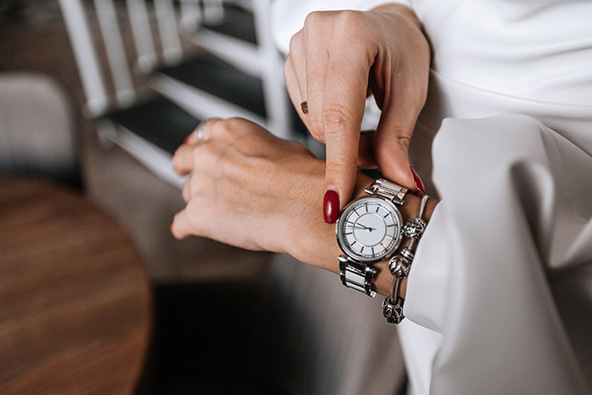
The Right Way
For left-handed people, this may seem like a limiting realization where watch selections are concerned. The reality is that if you’re left-handed, it’s perfectly fine to wear your watch on the left wrist. Simply take extra care not to bang or scratch it throughout the day. If you find it gets in the way, you can always seek Destro watches, which means “right” in Italian. These are watches designed with the crown at nine o’clock, specifically intended for the right wrist. You can also opt for a neutral self-winding watch, which can be worn the same way on either wrist due to its lack of a crown.
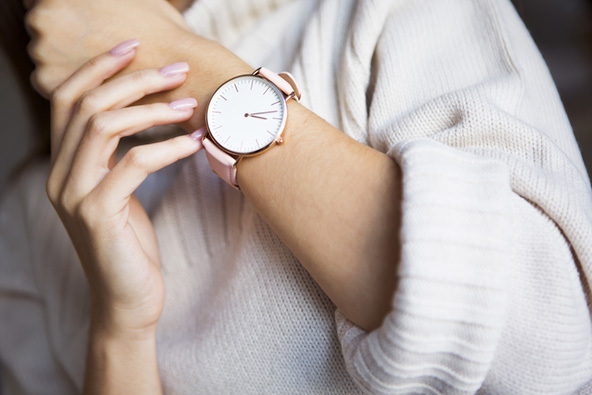
What Wrist Do You Wear Your Watch On? Men vs. Women
Another myth that circulates online is that a separate set of rules applies to men and women regarding how to wear a watch. There is no reason for men to wear a watch on the left wrist while women wear it on the right or vice versa. Watches for both genders are designed with the same principles regarding the crown’s position and how it’s most accessible to the individual’s dominant hand. So, whether you’re shopping for Men's Rolex watches or Women’s Rolex watches, the parameters for how to wear them remain the same.
Browse Our Collection of Rolex Watches
Shop Our Luxury Watches
So, what wrist do you wear your watch on? The simple conclusion is your left, typically as the manufacturer intended. Regardless of your dominant hand, there’s a luxury watch that suits your needs and your style. Explore our online store for renowned brands like Rolex, Cartier, Audemars Piguet, or Omega. Or enjoy the prestige of a unique vintage piece with our selection of authentic pre-owned Rolex watches.
Frequently Asked Questions
-
What wrist do right-handed people wear watches on?
Most right handers wear a watch on their left wrist. For most people, this is the non-dominant wrist. Your dominant hand remains available for writing, eating, and more. The watch crown is forward enough for easy access with your right hand. This is the best fit for most watch straps and designs. Personal preference does come into play, but the left wrist is most common for right-handed wearers.
-
Can I wear my watch on my right hand?
Yes, you can wear watches on your right hand if you are left-handed and that’s what feels the most comfortable. Some people are just more comfortable that way, whether they’re right handed or left. Lefties will generally opt for the right wrist. But everyday watches could feel uncomfortable because the crown points in the wrong direction. Search for watches made for the left hand, as they're the ones with the crown placed right. Personal preference and comfort should dictate which wrist you choose.
-
Why do some people wear watches on their right hand?
There are several reasons why people wear watches on their right hand. Left-handed wearers often prefer protecting their dominant hand. Some follow tradition from within their culture or family. Other military watch-wearers put watches on the right hand for practical reasons. The perfect watch is the one that suits your lifestyle no matter what wrist you choose to wear it on.
-
Which hand should men wear watches on?
Men should wear watches on their non-dominant wrist, which is usually the left hand. That’s standard practice in the watch world. But personal preference speaks louder than strict rules. Take your own style and daily activities into consideration. Watch bands should fit snugly on either wrist. The key is protecting your watch from damage while keeping it accessible.
-
Which hand should women wear watches on?
Women follow the same guidelines as men when deciding which hand to wear watches on. The non-dominant wrist is standard, usually the left hand. There's no special rule that women should wear watches differently than men. Some women like to match their watch with other jewelry they’re wearing on their wrist. Opt for watch straps that suit your own style. The right watch is right on whatever wrist it feels comfortable.
-
What is the meaning of wearing a watch on a right hand?
Wearing a watch on the right hand doesn't have one specific meaning. For left-handers it just makes sense and is more comfortable. In some cultures, wearing watches on the right hand shows personal style or independence. Military traditions sometimes require right-hand wear for practical reasons. There's no universal symbolic meaning, and personal preference drives this choice for most people.