
What Does Rolex Oyster Mean? The Story Behind Rolex's Iconic Case
21st Jan 2026
The term "Rolex Oyster" appears on countless watch dials, yet many buyers don't fully understand what it signifies. People search for "what does rolex oyster mean" because this designation appears prominently on some of the world's most coveted timepieces, but its meaning isn't immediately obvious. Is it a model? A material? A special feature?
Oyster is a technology, not a model. It represents Rolex's revolutionary waterproof case design that fundamentally changed watchmaking when introduced in 1926. This innovation transformed wristwatches from delicate dress accessories requiring careful handling into durable instruments capable of withstanding water, dust, and demanding environments. This guide explains the complete story behind this iconic designation and why it matters when choosing luxury watches.
What Does "Rolex Oyster" Mean?
"Oyster" refers to Rolex's patented waterproof watch case design, first introduced in 1926. This revolutionary case features a screw-down crown, hermetically sealed caseback, and screw-down bezel that work together to create a water-resistant seal protecting the movement inside.
Why Rolex chose the name "Oyster": Founder Hans Wilsdorf selected this name because oyster shells create hermetically sealed environments protecting the delicate organism inside—exactly what Rolex's new case design accomplished for watch movements. Just as an oyster shell keeps water out while sheltering the pearl within, the Rolex Oyster case shields precision mechanics from moisture, dust, and contaminants.
"Oyster" refers specifically to the waterproof case technology, while "Oyster Perpetual" combines the Oyster case with Rolex's Perpetual (self-winding automatic) movement. Many people mistakenly think Oyster Perpetual is a single model, but it actually describes any Rolex watch featuring both technologies—which includes most of the brand's catalog.
According to Rolex's official documentation, the Oyster case "represented a major technical breakthrough" that established the foundation for all subsequent Rolex innovations. This wasn't mere marketing—the Oyster case solved genuine problems plaguing early wristwatches and set new industry standards for reliability.
The History of the Rolex Oyster Case
1926: The world's first waterproof wristwatch
Hans Wilsdorf's vision transformed watchmaking when Rolex introduced the Oyster case in 1926. Before this innovation, wristwatches were notoriously vulnerable to moisture.
The engineering breakthrough: Rolex engineers developed three integrated innovations that created truly waterproof protection:
- Screw-down crown
- Hermetically sealed caseback
- Screw-down bezel
Mercedes Gleitze's historic swim: In 1927, just one year after introduction, swimmer Mercedes Gleitze wore a Rolex Oyster during her historic English Channel crossing. After more than 10 hours in cold seawater, the watch emerged fully functional, providing undeniable real-world proof of the Oyster case's effectiveness.
Watchmaker and historian Nicholas Foulkes notes in his research, "The Mercedes Gleitze swim wasn't a marketing stunt, it was genuine engineering validation. This single event demonstrated that wristwatches could rival pocket watches for reliability, fundamentally shifting consumer perceptions."
How the Rolex Oyster Case Works
Three Key Components:
- Screw-down crown. Rolex's screw-down crown features multiple gaskets that compress when threaded into the case tube, creating watertight barriers.
- Hermetically sealed caseback. The caseback screws onto the middle case with precision threads machined to tight tolerances. Compression gaskets positioned between caseback and case create continuous seals around the entire circumference.
- Screw-down bezel. The bezel secures the sapphire crystal to the case middle using screw threads and gaskets. This creates a sealed chamber protecting the dial and hands.
Achieving Pressure Resistance
These three components work together to create a sealed environment resistant to water pressure at specified depths. The gaskets are made from synthetic rubber compounds and are resistant to aging, temperature extremes, and saltwater.
Important clarification: Rolex doesn't claim watches are "waterproof" they specify "water-resistant to [depth]." This distinction matters legally and practically. Water-resistant means the watch withstands water pressure to rated depths under controlled conditions. Waterproof would imply unlimited protection under all circumstances. Gaskets age, seals require maintenance, and user error can compromise protection.
What Is the Difference Between Rolex Oyster and Oyster Perpetual?
|
Term |
Meaning |
|
Oyster |
Waterproof case design with screw-down crown, bezel, and caseback |
|
Perpetual |
Self-winding automatic movement that winds through wrist motion |
|
Oyster Perpetual |
Complete watch featuring waterproof Oyster case + Perpetual automatic movement |
Many assume "Oyster Perpetual" designates a specific model. In reality, it describes any Rolex watch combining these two technologies.
Which Rolex Watches Use the Oyster Case?
Popular Oyster models:
- Submariner: Iconic dive watch with 300m water resistance, rotating bezel
- Datejust: Classic dress-sports watch with date window, available in numerous configurations
- Daytona: Legendary chronograph with tachymeter bezel for racing
- Explorer: Field watch designed for extreme environments and expeditions
- GMT-Master II: Dual-timezone watch developed for pilots
- Cosmograph Daytona: Motorsports chronograph
- Sea-Dweller: Professional dive watch with helium escape valve, 1,220m+ water resistance
- Yacht-Master: Nautical sports watch with functional regatta timing
- Air-King: Aviation-inspired watch with distinctive dial
- Milgauss: Anti-magnetic watch for scientists and engineers
Models NOT using Oyster cases:
The Cellini collection uses traditional watch cases without Oyster waterproofing, featuring dress watch aesthetics prioritizing elegance over tool-watch durability. These watches target formal occasions where slim profiles and classic styling outweigh rugged construction needs.
Approximately 95% of Rolex production features Oyster cases. This reflects consumer preference for versatile watches suitable for both daily wear and challenging conditions. The Oyster case's durability and water resistance make rolex oyster watches appropriate for virtually any situation—swimming, hiking, formal events, business meetings—eliminating the need to own separate sport and dress watches.
Oyster Case vs Other Rolex Case Designs
Oyster vs Cellini:
Cellini cases sacrifice water resistance for slimmer profiles and traditional dress watch aesthetics. These cases use conventional construction, snap-on or screw-down casebacks without comprehensive sealing, standard crowns without screw-down threading, and thinner proportions prioritizing elegance.
Oyster vs Sea-Dweller variations:
While Sea-Dwellers use Oyster case architecture, they incorporate additional engineering for extreme depths. The helium escape valve allows helium molecules to escape during decompression without damaging the watch. Thicker case construction, enhanced gaskets, and specialized crystals enable water resistance exceeding 1,220 meters (4,000 feet)—far beyond standard Oyster capabilities.
Why Oyster dominates for daily wear:
The standard Oyster case balances protection with wearability. Professional models offer enhanced water resistance but add thickness and weight unnecessary for most wearers. Standard Oyster cases provide 100-meter water resistance, which is adequate for swimming, snorkeling, and water sports, all while maintaining comfortable dimensions for all-day wear.
Water Resistance: What Rolex Oyster Really Guarantees
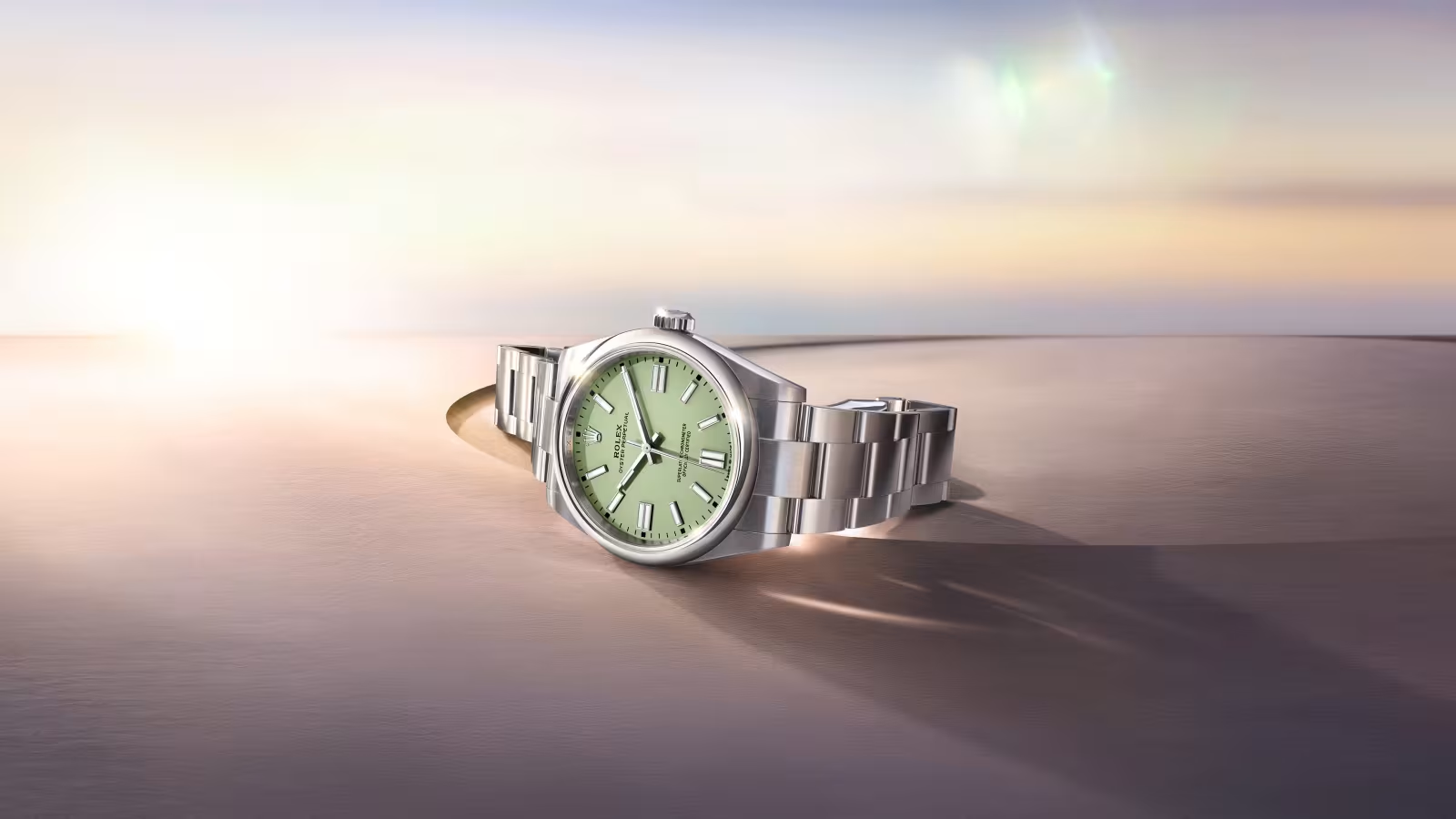
Standard Oyster water resistance: Most Oyster models offer 100 meters (330 feet) water resistance. This rating means the watch withstands pressure equivalent to that depth under laboratory conditions.
Professional Oyster models: Submariner (300m), Sea-Dweller (1,220m), and Deepsea (3,900m) feature enhanced Oyster cases with thicker crystals, additional gaskets, and reinforced construction enabling professional diving use.
Testing standards: Rolex exceeds industry standards when testing water resistance. According to ISO 6425 diving watch standards, manufacturers must test watches to 125% of rated depth. Rolex reportedly tests to even higher margins, ensuring real-world reliability exceeds specifications.
What Oyster does NOT mean:
- Not maintenance-free: Gaskets age and lose elasticity, requiring replacement every 5-10 years during service
- Not invincible: Operating the crown underwater (even if rated for that depth) can allow water entry
- Not guaranteed indefinitely: Without periodic service, water resistance deteriorates regardless of external condition
- Not foolproof: Impact damage, temperature extremes, and chemical exposure can compromise seals
Watch expert Eric Wind of Wind Vintage explains, "Oyster cases are remarkably durable, but they're mechanical systems requiring maintenance. Many owners assume 'waterproof' means forever, then face expensive repairs from water damage that proper servicing would have prevented.
Most watch guides discuss Oyster case features but ignore the psychological impact on ownership experience. Oyster cases allow owners to wear expensive watches daily without anxiety about weather, activities, or accidents. This practical durability explains why Rolex maintains resale value better than brands producing equally expensive but less robust watches.
Oyster Case Materials Explained
Oystersteel (904L stainless steel):
Rolex exclusively uses 904L stainless steel. The enhanced alloy composition provides superior corrosion resistance, particularly in saltwater environments. 904L maintains higher polish and resists scratching better than 316L. However, 904L's hardness makes it significantly more difficult and expensive to machine, requiring specialized equipment most manufacturers avoid.
Gold and Rolesor cases:
Rolex produces Oyster cases in 18k gold and Rolesor. These precious metal cases use identical waterproof architecture as steel versions. The screw-down components, gaskets, and sealing methodology remain consistent regardless of case material.
Material comparison:
While 316L steel provides adequate corrosion resistance for most applications, 904L's enhanced properties justify Rolex's investment in this premium material. Independent testing shows 904L withstands 2-3 times longer exposure to corrosive environments before showing deterioration compared to 316L.
Does "Oyster" Increase a Rolex's Value?
Approximately 95% of vintage Rolex market activity involves Oyster-cased watches. The Cellini collection, despite producing beautiful watches, commands significantly lower collector interest. The Oyster case represents an authentic tool-watch heritage that collectors value.
According to analysis from WatchCharts, Rolex Oyster models retain an average of 85-95% of retail value in the first five years, while competitors' comparable models average 60-75% retention. The Oyster case's proven durability reduces buyer concern about condition and longevity, supporting premium resale pricing.
Conclusion
The Oyster case, introduced in 1926 as the world's first waterproof wristwatch, transformed watchmaking by proving wristwatches could withstand demanding conditions while maintaining precision. Ready to explore the world of Rolex Oyster watches? Visit Luxury of Watches to discover our authenticated collection of iconic timepieces built on this legendary technology.
Frequently Asked Questions
What does Oyster mean on a Rolex watch?
"Oyster" on a Rolex dial refers to the watch's waterproof case design featuring a screw-down crown, hermetically sealed caseback, and screw-down bezel. The name comes from oyster shells, which create sealed environments protecting the organism inside—exactly what the Oyster case accomplishes for watch movements.
Is every Rolex an Oyster?
No, approximately 95% of Rolex watches use Oyster cases, but the Cellini dress watch collection uses traditional cases without Oyster waterproofing. Cellini watches prioritize slim, elegant profiles appropriate for formal occasions over tool-watch durability. These watches typically offer only 50-meter water resistance compared to Oyster models' 100+ meter ratings.
Is Rolex Oyster waterproof?
Rolex Oyster watches are "water-resistant" to specified depths rather than completely "waterproof." This distinction matters because water resistance depends on gasket condition, proper crown operation, and regular maintenance. Standard Oyster models offer 100-meter water resistance suitable for swimming and water sports. Professional models like Submariner (300m) and Sea-Dweller (1,220m) provide enhanced water resistance for diving.
What does Oyster Perpetual actually mean?
"Oyster Perpetual" combines two Rolex technologies, the Oyster waterproof case and the Perpetual self-winding automatic movement. The designation describes the engineering foundations of modern Rolex watches: waterproof cases protecting automatic movements that wind through wrist motion, eliminating manual winding needs while ensuring reliability in any environment.