
Build a relationship with a watch dealer through open price communication
Posted by Luxury of Watches on 12th Nov 2026
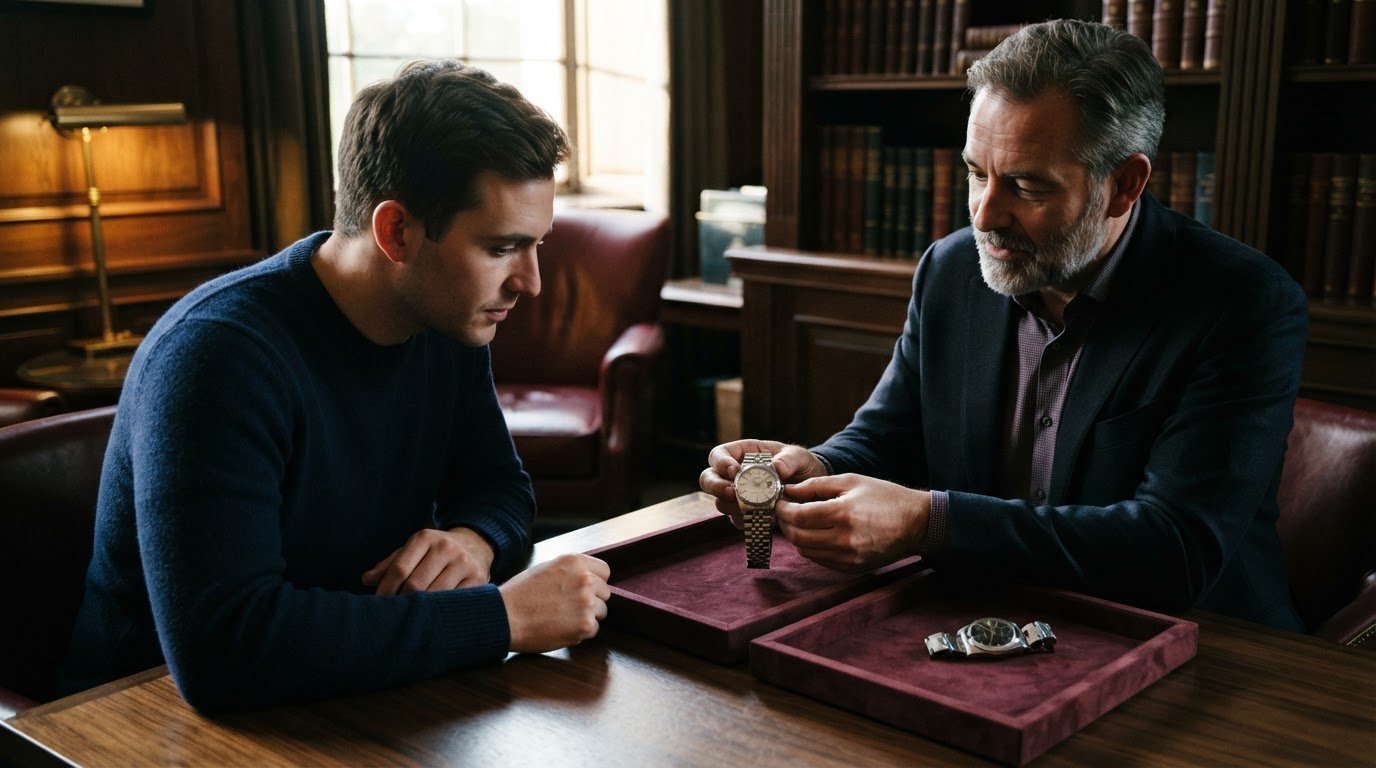
A lasting relationship with a watch dealer starts with candid, respectful communication, not pressure. Knowing how to build a relationship with a watch dealer means being clear about the models you want, asking direct questions about availability and terms, and staying engaged without treating every conversation as a negotiation.
It’s understandable to want clarity when a sought-after watch is difficult to find or prices shift. Be specific about your preferences, share when you’re open to alternative configurations, and ask thoughtful questions about the models that interest you. Consistent, polite follow-up helps keep communication natural, while honest conversations make it easier for a dealer to understand what matters to you.
This guide explains how to discuss availability and price changes, make the most of dealer events, and show respect for a specialist’s time and expertise. It also explores what a genuine connection may bring, from recommendations that better reflect your taste to invitations and opportunities to learn more about fine watchmaking. The aim is a relationship grounded in trust, realistic expectations, and a shared appreciation of exceptional timepieces.
Key Takeaways
- Explain which watch models you genuinely want and be candid about your budget and flexibility when discussing supply or price changes.
- Use dealer events and workshops to learn about watches, meet staff, and build rapport through thoughtful conversation.
- Respect a dealer’s time by following up politely, arriving on time, and listening to their expertise.
- A consistent, trust-based connection may lead to more tailored recommendations, invitations, and opportunities to learn about sought-after watches.
1. Proactive communication about supply and price changes
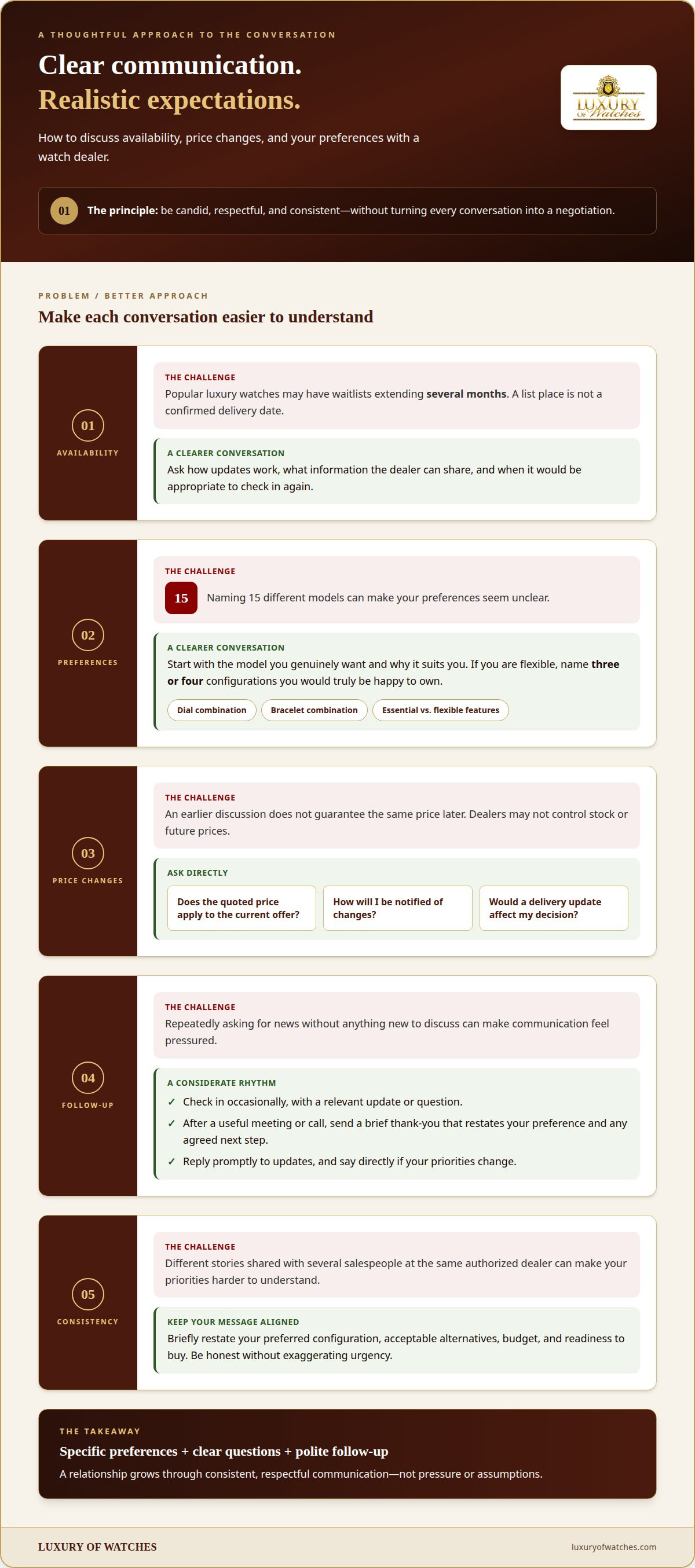
For popular luxury watches, waitlists can extend several months. Access depends on supply, demand, and the dealer’s process. A place on a list is not a confirmed delivery date, so ask how updates work and what information the dealer can provide.
Start with the particular model you genuinely want, then explain why it suits you. Naming 15 different models can make your preferences seem unclear. If you’d consider alternatives, identify three or four configurations you’d truly be happy to own, such as different dial or bracelet combinations. Be precise about which features are essential and which are flexible.
Ask how changes in supply or pricing could affect the watch you’re considering. A dealer may not control stock or future prices, but clear questions help establish what can be shared and when. Ask whether a quoted price applies to the current offer, how you’ll be notified of changes, and whether a delivery update affects your decision. Don’t assume an earlier discussion guarantees the same price later.
Keep conversations professional and consistent. State your interest, budget, and readiness to buy plainly, without exaggerating urgency. If you’re speaking with an authorized dealer, explain which Rolex model you prefer so the associate can share relevant updates. Check in occasionally, rather than repeatedly asking for news without anything new to discuss.
After a meeting or useful call, send a brief thank-you email that restates your preference and any agreed next step. Reply promptly to updates and take time to make a considered decision. If your priorities change, say so directly instead of leaving the associate with outdated expectations.
Keep your account of what you want consistent. Giving different stories to several salespeople at the same authorized dealer can make your priorities harder to understand. A concise follow-up can name your preferred configuration, mention acceptable alternatives, and ask when it would be appropriate to check in again.
2. Attending brand events and workshops
A product launch or exhibition offers a different setting from a purchase appointment. You can see models together, hear how a brand describes its design choices, and meet dealer staff outside a sales discussion. Shared interest in watches can build a connection beyond a single transaction.
Choose events connected to brands or watch styles you genuinely follow. Before attending, note a few topics you’d like to understand, such as a collection’s history, movement design, or differences between case materials. If you admire Rolex or Cartier, for example, ask how the brand’s design heritage informs its current models. Focus on learning, not securing a particular watch.
During an exhibition, let the conversation develop naturally. Ask a specific question about a model’s proportions, dial layout, or intended use, then listen before moving on. Other enthusiasts may offer useful perspectives. Keep the discussion courteous and avoid turning it into a comparison of purchase histories.
A workshop can make technical subjects easier to explore. Use the session to clarify unfamiliar terms or learn how craftsmanship shapes a watch’s design. If a demonstration covers a movement or finishing technique, ask how it relates to the models on display. A focused question shows genuine curiosity and helps staff understand what you value.
For collectors considering how to build a relationship with a watch dealer, continuity matters after the event. Recall one useful detail and mention it in a later conversation, such as a design feature from a launch or a workshop topic you’d like to explore further. Attend when the subject interests you, participate thoughtfully, and give staff room to speak with other guests. Informed, genuine conversation can turn a brief introduction into a more meaningful connection.
3. Respecting dealer time and expertise
Arrive on time for an appointment and give the conversation your attention. If you’ve booked time to discuss a particular watch, start with its features, fit, and intended use. A focused discussion helps the dealer offer relevant insight without revisiting details you could have shared beforehand.
There’s no universal budget or purchase-history threshold that every dealer expects from a new client. Expectations vary with the watch, its demand, and the dealer’s allocation policies. Be candid about your budget and the model you want; don’t imply a larger budget or purchase history than you have.
Listen when a specialist explains a movement, case material, or design distinction. If a recommendation differs from your first choice, ask what trade-offs inform it. For example, discuss how a case size wears before deciding whether it suits your wrist. A thoughtful exchange shows that you value expertise, even if you ultimately choose another model.
Patience matters. A dealer may need time to answer a detailed question or share an update, so avoid contacting the same salesperson every Tuesday without new information. Visit periodically and keep follow-ups relevant. Tracking 14 sales associates across six cities is an excessive approach; it can make conversations feel transactional rather than personal.
Keep appointments purposeful. Prepare details that help explain your decision, such as preferred size, dial, or wearing occasion. If your plans change, tell the dealer rather than leaving an outdated request in place. Avoid interrupting to push for an allocation or steering every topic back to availability. Ask, listen, and acknowledge useful guidance.
Trust develops through consistent conduct, not a single purchase. You don’t need to buy unwanted watches or jewelry to demonstrate interest. Respect the dealer’s time, respond clearly, and let conversations include the craftsmanship and design that drew you to watches in the first place.
4. Benefits of building a relationship with a watch dealer
A trusted connection may lead to more tailored recommendations or invitations to launches, exhibitions, and private viewings. For sought-after releases, waitlists can extend several months. Regular, respectful contact helps staff understand which watches genuinely suit your preferences, but does not guarantee access.
If you’re focused on one particular watch, build rapport with a dealer who understands your priorities. If you’re exploring different brands or needs, relationships with multiple dealers can make sense, as long as you communicate consistently with each.
To find a reputable dealer nearby, start with the brand’s official dealer listings, then review local business information and watch-enthusiast discussions. Compare reputation, pricing transparency, and customer service, rather than relying on a single glowing review.
Look for patterns in reviews, such as clear communication and consistent descriptions of a watch’s condition. An authenticity guarantee is meaningful when its written terms explain what documentation is provided and what recourse is available.
Buying jewelry, accessories, or another watch solely to build purchase history isn’t a sound strategy. Consider an additional purchase only if you genuinely want it and it fits your collecting priorities.
Before buying, review the condition description, supporting documentation, warranty terms, and return policy in writing. For a pre-owned watch, compare the stated condition with clear photographs and ask how authenticity is documented.
With a seller outside an authorized-dealer network, don’t assume warranty coverage, documentation, or return terms match those of an authorized purchase. Read the seller’s terms and understand the watch’s provenance before deciding.
If you’re considering a pre-owned timepiece, explore verified luxury watches and review the details that support an informed choice.
Regular interaction with authorized-dealer staff may lead to better service and priority access to sought-after watches that are unavailable to casual customers, while loyal customers may receive special pricing or incentives.
Luxury of Watches
If you’re ready to explore watches beyond a dealer relationship, Luxury of Watches offers Rolex Watches, Used Rolex watches, Pre-Owned Luxury Watches, and Breitling Watches. Its selection includes new and pre-owned luxury timepieces. Compare the models that suit your preferences, and consider each watch’s condition and documentation as part of your decision.
Luxury of Watches provides a comprehensive five-year in-house warranty on its authentic watch selection. This can be useful when considering a purchase alongside the communication and trust-building principles discussed above.
For help exploring luxury watches, contact Luxury of Watches.
Make your next watch decision with confidence
Turn your preferences into a clear buying brief: note the features you value most, the models you’re considering, and the questions that will help you assess each option. This keeps the decision centered on what you’ll enjoy owning, rather than pressure to secure a particular watch. It’s a practical foundation for building a relationship with a watch dealer while staying guided by your own priorities.
When you’re ready to explore, Luxury of Watches offers Rolex Watches, Used Rolex watches, and Pre-Owned Luxury Watches. Browse the selection and consider which watch best fits your interests and collecting goals.
Contact Luxury of Watches to discuss your interest in luxury timepieces. Approach your next decision with curiosity and care, and let your genuine appreciation for fine watchmaking guide the way.
Frequently Asked Questions
How should I introduce myself and communicate with a watch dealer?
Introduce yourself by sharing what draws you to a particular watch and what you hope to learn. Explain whether you’re comparing case sizes, choosing a daily-wear piece, or starting a collection. Keep your message concise, use a courteous tone, and ask one clear question at a time. This gives the dealer useful context without making the conversation feel like a scripted pitch.
How often should I follow up with a watch dealer without seeming pushy?
Agree on a suitable follow-up point with the dealer, then respect that preference. If you haven’t discussed timing, send a brief note after a meaningful change, such as a revised model preference or a decision to consider another configuration. Avoid repeated messages asking for the same update. A useful follow-up adds information or responds to something the dealer has shared.
What etiquette should I follow when visiting a watch dealer in person?
Be punctual, greet staff courteously, and explain what you’d like to see. Ask before handling a display watch, and follow the associate’s guidance while examining it. If you need to step away or end the visit, say so politely rather than leaving mid-conversation. These courtesies keep the appointment professional and leave room for a considered discussion.