
What to Look for When Buying a Pre-Owned Watch: The 2026 Collector’s Guide
Posted by Luxury of Watches on 21st Jul 2026
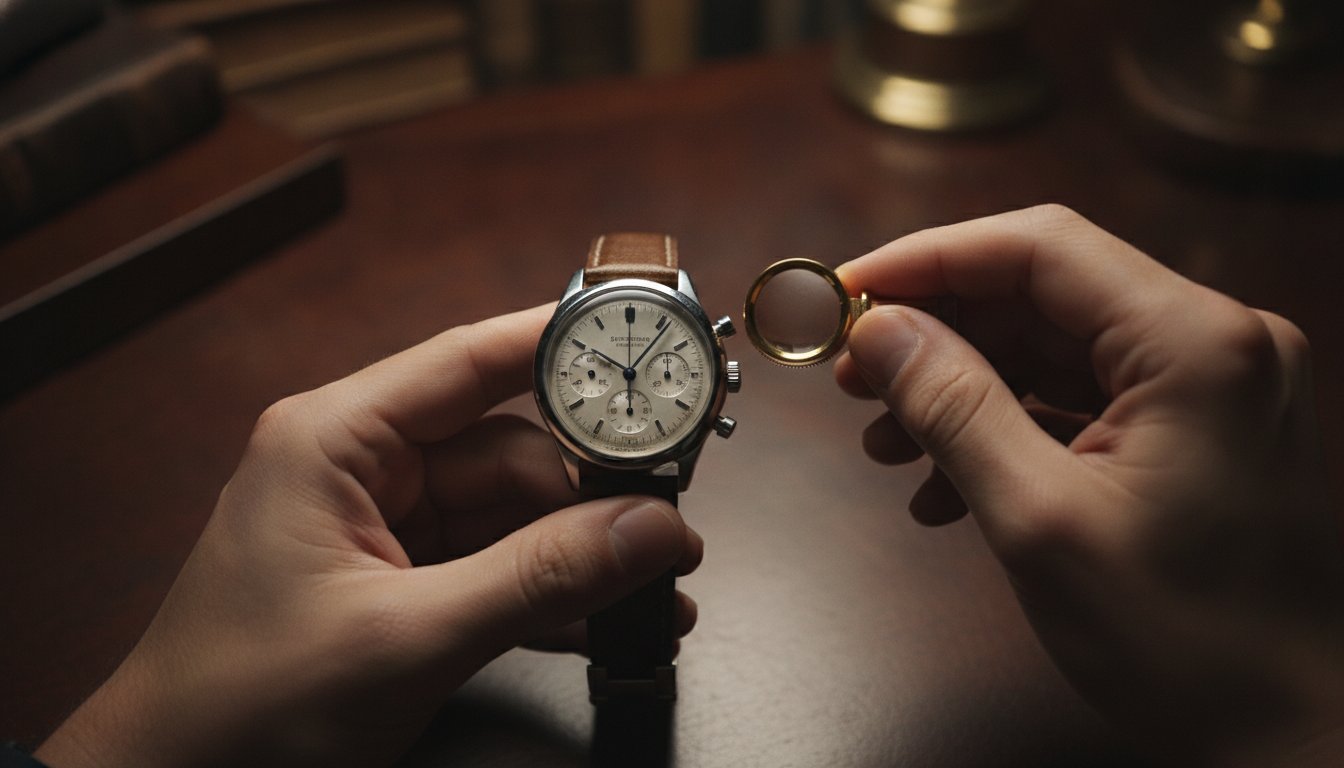
With Rolex steel model prices increasing by 5.6 percent in early 2026 and Swiss import tariffs impacting new inventory, the secondary market has evolved into the premier destination for discerning collectors. You likely recognize that acquiring a timepiece outside a traditional boutique can feel like a high-stakes gamble, especially when faced with the risk of a "frankenwatch" or the subtle distinctions between "mint" and "unworn" condition. It's a valid concern; the prestige of a Patek Philippe or Cartier demands absolute certainty regarding its horological integrity. Knowing exactly what to look for when buying a pre-owned watch is no longer just a recommendation; it's a prerequisite for protecting both your capital and your passion.
We've developed this 2026 guide to help you master the nuances of high-value transactions with the confidence of a seasoned expert. You will learn a clear framework for physical inspection, the critical importance of official documentation, and why a robust, five-year dealer-backed warranty often provides more security than an expired manufacturer's certificate. By understanding how to select a reputable intermediary who prioritizes absolute verification, you can move beyond the anxiety of the secondary market and focus on the timeless craftsmanship of your next acquisition.
Key Takeaways
- Bypass multi-year waitlists for iconic models like the Rolex Submariner while securing a timepiece that has already navigated the initial retail depreciation cliff.
- Master the technical nuances of what to look for when buying a pre-owned watch, including how to identify original case chamfers and verify the consistency of dial lume.
- Identify the essential components of a "Full Set" and understand why original documentation and chronometer certificates command a significant value premium.
- Recognize why a robust 5-year in-house warranty offers more practical security than the expired manufacturer coverage typically found on the secondary market.
- Gain confidence in your investment by learning to prioritize expert verification protocols that ensure every component meets rigorous horological standards.
The Strategic Advantage of Buying Pre-Owned Luxury Watches in 2026
The 2026 horological market has reached a definitive turning point. While Authorized Dealers continue to manage extensive waitlists for icons like the Rolex Submariner and GMT-Master II, the secondary market offers immediate gratification for the serious collector. Collectors have realized that waiting years for a phone call is no longer the only path to prestige. Instead, they're turning to expert intermediaries to secure these references today. This shift is driven by a desire for efficiency and a pragmatic approach to value. When you understand Rolex Prices 2026, it becomes clear that the secondary market often provides a more stable entry point than the volatile retail environment. With recent 2026 price hikes of 5.6 percent for steel Rolex models, the secondary market is where savvy buyers find their edge.
Market Dynamics: Retail vs. Secondary Value
Price stability remains the hallmark of the "Big Three" Patek Philippe, Audemars Piguet, and Rolex. These manufacturers represent roughly 64 percent of the total secondary market value. Buying pre-owned allows you to bypass the initial retail depreciation cliff, where a timepiece can lose up to 30 percent of its value the moment you leave the boutique. For expensive collectible watches, the secondary market isn't just a place for "used" goods; it's a strategic platform where price transparency and availability meet. This is a core part of what to look for when buying a pre-owned watch: the ability to acquire a high-tier asset that has already stabilized in value. In early 2026, over half of Rolex and Audemars Piguet models continue to trade above their original retail prices, proving that secondary market availability is the primary driver for modern collectors.
The 'New Old Stock' (NOS) Opportunity
Many collectors are surprised to find that the secondary market includes "New Old Stock" or unworn pieces from the current 2026 catalog. These timepieces come with zero wrist time, often still bearing factory stickers. This allows you to enjoy the aesthetic perfection of a brand-new watch without the retail hurdles. It also opens doors to discontinued references and "neo-vintage" icons that define modern horology. We've seen a massive surge in interest for smaller case sizes, such as 36mm and 37mm Royal Oaks, which are often only available through secondary channels. Finding these 2026 models with zero wrist time provides the same emotional satisfaction as a boutique purchase, but with the added benefit of immediate possession and a clear understanding of the watch's market trajectory.
The Physical Inspection: A 5-Point Condition Checklist
A successful acquisition relies on a disciplined eye and a methodical approach to physical scrutiny. When determining what to look for when buying a pre-owned watch, the physical condition provides the most honest narrative of the timepiece's history. While professional photography can be evocative, your inspection must focus on the technical details that define both aesthetic beauty and long-term value. Our collection of Pre-Owned Luxury Watches undergoes this exact scrutiny before being listed, ensuring every piece meets our rigorous standards.
- The Case and Bezel: Examine the lugs for crisp chamfers, which are the sharp, angled edges on the case. Evidence of over-polishing appears as rounded edges or softened lines, which significantly diminishes the watch's original silhouette and collector appeal.
- The Dial and Hands: Look for lume consistency across the hour markers and hands. You should also identify "service dials," which are later replacements that, while functional, can lower the value compared to a period-correct original dial.
- The Movement: Listen for excessive rotor noise in automatic calibers. When winding, the crown should offer a smooth, consistent resistance without any grinding or slipping.
- The Bracelet and Clasp: Check for "stretch" in Oyster or Jubilee links by holding the watch head and observing how much the bracelet sags. Excessive play indicates worn pins and potentially decades of heavy use.
- The Crystal: Inspect the edges of sapphire crystals for "flea bites," which are tiny chips often invisible to the naked eye. Also, check for scratches in the anti-reflective (AR) coating that can distort the dial's clarity under direct light.
Horological Integrity: Originality vs. Service Parts
Originality is the cornerstone of investment-grade horology. A "Frankenwatch," which contains mismatched movements, bezels, or dials from different eras, may look appealing but lacks the integrity required for value retention. Serious collectors prioritize "all original" examples where every component is period-correct. In 2026, high-resolution macro photography has become an essential tool for remote verification, allowing you to inspect the grain of the dial and the serial engravings between the lugs with absolute precision.
Mechanical Health and Amplitude
Beyond the visual, mechanical health is verified through timegrapher results. While a reading of +/- 2 seconds per day is excellent, it only tells part of the story. You must also consider the power reserve and the amplitude of the movement. Amplitude is the health indicator of the balance wheel's swing, measured in degrees; a low reading suggests the movement requires a full overhaul. Understanding these technical metrics ensures that your investment is as mechanically sound as it is visually stunning.
Deciphering Provenance: Box, Papers, and Serial Numbers
Provenance isn't merely about storage; it's a financial catalyst. In the 2026 secondary market, a "Full Set" commands a 10 to 15 percent price premium over watch-only examples. For a Rolex, this typically includes the outer and inner boxes, the green or red hangtag, the bezel protector, and the critical warranty card. Cartier enthusiasts expect the iconic red box and the stamped certificate of origin. These elements provide a tangible link to the timepiece's history, verifying that it hasn't been assembled from disparate parts. When considering what to look for when buying a pre-owned watch, the presence of these original accessories acts as a signature of a well-maintained investment.
Decoding serial numbers remains a vital skill for any serious collector. By matching the serial engraving to known production sequences, you can verify if the dial features or bezel materials are period-correct for that specific year. In 2026, many manufacturers have transitioned to digital e-warranties. These NFC-enabled cards allow for instant verification via smartphone, providing a level of security that traditional paper certificates cannot match. This technological shift has simplified the verification process for modern references, ensuring that the watch's digital identity matches its physical presence.
The Paperwork Myth: Is a Watch Without Papers Still Authentic?
It's a common misconception that a watch without papers is inherently suspect. While documentation adds significant market value, it doesn't define authenticity. A vintage piece from the 1990s may have lost its box over decades of ownership, yet its mechanical integrity remains flawless. In these scenarios, you should prioritize the physical condition and the reputation of the intermediary. Third-party authentication reports have become a standard way to bridge this documentation gap, providing a verified record of legitimacy even when the original warranty card is absent.
Identifying Counterfeits in the Modern Era
The rise of "Superclones" has made basic checklists insufficient for the modern buyer. These high-tier counterfeits often replicate the weight and external aesthetics of a Patek Philippe or Rolex with alarming accuracy. To find the truth, you must look at the final frontiers of horological craftsmanship. This includes inspecting the microscopic laser-etched crown at the 6 o'clock position on Rolex crystals or the intricate finishing on the movement bridges. For a deeper understanding of these nuances, consult our Guide to Pre-Owned Luxury Watches. True authenticity is found in the specific weight of the precious metals, the precision of the engravings, and the silent, smooth efficiency of a genuine caliber.

The Dealer Factor: Why the Warranty is Your Best Defense
Selecting a timepiece is only half of the challenge; the other half is selecting the entity that stands behind it. When you're determining what to look for when buying a pre-owned watch, the dealer's infrastructure is just as critical as the movement's beat rate. Private transactions often leave buyers vulnerable to mechanical failures that appear weeks after the sale. A professional retailer acts as an expert intermediary, assuming the technical and financial risks that an individual seller cannot. This de-risking process is what separates a speculative gamble from a secure investment in high-tier horology.
In-House Warranty vs. Manufacturer Warranty
Manufacturer warranties for brands like Rolex or Patek Philippe are often limited to a five-year window from the original retail purchase. On the secondary market, these warranties have frequently expired or are non-transferable, leaving you without a safety net. An in-house warranty bridges this gap by providing direct coverage for the movement, water-resistance seals, and timing accuracy. Luxury of Watches provides a dedicated 5-year in-house warranty on all authentic timepieces, offering a level of protection that far exceeds a standard "recently serviced" claim. This direct service model is often more efficient than factory centers, which can involve lengthy international shipping and months of waiting for simple adjustments.
Our commitment to horological integrity has been the cornerstone of our business since 1999. By maintaining a specialized focus on Rolex, Cartier, and other premier manufacturers, we ensure that every watch in our inventory meets a standard of excellence that honors the original maker's heritage. You don't have to worry about the logistical hurdles of factory repairs when you have a direct line to expert watchmakers who understand the nuances of your specific caliber.
Secure Transactions and Global Logistics
The security of your acquisition extends to the moment it reaches your wrist. High-value transactions require fully insured shipping protocols and "signature required" delivery to ensure the timepiece remains protected throughout its journey. You should always verify a dealer's reputation through independent horological forums and their longevity in the market. A dealer's reputation is the most valuable part of the watch's price. When you browse our selection of Rolex and Patek Philippe timepieces, you're investing in a verification protocol that has been refined over decades. This professional oversight ensures that every transaction is as polished and secure as the timepiece itself.
Finalizing Your Purchase with Luxury of Watches
Acquiring a luxury timepiece is a significant milestone that requires more than just technical knowledge. It requires a partner who understands the gravity of the investment. We curate a premier selection of Rolex, Cartier, and Breitling models, ensuring that every piece reflects the pinnacle of horological achievement. While you now understand what to look for when buying a pre-owned watch, our role is to execute those rigorous checks on your behalf. We act as your expert intermediary, providing the verification and security necessary to navigate the secondary market with absolute poise.
Our Commitment to Authenticity
Every timepiece in our inventory undergoes a multi-point inspection process that leaves no detail unexamined. We focus on high-tier brands such as Patek Philippe and Audemars Piguet, where the nuances of movement finishing and case geometry are paramount. Transparency is our signature; we provide detailed condition reporting and high-resolution macro-photography so you can see the exact state of the watch before it arrives. This level of disclosure ensures there are no surprises, only the satisfaction of receiving a timepiece that meets your exacting standards.
Our horological specialists are available to provide personalized support, answering technical questions about specific calibers or the heritage of a particular reference. This human element, combined with our technical expertise, creates a buying experience that is as refined as the watches we sell. Whether you're seeking a modern professional model or a discontinued icon, our team ensures you feel intellectually secure throughout the process.
Start Your Collection Today
Navigating our digital boutique is designed to be as efficient as a modern commerce platform while maintaining the exclusivity of a heritage boutique. You can easily filter by brand, material, or complication to find the specific reference that completes your collection. Once you've made your selection, our secure checkout and fully insured worldwide delivery protocols ensure your watch arrives safely at your door. We stand behind every sale with a 5-year in-house warranty, providing a level of long-term security that is rare in the pre-owned market.
The journey to owning a masterpiece of engineering begins with a single, confident decision. We invite you to explore our collection of authentic pre-owned luxury watches and discover the value of expert verification. Your next acquisition isn't just a watch; it's a legacy protected by our decades of expertise.
Securing Your Horological Legacy in 2026
The secondary market offers unparalleled access to the world's most coveted timepieces, provided you approach every transaction with a rigorous eye. By mastering what to look for when buying a pre-owned watch, from the crispness of case chamfers to the integrity of digital e-warranties, you transform a high-stakes purchase into a confident investment. You've learned that physical condition and provenance are only as reliable as the entity standing behind them. A watch is more than a tool for timekeeping; it's a store of value that deserves absolute verification.
Since 1999, Luxury of Watches has acted as a specialist intermediary for collectors who demand transparency and technical excellence. Our expertly verified Rolex and Patek Philippe inventory undergoes the exact scrutiny detailed in this guide to ensure every component meets original standards. While factory coverage often lapses, our comprehensive 5-year in-house warranty provides the enduring security your collection requires. Secure your next investment with our 5-year warranty at Luxury of Watches and enjoy the peace of mind that comes with decades of horological expertise. Your next masterpiece is waiting, perfectly preserved and ready for the wrist.
Frequently Asked Questions
Is it worth buying a pre-owned watch without the original papers?
It's absolutely worth acquiring a watch without papers if the timepiece's physical condition is exceptional and the price is adjusted accordingly. While "Full Sets" command a 10 to 15 percent premium, the lack of a warranty card doesn't invalidate the watch's authenticity. Professional dealers bridge this gap through rigorous internal verification and third-party authentication reports that confirm the piece's legitimacy even when documentation is absent.
How can I tell if a pre-owned Rolex has been over-polished?
You can identify over-polishing by examining the lugs for sharpness and the crown guards for symmetry. A watch that has been excessively polished will have rounded edges instead of crisp, defined chamfers. This thinning of the metal significantly impacts the watch's original silhouette and long-term collector value. Look for the original brushed or polished finish consistency across the entire case to ensure the metal's integrity remains intact.
What is a 'frankenwatch' and how do I avoid buying one?
A "frankenwatch" is a timepiece assembled from non-matching or aftermarket components, such as a movement from one reference inside the case of another. When considering what to look for when buying a pre-owned watch, the most effective defense is a dealer's multi-point inspection. Professional intermediaries verify that every internal and external component is period-correct for that specific serial number, ensuring the horological integrity of your investment.
Does a pre-owned watch still have a manufacturer's warranty?
Most pre-owned watches have already surpassed the standard five-year manufacturer's warranty window. Even if a factory warranty remains, it may not be transferable in certain jurisdictions or after a secondary sale. This is why we provide a comprehensive 5-year in-house warranty, ensuring your investment is protected against mechanical failure long after the original manufacturer's coverage has lapsed. This provides practical security for the modern collector.
What is the difference between 'mint' and 'excellent' condition?
"Mint" condition describes a timepiece that appears virtually identical to a brand-new model with no visible signs of wear or handling. "Excellent" condition allows for very minor, superficial hairlines on the polished surfaces that are only visible under specific lighting conditions. Neither grade should include deep scratches, dings, or evidence of significant metal loss. These distinctions are vital for accurately assessing the fair market value of a reference.
Why should I buy from a dealer instead of a private seller on a marketplace?
Buying from a dealer offers a level of security and mechanical guarantee that private sellers simply cannot match. Marketplaces often leave the burden of authentication on the buyer, whereas a reputable dealer assumes the risk by verifying every timepiece before the sale. Our specialized focus since 1999 ensures that your acquisition is backed by decades of technical expertise, secure global shipping, and professional recourse that private transactions lack.
How do I verify the serial number on a luxury watch?
You can find the serial number on modern Rolex models engraved on the rehaut at the 6 o'clock position; older models feature it between the lugs. Verifying this number against production charts is a key part of what to look for when buying a pre-owned watch. This process confirms that the model features, such as the dial type or bezel material, align perfectly with the specific production year and manufacturer records.
What should I do if my pre-owned watch is losing time?
If your watch is losing time, first ensure it is fully wound and hasn't been exposed to strong magnetic fields from household electronics. If the inaccuracy persists, the movement likely requires professional regulation or a service to address low amplitude. Utilizing a dealer-backed warranty allows you to have these technical adjustments performed by specialists efficiently, bypassing the months of waiting often required by factory service centers.