
Tourbillon Watches Explained for Beginners: Mechanics, History, and Value
Posted by Luxury of Watches on 23rd Sep 2026
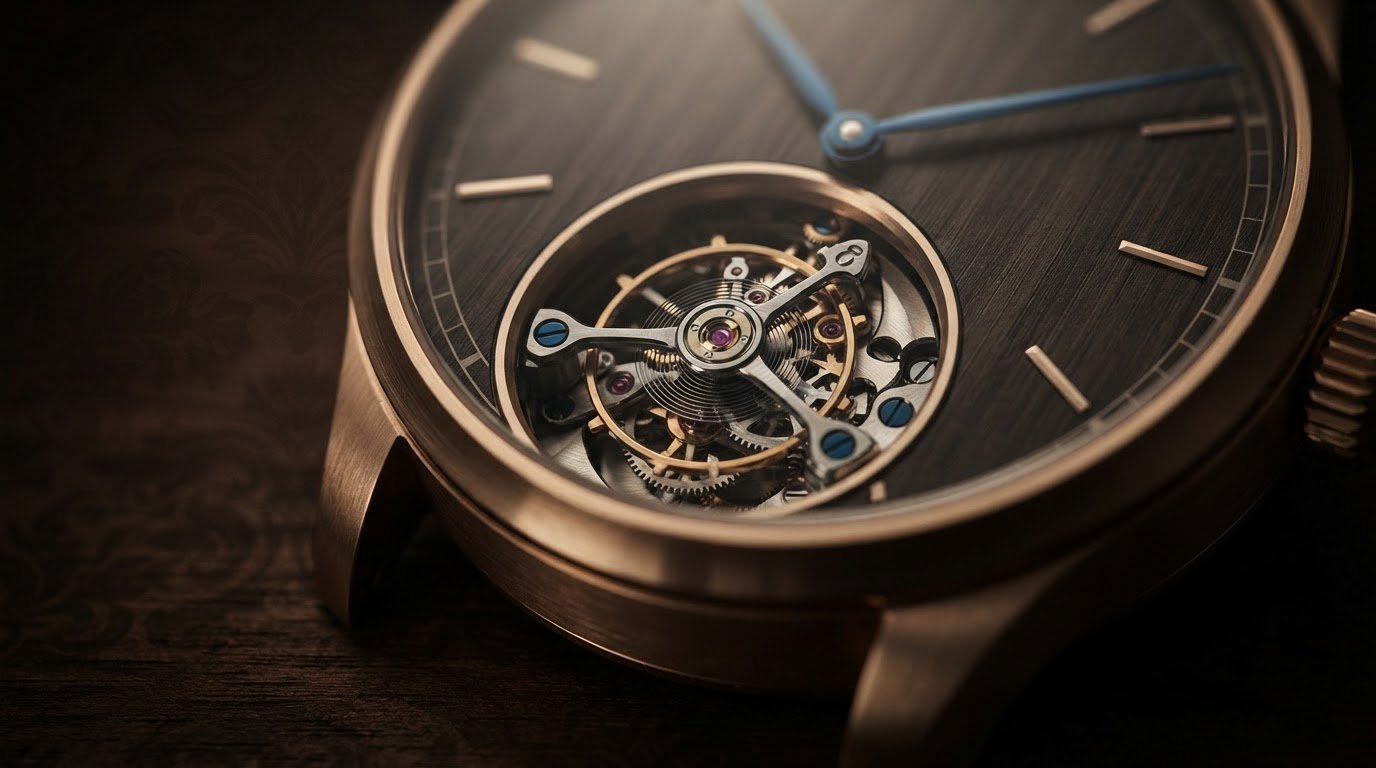
The most coveted complication in luxury horology doesn't exist to make your watch more accurate; it exists as pure kinetic sculpture. If you've ever felt intimidated by dense technical jargon, having tourbillon watches explained for beginners cuts right through the noise of balance springs, escapements, and positional error. You aren't alone if you wonder whether a rotating, gravity-defying cage actually serves a functional purpose on your wrist, or if it's simply an extravagant visual gimmick.
While natural arm movement renders its original 1801 utility largely obsolete today, the sheer micro-mechanical artistry required to assemble these mechanisms remains unmatched. In this guide, you'll discover how tourbillon watches function, why elite watchmakers still craft them, and how to evaluate these pinnacle timepieces with verified confidence. From traditional single-axis builds to breathtaking flying and multi-axis designs, here is your foundational introduction to appreciating high-horology craftsmanship.
Key Takeaways
- Understand the mechanical purpose of the rotating cage, originally designed to counter gravitational pull on pocket watch escapements.
- Distinguish between traditional bridged assemblies, cantilevered flying tourbillons, and advanced multi-axis constructions.
- With tourbillon watches explained for beginners, you can separate genuine micro-engineering from superficial open-heart dials while setting realistic expectations for daily wear.
- Learn how to evaluate high-horology complications on the secondary market by prioritizing movement verification and comprehensive warranty coverage.
What Is a Tourbillon Watch? The Beginner's Core Definition
At its core, a tourbillon is an intricate mechanical cage that continuously rotates a watch's regulating organ, specifically the balance wheel, balance spring, and escapement. Derived from the French word for "whirlwind," the device was engineered to counteract earth's gravitational pull. When a delicate mechanical movement remains stationary in an upright position, gravity tugs unevenly on its hairspring, inducing subtle timing drift known as positional error. Having tourbillon watches explained for beginners clarifies that this mechanism is no longer about strict timekeeping necessity; it represents the pinnacle of kinetic micro-engineering and horological artistry.
The Pocket Watch Dilemma: Abraham-Louis Breguet's 1801 Invention
During the late eighteenth century, gentlemen carried timepieces vertically inside waistcoat pockets. This fixed, upright posture subjected the sensitive regulating organ to relentless downward gravitational drag for hours at a time. The minute hairspring inevitably distorted under its own weight, causing pocket watches to run noticeably fast or slow throughout the day.
Master horologist Abraham-Louis Breguet solved this dilemma in 1801 by patenting the Tourbillon mechanism. Breguet reasoned that while gravity itself could not be suspended, its disruptive influence could be systematically neutralized. By housing the entire escapement assembly within a lightweight carriage that rotated 360 degrees, usually completing one full revolution every sixty seconds, the mechanism constantly averaged out positional discrepancies and stabilized daily rate accuracy across vertical orientations.
Why Wristwatches Changed the Mechanical Equation
The twentieth-century shift from pocket watches to wristwatches fundamentally altered this operational environment. A wristwatch rarely rests stationary in a single vertical plane; it moves dynamically through three-dimensional space with every gesture, stride, and motion of your arm. This natural, erratic movement naturally redistributes gravitational pull across every angle, largely fulfilling the tourbillon's original historical purpose without mechanical intervention.
Modern advancements like synthetic lubricants, quartz regulation, and non-magnetic silicon hairsprings easily exceed the baseline chronometric performance of historical escapements. Yet, prestige manufactures continue to construct these mechanisms because building an assembly that rotates friction-free under extreme tolerances remains horology's definitive technical benchmark. When exploring tourbillon watches explained for beginners, discerning collectors appreciate that these complications are treasured today for their peerless finishing, heritage prestige, and kinetic beauty rather than pure utilitarian chronometry.
How Does a Tourbillon Movement Actually Work?
In a standard mechanical watch, energy travels linearly from the mainspring through the gear train to an escapement fixed securely to the mainplate. A tourbillon alters this traditional architecture by placing the entire regulating organ inside a revolving framework. Having tourbillon watches explained for beginners becomes far simpler when you trace this mechanical energy path through four fundamental steps:
- Energy Delivery: The mainspring barrel releases raw stored power through the wheel train, transferring torque toward the escapement.
- Cage Rotation: The movement's stationary fourth wheel engages directly with the tourbillon carriage pinion, driving the entire housing into a continuous rotation.
- Impulse and Release: As the carriage turns, the escape wheel teeth interact with the pallet jewels, converting rotational energy into precise lateral impulses.
- Regulated Oscillation: The balance wheel and hairspring absorb these impulses to oscillate back and forth, governing the speed of the gear train while revolving through space.
The rhythmic motion framed within an exposed dial aperture transforms raw mechanical regulation into captivating kinetic art.
The Anatomy of the Rotating Balance Cage
The tourbillon cage is a masterclass in extreme miniaturization. It suspends the balance wheel, hairspring, pallet fork, and escape wheel in an assembly that often weighs less than a single gram. To prevent parasitic drag on the gear train, premier manufactures construct these framework cages from ultra-lightweight materials like grade 5 titanium or specialized aluminum alloys. Every bridge is hand-beveled and polished to microscopic tolerances, ensuring structural rigidity without adding unnecessary inertia.
Escapement Dynamics: Transforming Rotary Motion into Stability
Standard mechanical escapements remain static, meaning their components only move along fixed pivots. In contrast, the tourbillon turns the escapement into a moving planetary system. Most traditional configurations complete one full revolution every sixty seconds, allowing the rotating carriage to double functionally as a running seconds indicator on the dial.
Driving this kinetic cage demands significant energy. Watchmakers must minimize friction at every contact point using high-grade synthetic ruby jewels and polished pinions to avoid draining the movement's power reserve. For discerning buyers who appreciate this micro-mechanical mastery, exploring verified pre-owned luxury watches opens an approachable path toward acquiring genuine high-horology calibers backed by absolute authenticity.
Types of Tourbillon Mechanisms: From Flying to Multi-Axis
Watchmakers have expanded Breguet's foundational concept into diverse mechanical architectures over the past century. While each variation pursues the same objective of averaging positional error, they differ significantly in structural support, visual transparency, and case profile. Getting tourbillon watches explained for beginners requires looking closely at the three primary categories that define modern high horology.
- Traditional Tourbillon: Secured by both upper and lower bridges, offering robust physical support at the expense of slight dial-side visual obstruction.
- Flying Tourbillon: Anchored exclusively from below, presenting an unhindered, floating view of the rotating cage.
- Multi-Axis Tourbillon: Operates within two or three concentric cages rotating along separate geometric planes, creating a multi-dimensional kinetic sculpture.
Traditional vs. Flying Tourbillon Architectures
Traditional configurations rely on a steel or titanium bridge spanning across the dial aperture to lock the upper pivot securely in place. This twin-bridge approach maximizes shock resistance, shielding the high-speed balance wheel from lateral impacts. However, that upper bridge partially obscures the escapement beneath it.
In 1920, German master watchmaker Alfred Helwig invented the flying tourbillon in Glashütte to eliminate this visual obstruction. By supporting the cage entirely from the movement's base via a cantilevered bearing system, the mechanism appears to float freely above the mainplate. While cantilever mounting demands exceptional metallurgical rigidity to resist shocks, it grants collectors an entirely unobstructed view of the escapement's rhythmic motion.
Gyrotourbillons and Multi-Axis Innovations
Single-axis carriages address gravitational forces primarily along a vertical edge. To neutralize gravity in every conceivable wrist orientation, contemporary watchmakers designed multi-axis systems. Double-axis mechanisms spin simultaneously on horizontal and vertical axes, while spherical gyrotourbillons rotate within three concentric cages, constantly tumbling through three-dimensional space.
These complex mechanisms multiply the part count exponentially, often incorporating hundreds of microscopic, hand-finished components into a single escapement assembly. Because concentric cages require significant spatial clearance, multi-axis watches demand substantially thicker cases and domed sapphire crystals. Revered houses highlighted in our guide to Patek Philippe and Audemars Piguet continually refine these pinnacle architectures, pushing physical limits while crafting wearable works of art. Reading tourbillon watches explained for beginners underscores that choosing among these architectures is ultimately a balance between structural durability, aesthetic presence, and technical complexity.

Is a Tourbillon Worth It? Evaluating Collector Value and Maintenance
For collectors weighing an acquisition, the appeal of a tourbillon rests on exclusivity, hand-finishing, and kinetic artistry. A frequent novice misconception is that a tourbillon makes a wristwatch exceptionally accurate or rugged for everyday use. It doesn't. Modern wrist movements naturally manage gravitational error, and tourbillon calibers are among the most intricate mechanisms ever devised. Their true value lies in artisanal rarity, sculptural beauty, and historic prestige.
Practical Ownership: Service Demands, Fragility, and Wearability
Living with a tourbillon requires mindful ownership habits. Because rotating carriages operate under microscopic tolerances, sudden shocks can dislodge hairsprings or shear delicate balance pivots. While some modern sports models incorporate specialized shock-absorption bridges, most tourbillons belong in refined, careful rotations rather than high-impact environments.
Periodic maintenance also demands specialized expertise. Routine watchmakers cannot simply service a rotating carriage; only certified master horologists possess the tooling to dismantle, clean, and re-poise these miniature cages. Collectors should exercise patience when setting the hands or winding manual-wind models, giving the escapement time to stabilize without sudden bursts of friction.
Comparing High Horology Value: Handcraft vs. Industrial Production
Standard luxury watches increasingly rely on automated CNC machining and robotic assembly. In contrast, genuine tourbillon cages demand dozens of hours of meticulous human touch. Master finishers spend days perfecting interior angles, chamfering bridge edges through anglage, and hand-polishing carriage steel to a flawless black-mirror sheen that machines cannot replicate.
This intensive handcrafting severely restricts annual production numbers, driving strong demand and enduring desirability across secondary markets. Having tourbillon watches explained for beginners helps prospective buyers look past mere marketing hype to appreciate authentic mechanical value. To protect your investment in high-complication calibers, browse our authenticated collection of pre-owned luxury watches backed by an industry-leading five-year in-house warranty, and consult our detailed advisory on pre-owned luxury watches for essential ownership insights.
Navigating the Tourbillon Market: How to Acquire High Horology Safely
Acquiring a grand complication marks a major milestone for any collector. While traditional boutique allocations often require years of client purchase history, trusted secondary market dealers provide immediate access to rare, discontinued, and highly coveted references. However, moving into this tier demands elevated standards of due diligence. When tourbillon watches explained for beginners transition into active buying decisions, collectors must prioritize complete movement verification over superficial cosmetic appearance.
Vetting Authenticity and Provenance in Pre-Owned Complications
Grand complications face specific risks if prior owners trusted unqualified technicians. A single botched service can permanently distort delicate carriage balance or introduce non-original components into the gear train. Never settle for an external serial number check alone.
Vetting an acquisition requires rigorous scrutiny of documentation and physical mechanics:
- Complete Provenance: Insist on matching serial numbers across original boxes, guarantee papers, or confirmed extracts from the manufacturer's archives.
- Diagnostic Testing: Review multi-position timing slips to verify that the rotating cage maintains a consistent amplitude and stable daily rate.
- Microscopic Inspection: Examine the carriage under a 10x loupe. Authentic haute horlogerie reveals razor-sharp interior angles, flawless beveling, and pristine screw heads free of burrs or tool slips.
The Reassurance of Independent Five-Year Warranty Coverage
Because an intricate rotating cage houses dozens of microscopic moving parts under tension, brief thirty-day return windows don't provide adequate safety for high-value transactions. Complex mechanical movements demand extended, dependable coverage that protects your investment long after the initial delivery.
Luxury of Watches backs mechanical integrity with an industry-leading five-year in-house warranty rather than standard factory channels. Operating as an established United States specialist since 1999, our master horologists subject every piece to a strict, multi-point verification protocol before listing. Having tourbillon watches explained for beginners demonstrates that true value pairs technical mastery with peace of mind. When you're prepared to expand your collection, Browse Authentic Luxury Timepieces with complete security and transparent provenance.
Step Confidently into the World of High Horology
A tourbillon remains the definitive emblem of mechanical ambition. Having tourbillon watches explained for beginners reveals that this historic complication isn't about setting daily timing records; it's about celebrating centuries of uncompromised handcraftsmanship, micro-engineering, and kinetic artistry. Whether you're drawn to classic bridged carriages or gravity-defying multi-axis creations, your collecting journey deserves to be guided by both horological passion and absolute transactional security.
Acquiring pinnacle timepieces demands unwavering confidence in provenance and mechanical health. As a trusted United States specialist serving collectors securely since 1999, Luxury of Watches protects every client through an uncompromising multi-point authenticity verification protocol. When you're ready to add an enduring mechanical sculpture to your personal curation, Explore Authentic High Horology Timepieces with Our 5-Year In-House Warranty and embrace the pinnacle of horology with complete peace of mind.
Frequently Asked Questions
Does a tourbillon watch make timekeeping more accurate today?
No, a tourbillon does not measurably improve timekeeping accuracy on a modern wristwatch. Abraham-Louis Breguet invented the mechanism for pocket watches that rested upright in waistcoat pockets for hours. Because wrists move naturally throughout the day, gravitational positional errors constantly cancel out on their own. Modern silicon balance springs and standard chronometer regulation easily match tourbillon precision, leaving the complication treasured primarily for kinetic beauty and prestige.
Can you wear a tourbillon watch as an everyday timepiece?
Yes, you can wear a tourbillon daily, provided you treat it with appropriate mindfulness. While sports models housed in robust titanium or ceramic cases offer dependable water resistance and shock damping, tourbillon carriages remain sensitive to sharp impacts. Engaging in vigorous sports, heavy gym workouts, or manual labor can disrupt the hairspring or microscopic pivots. For typical business and social settings, however, a tourbillon performs reliably.
What is the difference between a tourbillon and an open-heart watch?
The primary difference is motion; an open-heart dial merely exposes a stationary balance wheel, whereas a tourbillon rotates the entire escapement within a revolving carriage. Having tourbillon watches explained for beginners reveals that a genuine tourbillon houses the balance wheel, hairspring, pallet fork, and escape wheel inside a mobile cage that continuously turns 360 degrees. Open-heart watches lack this rotating carriage, making them far simpler and less complex to manufacture.
Why are tourbillon watches generally so expensive?
Tourbillon watches command significant premiums due to extreme micro-engineering and labor-intensive artisanal handcraft. A single carriage often contains dozens of microscopic components weighing less than a gram combined. Master watchmakers must painstakingly chamfer edges, apply mirror black polish, and assemble every pivot by hand under high magnification. This meticulous process limits annual output, ensuring sustained exclusivity and prestige for genuine high-horology pieces across the secondary market.
How often does a tourbillon watch need to be serviced?
Most luxury watchmakers recommend comprehensive maintenance every three to five years. Because the revolving cage operates under continuous kinetic friction, specialized synthetic oils must stay fresh to prevent pivot wear. Given the complexity of rotating escapements, servicing requires highly trained master horologists rather than general technicians. Choosing timepieces backed by Luxury of Watches' five-year in-house warranty provides vital reassurance that your mechanical investment remains protected against premature component fatigue.
What happens if a tourbillon watch experiences a sudden shock or drop?
A severe drop or sharp impact can easily bend the balance staff, displace the delicate hairspring coils, or shatter microscopic pivot jewels within the carriage. Because rotating cages operate with sub-millimeter tolerances, even minor physical trauma can cause the mechanism to bind or stop entirely. When reading tourbillon watches explained for beginners, collectors learn to keep these intricate calibers safely stored in protective cases or winders when not on the wrist.
Is a flying tourbillon less durable than a traditional tourbillon?
Mechanically, a flying tourbillon exhibits slightly greater vulnerability to lateral shocks because it is supported solely from underneath by a cantilevered bearing. Traditional tourbillons bridge the carriage from both top and bottom, distributing physical stress evenly across two rigid anchor points. However, modern metallurgical advancements and rigid titanium components ensure that modern flying tourbillons remain remarkably resilient when worn responsibly under normal, everyday conditions.