
Rolex DLC/PVD Coating: The Ultimate Guide to Black Rolex Watches
4th Apr 2026
A factory-finish Rolex is an undeniable symbol of achievement, yet a growing segment of elite collectors believes the ultimate expression of luxury is found in the shadows. Transitioning a classic timepiece into a stealthy, "blacked-out" aesthetic isn't just a stylistic choice; it's a technical evolution that challenges traditional horological norms. Whether you're drawn to the tactical allure of a Milgauss or the sleek profile of a GMT-Master II, understanding the nuances of rolex dlc/pvd coating is essential before you commit to such a bold transformation.
It's natural to feel protective of a high-value asset, especially when permanent modifications are involved. We understand that the fear of voiding a manufacturer warranty or compromising a watch's 904L steel structure often holds enthusiasts back. This guide will clarify the technical science behind these finishes, specifically why Diamond-Like Carbon offers a hardness rating up to 9,000 Vickers compared to standard steel's 200. You'll learn how to distinguish between these technologies, maintain your watch's pristine finish, and navigate the investment reality of the secondary market. We're exploring the intersection of avant-garde aesthetics and the enduring prestige that defines every authentic Rolex timepiece.
Key Takeaways
- Understand the origins of the "Stealth Rolex" movement and why these exclusive finishes are achieved through professional aftermarket customization rather than factory production.
- Distinguish between the technical application of PVD and the superior durability of a rolex dlc/pvd coating to ensure your timepiece maintains its pristine appearance.
- Navigate the collector’s market with confidence by learning how professional black coatings impact resale value and why they often command a premium among niche enthusiasts.
- Identify which iconic models are best suited for DLC treatment and how to properly maintain the scratch-resistant integrity of your customized luxury watch.
- Discover the advantage of sourcing via Luxury of Watches, including our rigorous verification process and the security of an exclusive 5-year in-house warranty.
What is a Rolex DLC/PVD Coated Watch?
A Rolex DLC/PVD coated watch is a genuine timepiece that has undergone a specialized aftermarket transformation to achieve a matte or satin black finish. This movement, often called the "Stealth Rolex" trend, gained significant traction around 2005 as collectors sought to distinguish their pieces from standard retail models. While Rolex is famous for its 904L Oystersteel, the brand hasn't offered a black finish since the reference 5513 and 5517 "MilSub" models were issued to the British Ministry of Defence in the early 1970s. This customization allows owners to maintain the mechanical excellence of a Swiss movement while adopting a modern, tactical aesthetic that feels both rugged and refined.
The Rise of the 'Black Rolex' Aesthetic
The shift from military utility to high-end fashion reflects a growing desire for exclusivity among elite collectors. In a market where standard stainless steel models are ubiquitous, a blacked-out aesthetic offers a bold, contemporary edge. It appeals to a specific "if you know, you know" mentality that defines modern luxury. The psychological draw lies in the juxtaposition of a world-renowned luxury icon with a muted, non-reflective finish that hides its true value from the casual observer. Collectors are increasingly moving away from standard Oystersteel to create unique pieces that reflect a more aggressive, personal style. This trend has seen a steady increase in demand over the last 15 years as the luxury market embraces high-end personalization.
Factory Original vs. Professional Customization
It's vital to recognize that Diamond-like carbon (DLC) is more than just a color change; it's a structural enhancement. These watches remain authentic Rolex timepieces at their core, featuring original calibers and cases, but they're modified by specialized third-party firms. DLC is a diamond-like carbon layer applied via vacuum. Unlike cheap spray-on coatings that might peel or flake within 6 months, professional rolex dlc/pvd coating involves a molecular bonding process. This ensures the finish is nearly as hard as a natural diamond, often reaching Vickers hardness levels between 2,000 and 5,000. Professional-grade customization preserves the integrity of the watch while providing a level of scratch resistance that standard steel simply can't match. This distinction ensures that the investment remains pristine even under heavy daily wear.
- Authentic Core: Every modified piece begins as a 100% authentic Rolex watch.
- Molecular Bonding: Professional coatings are bonded at the surface level, not painted on.
- Enhanced Durability: The resulting surface is significantly harder than the original 904L steel.
- Exclusivity: Customization offers a way to own a "one-of-a-kind" version of a classic reference.
DLC vs. PVD: Understanding the Technical Science
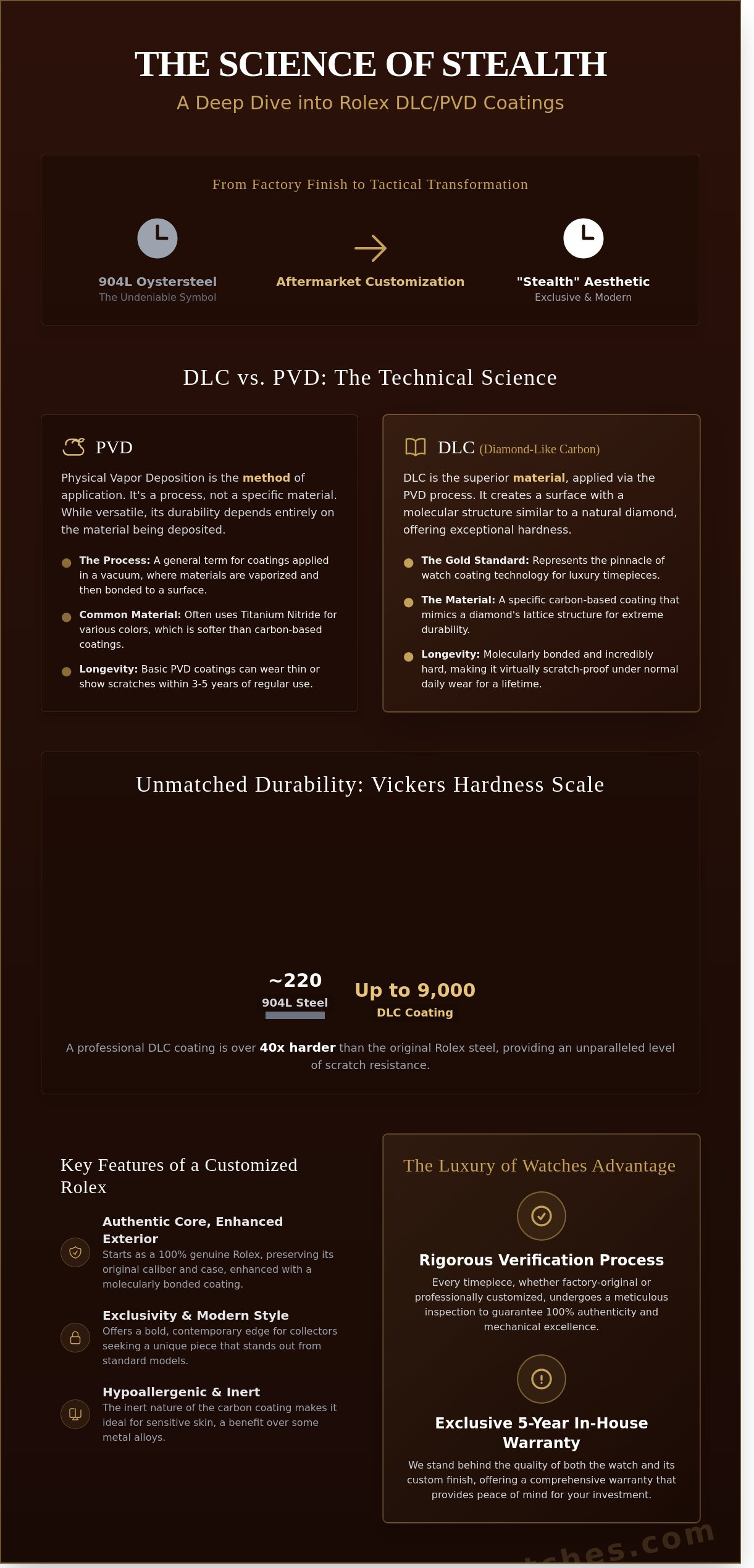
To understand the allure of a custom black Rolex, you must first distinguish between the process and the material. PVD, or Physical Vapor Deposition, represents the application method. DLC, or Diamond-Like Carbon, is the actual coating material. While many brands use PVD to apply various metals, the rolex dlc/pvd coating standard relies on carbon to achieve its signature depth and resilience. It's a distinction that separates professional-grade modifications from decorative fashion watches.
How PVD Coating Works
This process occurs within a specialized vacuum chamber. Technicians vaporize solid metals like titanium or chrome using high-energy sources; these particles then bond with the watch's steel surface at a molecular level. While standard PVD often utilizes Titanium Nitride to create gold or rose gold hues, these layers remain relatively soft compared to carbon-based alternatives. Without the inclusion of carbon, basic PVD coatings can wear thin over three to five years of regular use.
The DLC Advantage: Why It’s Superior
DLC represents the gold standard for luxury horology because it mimics the lattice structure of a diamond. According to a scientific review of DLC coatings, this material provides an exceptional balance of high hardness and low friction. While 904L steel sits at about 220 on the Vickers scale, a DLC coating can reach up to 5,000 Vickers. This makes it nearly impossible to scratch during daily wear. It's also hypoallergenic; the inert nature of the carbon makes it ideal for enthusiasts with sensitive skin. Collectors seeking these exquisite modified models often prioritize this durability over standard factory finishes.
Finish Options: Matte, Satin, and High Gloss
The final aesthetic depends entirely on how the steel is treated before entering the chamber. A Submariner often receives a bead-blasted matte finish to emphasize its tool-watch heritage. A Datejust might undergo high-polish buffing to achieve a deep, piano-black gloss. These choices dictate how light interacts with the watch face. Visual options include:
- Matte: A non-reflective, tactical appearance that hides fingerprints.
- Satin: A brushed look that maintains the original Rolex texture.
- High Gloss: A mirror-like black finish that mimics the look of onyx.
- Ghost: A light gray variation achieved by reducing the carbon density.
Choosing the right finish is vital for maintaining the watch's character. A "Deep Black" coating requires multiple cycles to ensure total light absorption, resulting in a pristine look that standard steel simply cannot replicate.
The Collector’s Dilemma: Resale Value and Authenticity
For many purists, applying a rolex dlc/pvd coating to a pristine Submariner or Daytona feels like a risky departure from tradition. The primary concern is always whether such a modification ruins the investment potential of a high-value timepiece. While it's true that a factory-original watch follows a predictable price trajectory, the secondary market for customized Rolexes has evolved into a sophisticated, high-demand niche. Serious collectors often view a professional coating not as a detraction, but as a bespoke enhancement that separates a common reference from a unique statement piece.
Investment Potential in the Custom Market
The market perception of customized luxury shifted significantly around 2017 when major players like Bamford Watch Department moved from aftermarket modifications to official brand partnerships. This "Bamford Effect" validated the idea that rarity and unique aesthetics can drive prices upward. While a standard steel Datejust might have a set market ceiling, a professionally coated version can command a 15% to 35% premium in the grey market among buyers who value exclusivity. These collectors aren't looking for a "Full Set" factory model; they're hunting for a specific aesthetic that Rolex doesn't offer directly from the catalog.
The Rolex Service Center (RSC) Problem
Rolex maintains a famously rigid stance on modifications. If you send a watch featuring a rolex dlc/pvd coating to a Rolex Service Center, the technicians will typically refuse to service the movement. In some cases, they may offer to "restore" the watch to factory specifications, which involves replacing the coated case and bracelet with standard steel components at a cost that can exceed $3,000. To maintain these timepieces, owners must build relationships with expert independent horologists who understand the technical properties of Diamond-Like Carbon (DLC) and possess the specialized tools to handle the finish without scratching it. Professional customization voids factory warranties but is replaced by boutique guarantees.
Authenticity remains the cornerstone of any luxury transaction, especially when the original steel is hidden beneath a dark layer. Verifying the base Rolex requires a meticulous inspection of the serial and model numbers engraved between the lugs. On professional-grade coatings, these markings remain crisp and legible under a 10x loupe. A true connoisseur also checks the laser-etched crown at the 6 o'clock position on the sapphire crystal and ensures the movement's beat rate and finishing match the caliber's specifications. We prioritize 100% Authenticity by certifying the base timepiece before any coating process begins, ensuring the prestigious heritage of the watch remains intact even as its appearance is transformed.
Choosing and Maintaining Your Black Rolex
Selecting the right base model is the first step in a successful customization. While any stainless steel Oyster case can undergo the process, certain silhouettes carry the dark aesthetic with more gravitas. The rolex dlc/pvd coating works best on watches with bold lines and functional histories. You're not just changing a color; you're reimagining the watch's identity from a luxury jewelry piece to a tactical instrument. Owners should realize that while DLC is incredibly durable, it requires a specific care regimen to remain pristine over decades of use.
Top Models for DLC/PVD Customization
The Rolex Submariner remains the quintessential choice for a stealth conversion. Its 41mm profile and ceramic bezel provide a perfect canvas for a matte or satin black finish. The Milgauss, specifically the reference 116400GV, offers a unique visual contrast. The green sapphire crystal "pops" against a dark DLC case, emphasizing the watch's scientific heritage. For travelers, the GMT-Master II in a "blacked out" configuration offers a sophisticated, modern alternative to the standard bi-color bezels. These professional models utilize 904L stainless steel, which provides an ideal surface for the carbon bonding process.
The Maintenance Protocol
Daily care for a black Rolex is straightforward but strict. You should only use a clean microfiber cloth and distilled water for routine wiping. Avoid tap water if you live in an area with high mineral content, as calcium deposits can leave visible spots on a matte finish. Never use ultrasonic cleaners or harsh chemicals like ammonia or bleach. These substances can eventually degrade the bond between the coating and the steel substrate.
- No Polishing: Standard cape cod cloths or polishing wheels will ruin the finish. If the coating is scratched, it cannot be "buffed out" like raw steel.
- Friction Points: Pay close attention to the bracelet links and the clasp. These high-friction areas are where wear first appears.
- Hardness Reality: High-quality DLC has a hardness rating of approximately 3,000 Vickers. This is nearly 15 times harder than the 200 Vickers rating of standard 904L stainless steel.
It's a common misconception that DLC is indestructible. While it resists most scratches from keys or coins, a direct impact with a sharp granite edge or a concrete wall can chip the coating. If a chip occurs, the silver steel underneath will show through. Repairing this isn't a simple touch-up job; it requires the entire watch to be disassembled, chemically stripped, and recoated from scratch. This process can take 4 to 8 weeks depending on the specialist. To ensure your timepiece remains in peak condition, always source your watches from a trusted connoisseur who understands the nuances of high-end customization and maintenance.
The Luxury of Watches Advantage
Acquiring a custom timepiece requires more than an appreciation for stealth aesthetics; it demands a partnership with a provider that understands the technicalities of the rolex dlc/pvd coating process. At Luxury of Watches, we don't just sell modified watches. We curate them. Every piece in our inventory is sourced through a network of vetted suppliers established over our 21 years in the luxury horology industry. Because Rolex Service Centers typically refuse to service modified timepieces, we've removed this hurdle by providing a comprehensive 5-Year In-House Warranty. This guarantee ensures your investment is protected by master watchmakers who specialize in the unique requirements of coated luxury steel.
Choosing a trusted connoisseur over private forums or unregulated auction sites protects you from the common pitfalls of the secondary market. We maintain a 100% authenticity guarantee on every component, from the hairspring to the oscillating weight. While private sellers often hide imperfections under a fresh coat of PVD, we only select pristine, mint-condition specimens for our collection. This commitment to quality ensures that the physical vapor deposition bonds perfectly with the 904L stainless steel, preventing the premature peeling or flaking often seen in lower-tier modifications.
Our Rigorous Authentication Process
Before any rolex dlc/pvd coating is applied, each watch undergoes a 30-point inspection. Our technicians verify movement beat rates, amplitude, and serial number alignment to confirm the watch is factory-original. Customization never compromises the horological heart of the timepiece. We ensure the movement remains untouched and performs to COSC standards. Every purchase includes our signature Certificate of Authenticity. This document acts as your security bond, confirming that the watch is a genuine Rolex product that has been enhanced to the highest professional standards.
Unbeatable Value and Security
We believe in providing prestige at a price that makes sense. By operating as a premier grey market leader, we offer these exclusive blacked-out designs at competitive prices, often saving clients 15% to 25% compared to traditional boutique markups. You gain the peace of mind provided by our California-based support team, who are available to assist with any technical queries or servicing needs. This localized expertise eliminates the stress of shipping high-value items overseas for repairs. You get the allure of a bespoke, limited-edition look backed by the stability of a professional American business.
Elevate Your Collection with a Custom Aesthetic
Owning a black Rolex represents a bold departure from traditional horology. You've learned that rolex dlc/pvd coating isn't just about aesthetics; it's a technical upgrade that utilizes carbon layers to enhance scratch resistance. While PVD offers a sleek finish, DLC provides the diamond-like hardness necessary for daily wear. Choosing the right timepiece requires a balance of personal style and an understanding of market value. This modification allows you to maintain the prestige of a classic silhouette while embracing a modern, stealthy profile.
Luxury of Watches has provided expert horological support since 1999, ensuring every collector finds an exquisite match for their wrist. We remove the uncertainty of the secondary market by offering a 5-Year Comprehensive In-House Warranty on every piece. You don't have to compromise on security when seeking a custom look. Every watch we sell comes with 100% Authenticity Guaranteed, protecting your investment from the moment it arrives in pristine condition.
Shop Authentic Black DLC & PVD Rolex Watches at luxuryofwatches.com to find your next statement piece. Your journey toward a unique and powerful horological legacy begins now.
Frequently Asked Questions
Is Rolex DLC coating permanent?
DLC coating isn't strictly permanent, though it's designed to last for 15 to 20 years under normal wear. The Diamond-Like Carbon layer reaches a hardness of 90 on the Rockwell C scale, making it incredibly resilient. It won't flake off like paint, but it can eventually wear thin at high-friction points like the clasp edges after two decades of daily use. Most collectors find the finish remains pristine for the lifetime of their ownership.
Will Rolex service a PVD coated watch?
Rolex Service Centers typically refuse to service any timepiece that's undergone aftermarket modifications like PVD or DLC applications. Since a 2020 policy update, official centers often return modified watches unserviced to maintain factory original standards. If they do accept it, they'll likely require a full restoration to original 904L steel specifications. This process can cost upwards of $3,500, so owners usually rely on expert independent watchmakers for regular maintenance.
Does DLC coating scratch easily?
DLC coating is exceptionally difficult to scratch because it possesses a surface hardness of approximately 3,000 Vickers. Standard 904L stainless steel measures around 200 Vickers, meaning the coating is 15 times harder than the base metal. While it resists 99% of daily abrasions, a direct impact with a diamond or a sharp sapphire edge can still leave a mark. It's the most durable black finish available for luxury timepieces today.
What is the difference between black PVD and DLC?
Physical Vapor Deposition (PVD) is the vacuum process used to apply a finish, while Diamond-Like Carbon (DLC) is the specific high-performance material being applied. Standard PVD coatings often use titanium nitrides with a hardness of 2,500 Vickers. A rolex dlc/pvd coating utilizes carbon to achieve a superior hardness of 3,000 to 5,000 Vickers. This results in a darker, more scratch-resistant surface that offers better protection for the underlying prestigious movement.
Can you remove PVD coating from a Rolex?
You can remove PVD or DLC coating through a specialized de-coating process involving electrochemical baths or precision abrasive polishing. This procedure requires 4 to 6 hours of intensive labor to ensure the 904L stainless steel remains intact. Once the layer is stripped, the watch must undergo a full multi-stage polish to restore the original factory brushed and mirrored finishes. It's a complex task that should only be performed by a certified master watchmaker.
Does a black coating affect the water resistance of a Rolex?
A professionally applied black coating has zero impact on the 100-meter or 300-meter water resistance rating of a Rolex watch. The coating layer is only 2 to 5 microns thick, which is too thin to interfere with the compression of the rubber O-ring gaskets. Every rolex dlc/pvd coating project we handle includes a 10-bar pressure test after reassembly. This ensures the case remains 100% airtight and ready for aquatic use just like a factory model.
Why are some black Rolex watches more expensive than stainless steel ones?
Black Rolex watches often command a 30% to 45% price premium because of the intensive labor and specialized vacuum chambers required for the coating. Disassembling a 140-part Rolex movement and case for individual treatment adds significant technical overhead. Exclusivity also drives value, as these custom editions are often limited to batches of 50 units. Collectors pay for the unique aesthetic and the assurance of a finish that's harder than standard steel.
Is DLC coating the same as ceramic?
DLC is a thin carbon layer applied over a steel substrate, while Rolex Cerachrom is a solid block of ceramic material. A DLC layer is roughly 3 microns thick, providing a scratch-proof surface without the brittleness of solid ceramic. While a ceramic bezel might shatter if it hits a granite surface at a sharp angle, a DLC-coated steel case retains the impact resistance of metal. It's the perfect middle ground between extreme hardness and structural durability.