
How to Convince Your Spouse on a Watch Purchase, Without Creating Conflict
Posted by Luxury of Watches on 27th Sep 2026
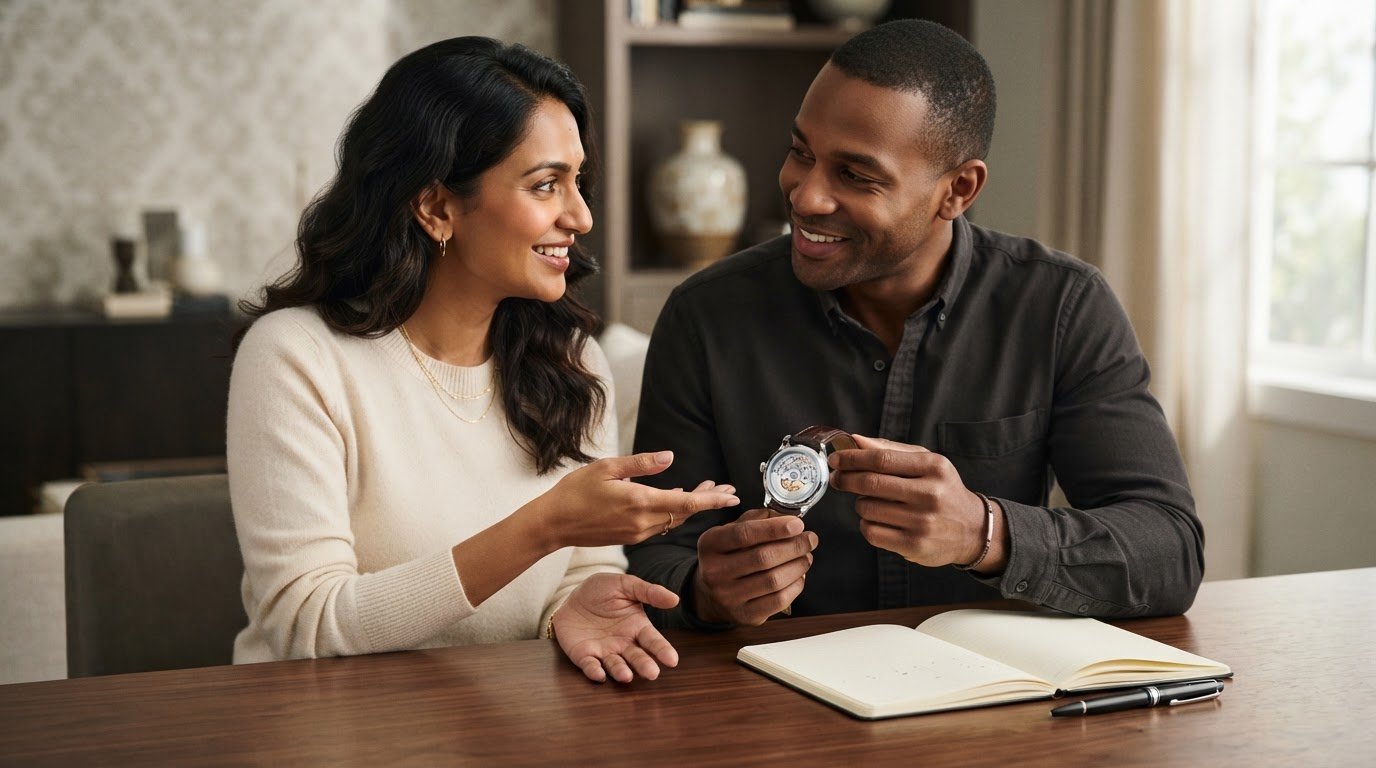
What if the best way to get the watch you want is to stop trying to persuade your spouse? If you're searching for how to convince your spouse on a watch purchase, it’s understandable to feel unsure. A luxury watch can be a meaningful expression of personal style and craftsmanship, yet still raise fair questions about cost and timing. A conversation that feels like a sales pitch can create tension; an honest discussion makes room for both partners’ priorities.
You don’t need to downplay why the watch matters or dismiss practical concerns. Explain its personal value, listen to your spouse’s perspective, and discuss a budget and timeline that fit your shared financial priorities.
Keep the decision collaborative, from agreeing on what feels comfortable to browsing together only if you’re both ready. If you do move forward, review the specific watch’s authenticity information and warranty terms before choosing. The goal isn’t a reluctant yes. It’s a decision you can both feel good about.
Key Takeaways
- Choose a calm moment to raise the subject, and frame it as a shared financial decision rather than a request for an immediate yes.
- Explain what the watch means to you personally without relying on investment or resale-value claims to justify the purchase.
- Learn how to convince your spouse on a watch purchase by listening to budget concerns and considering alternatives such as saving, waiting, or not buying.
- Use a neutral checklist to weigh budget fit, timing, personal meaning, research, and whether you both feel comfortable proceeding.
- If you agree to explore options, browse together and review the specific watch’s authenticity information and warranty terms before choosing.
How to Bring Up a Luxury Watch Purchase Without Starting an Argument
A luxury watch can hold personal meaning, but the decision may also affect shared savings, plans, or other priorities. Acknowledging that from the start shows you’re not treating the purchase as yours alone to decide. The aim isn’t to secure an immediate yes. It’s to open a conversation where both partners can speak honestly.
Choose a calm moment when neither of you is distracted, upset, or under pressure to make a quick purchase. Avoid raising it during an argument about spending or while looking at a watch you feel you must buy now. You might say you’d like to talk about a possible discretionary purchase and ask when your spouse would feel comfortable discussing it.
Before you begin, consider what draws you to the watch. It could be the design or craftsmanship, an interest in collecting, or a personal milestone you’d like it to mark. Explain that meaning as your own, rather than assuming your spouse shares it or suggesting the watch will gain value. Applying principles of negotiation means making space for both people’s interests, not just arguing for a preferred outcome.
What should you say when you first raise the idea?
Use first-person language to make clear you’re exploring, not announcing a decision. For example: “I’ve been thinking about a luxury watch because I appreciate the craftsmanship, and it would mark an important milestone for me. I know this could affect priorities we share, so I’d like to talk it through. What questions or concerns come to mind?”
This gives your spouse room to respond, including with uncertainty or disagreement. Don’t frame the conversation as a test of support or affection. Their questions may be about timing, budget, or what the purchase means to your household. Listen for the concern behind the first response before offering explanations.
How can you make the conversation feel collaborative?
Ask when and how your spouse would prefer to discuss a discretionary purchase. Some couples may want to review their budget together; others may first need a relaxed conversation about priorities. Agree on a process before trying to settle the decision.
A simple sequence can keep the discussion respectful:
- Share: Explain why you’re interested and what the watch represents to you.
- Ask: Invite your spouse’s questions and concerns.
- Reflect: Summarize what you heard before responding, such as, “It sounds like the timing worries you more than the watch itself.”
- Pause: If either of you needs time, agree to revisit the topic rather than forcing a conclusion.
This approach to how to convince your spouse on a watch purchase is less about persuasion than mutual understanding. A good first conversation may end without a decision. If both of you feel heard, it has still made progress.
How to Explain Why a Luxury Watch Matters Without Overstating Its Value
A persuasive explanation doesn’t need to make a luxury watch sound essential. Clarify what appeals to you and how you’d fit the purchase into plans you’ve both agreed on. Personal meaning and financial justification are different things: appreciating a watch’s design can be sincere, but it doesn’t prove that buying it is the right choice for your household.
Be specific about your interest. Perhaps you’re drawn to the proportions, finishing, mechanics, a brand’s history, or the idea of marking a personal milestone. If Rolex, Cartier, or Breitling interests you, explain what you find compelling rather than suggesting everyone should value those names. Status may explain the appeal, but it can’t establish that a purchase is necessary or financially sound.
How do you describe the appeal of a watch honestly?
Connect the watch to your preferences and intended use. For example: “I’m interested in the design and the craft behind a mechanical watch, and I’d hope to wear it regularly. I know that may not matter to you in the same way, so I want to explain why it matters to me.” If you’re considering a milestone purchase, say what you want it to commemorate without expecting your spouse to assign it the same meaning.
Specifics make the conversation more grounded. Rather than relying on broad claims about heritage or quality, identify what you want to learn about a particular watch, such as its movement, materials, condition, or documentation. Check those details against reliable product information before presenting them as facts.
How can you answer, “Why spend this much on a watch?”
Start by acknowledging the question directly: a luxury watch is a discretionary purchase, and its personal value can differ from one partner to the other. Explain the role you imagine for it, including how often you expect to wear it and whether it would replace something you already own. Then discuss how the purchase would fit your budget and agreed financial plans. Enthusiasm is not a reason to bypass them.
Financial conversations tend to be more constructive when both partners can consider the same information and shared goals. Fidelity’s guidance on how couples talk about money and finances offers a useful reference for approaching those discussions. If resale value comes up, be candid about uncertainty. Some watches may retain value differently from others, but no future appreciation or resale outcome is guaranteed. Don’t use an investment claim to make the purchase seem safer than it is.
For how to convince your spouse on a watch purchase, aim to explain, not oversell. Once you’ve agreed that exploring options makes sense, you could browse luxury watches together and review the specific watch’s authenticity information and warranty terms before deciding.
How to Address Budget Concerns and Your Spouse’s Objections Fairly
A concern about cost isn’t a challenge to overcome. It’s information about how the purchase may affect your shared plans. Instead of responding with a sales pitch, ask what feels difficult: the amount, the timing, a savings goal, or the idea of buying a watch at all. These are different concerns, and each deserves an honest answer.
Before deciding, review the household commitments and savings plans you’ve agreed on. Use figures specific to your own finances; there’s no universal budget threshold that makes a luxury watch sensible for every couple. If buying now would compete with a priority you both value, pausing is a practical decision, not a failure to reach agreement.
What if your spouse says the watch is too expensive?
Ask what “too expensive” means in this situation. Your spouse may be comfortable with the idea but not the timing, or may prefer that discretionary spending go toward another goal. You could consider saving toward the purchase together, waiting until a planned milestone, or looking at pre-owned luxury watches. Pre-owned is an option to research, not an automatic guarantee of affordability or suitability. If your spouse remains uncomfortable, accept that the answer may be no.
A comparison can help you discuss choices without turning the conversation into a debate. Fill it in together using your own budget, priorities, and comfort level:
| Option | Timing | Budget fit | Household priorities | Comfort level |
|---|---|---|---|---|
| Buy now | Immediate | Does it fit the agreed plan? | Would another goal be affected? | Are both partners comfortable? |
| Wait and save | Revisit later | Can you set money aside without strain? | Does this protect current goals? | Does a pause feel fair to both? |
| Explore pre-owned | After more research | Does a specific option fit your budget? | Are condition and documentation acceptable? | Do you both feel informed? |
| Do not proceed | No purchase | No watch spending | Preserves other priorities | Can you both accept this outcome? |
How can you discuss trade-offs without creating pressure?
Compare the purchase with other discretionary goals that matter to both of you, rather than treating one person’s interest as less worthy. Agree that neither partner will use guilt, surprise spending, or repeated requests to force a decision. For further market context, consult Rolex Prices 2026: The Comprehensive Market Value & Buying Guide, then discuss what the information does and doesn’t tell you about your own choice.
Learning how to convince your spouse on a watch purchase shouldn’t mean pushing past a clear concern. A fair outcome may be buying later, choosing a different option, or deciding not to proceed. The decision is sound only if it respects both your shared commitments and each partner’s comfort.
How to Decide Together Whether a Watch Purchase Makes Sense
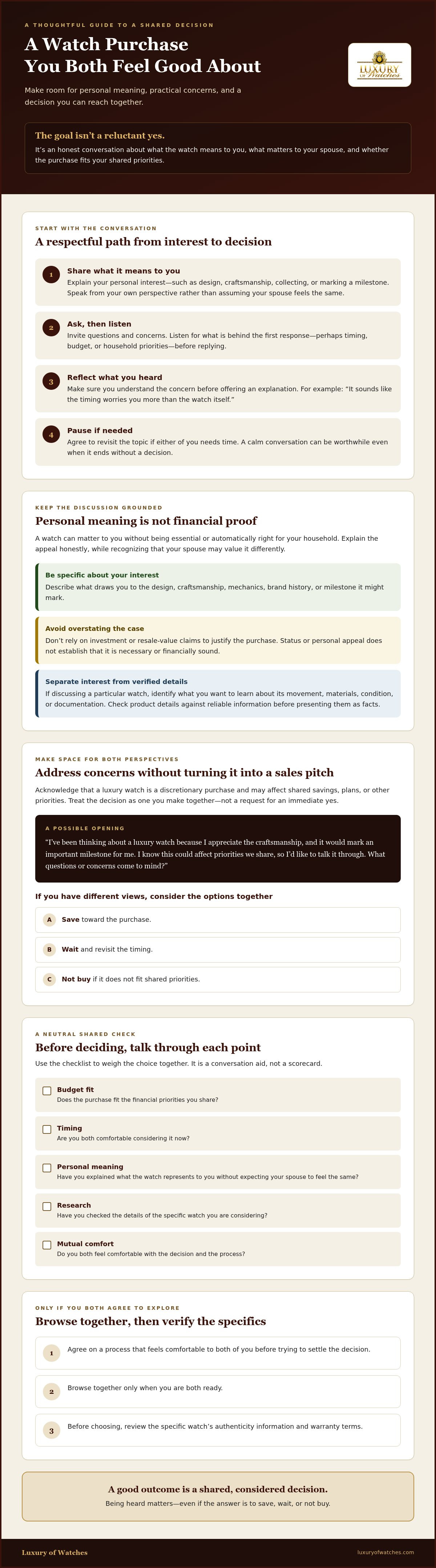
A shared decision needs more than agreement on a particular watch. Before comparing options, check whether the purchase fits your household’s priorities and whether both partners are comfortable moving forward. The goal isn’t to remove every uncertainty, but to make sure no one feels rushed or left out of the research.
Use this neutral checklist to assess the decision together:
- Budget fit: Does the purchase fit the spending plan you’ve agreed on without displacing a shared priority?
- Timing: Is buying now comfortable, or would waiting make more sense?
- Personal meaning: Do you understand why the watch matters to the person who wants it?
- Research: Have you reviewed the same information about the specific watch and seller?
- Mutual comfort: Can either partner raise a concern without being pressed to change their mind?
Then compare possible outcomes without treating one as the expected answer:
- Buy now: Consider this only if the budget, timing, research, and comfort checks all align.
- Wait: Set a time to revisit the question after a savings goal or other priority is addressed.
- Explore pre-owned: Compare relevant options and review condition, provenance, and documentation carefully. The Comprehensive Guide to Pre-Owned Luxury Watches: Value, Authenticity, and Ownership can offer further reading.
- Don’t proceed: Recognize this as a valid shared decision, not a failure to reach one.
What should couples agree on before choosing a watch?
Set a budget together and identify which household priorities are non-negotiable. Discuss whether you’re open to a new or pre-owned watch, and what documentation you’d want to review before buying. If either person is uncertain, agree on a cooling-off period. Hesitation is a reason to pause, not a signal to hurry the decision along.
How can you research a watch purchase responsibly?
Look at the same details together. Ask the seller what authenticity information is available, understand the transaction safeguards, and read the exact warranty terms for the specific watch. A retailer’s in-house warranty is not the same as a manufacturer’s international warranty; don’t assume one includes the other. Confirm the applicable terms before choosing.
After you’ve agreed on priorities and are ready to compare options, browse luxury watches together. Learning how to convince your spouse on a watch purchase should lead to a decision both partners can accept, whether that means buying now, waiting, or walking away.
How to Explore Luxury Watches Together After You Both Agree
Once you’ve agreed that exploring options feels comfortable, treat browsing as research, not a commitment. The aim is to learn what suits the person who’ll wear the watch while giving both partners enough information to make a considered choice. Either of you can pause the process or decide not to buy.
Compare preferences before narrowing the search. You might look at Rolex, Cartier, and Breitling and discuss which designs appeal to you, how a watch might fit into everyday wear, and whether you’re drawn to a new or pre-owned option. Focus on the specific watches rather than assuming a brand name alone determines the right choice.
What should you check when comparing luxury watches?
Review each candidate together. Look at its stated condition, included documentation, and the details the seller provides about that specific watch. If considering a pre-owned option, The Comprehensive Guide to Pre-Owned Luxury Watches: Value, Authenticity, and Ownership can help you identify topics to research before deciding.
Ask what authenticity information is available and read the exact warranty terms. Luxury of Watches states that its authentic watch selection comes with a five-year in-house warranty, but confirm the terms and coverage for the particular watch you’re considering. An in-house warranty is distinct from a manufacturer’s international warranty, so don’t assume one means the other.
How can you move forward without rushing the decision?
Shortlist a few options and compare them side by side. Each partner can note what they like, what questions remain, and whether the choice still fits the agreed budget. Give yourselves time to review the information outside the excitement of browsing. A pause can reveal whether the watch is genuinely right or simply appealing in the moment.
If questions come up, contact a retailer’s customer-support team before purchasing. Luxury of Watches offers expert customer support, which may help clarify product details and warranty terms. Treat it as one retailer to explore, not the predetermined choice. The process of how to convince your spouse on a watch purchase should end with both partners feeling informed and free to decide.
If you’ve agreed you’re ready to compare options, explore luxury watches together. Browse at your own pace, and proceed only if you’re both comfortable.
Make the Next Step a Shared One
A luxury watch conversation works best when it’s an invitation to decide together, not a campaign for approval. Explain what the watch means to you, take your spouse’s budget concerns seriously, and agree on timing and priorities before comparing options. Learning how to convince your spouse on a watch purchase is really about creating room for an honest yes, a thoughtful pause, or a mutual decision not to buy.
If you’re both ready to explore, Luxury of Watches offers new and pre-owned options across recognized brands, including Rolex, Cartier, and Breitling. The retailer states that its authentic watch selection includes a five-year in-house warranty, alongside secure transactions and expert customer support. Before choosing a specific watch, review its authenticity information and applicable warranty terms together.
Explore luxury watches together when you’ve agreed that browsing feels like the right next step. Take your time, ask questions, and choose only if you’re both comfortable. A considered decision can make the watch, or the choice to wait, feel right to both of you.
Frequently Asked Questions
How do I convince my spouse to let me buy a watch?
Start with an open conversation, not a persuasion campaign. Explain why the watch interests you, then ask what concerns your spouse has and listen before responding. Discuss how the purchase fits your shared budget and priorities, and consider waiting or deciding not to buy if it doesn’t feel right to both of you. Learning how to convince your spouse on a watch purchase is really about reaching a decision you can both accept, not securing an immediate yes.
How do I talk to my spouse about an expensive purchase?
Choose a calm time and explain what you’re considering, why you want it, and how you propose to pay for it. Invite questions instead of presenting the purchase as already decided. Review how it might affect shared goals and obligations, then agree on a budget or pause if needed. Avoid surprise spending or repeated pressure, and don’t suggest that an expensive watch will necessarily appreciate or deliver a particular resale outcome.
Should I buy a luxury watch if my spouse disagrees?
Don’t treat disagreement as a challenge to overcome. Ask whether the concern is affordability, timing, competing priorities, or discomfort with the purchase itself. Review your household plans together and consider waiting or not buying. If you manage finances jointly, make sure the decision fits your agreements. You can clarify where you differ without requiring either person to change their mind, and either partner’s ongoing hesitation is a reason to pause.
How can I explain the value of a luxury watch to my spouse?
Describe the personal reasons that genuinely matter to you, such as the design, craftsmanship, function, or a milestone you’d like the watch to mark. Be clear that personal appeal isn’t the same as financial value, and don’t promise appreciation, investment returns, or a particular resale result. Your spouse may not share your enthusiasm. Focus instead on transparency, affordability, and whether the purchase fits priorities you’ve agreed on together.
Is buying a pre-owned luxury watch a good compromise?
It can be an option to research together, but pre-owned doesn’t automatically mean affordable, suitable, or risk-free. Compare the specific watch’s condition, available documentation, seller information, and warranty terms. Ask what an in-house warranty covers, and don’t assume it’s the same as a manufacturer’s international warranty. Decide whether the option addresses your shared concerns. Don’t let the possibility of a lower price rush you into a purchase you haven’t both considered.
What should couples agree on before buying a luxury watch?
Agree on a budget that fits your shared plans, a comfortable timeline, and which household priorities can’t be compromised. Discuss whether you’re open to new or pre-owned options and what information you’ll want to review about the watch and seller. Make room for either partner to pause or ask for more time. Clear expectations can prevent misunderstandings and ensure you begin browsing only when both of you feel comfortable.
How can I choose a luxury watch retailer with my spouse?
Review the seller’s authenticity information, transaction safeguards, customer support, and written warranty terms together. Ask what the warranty does and doesn’t cover; an in-house warranty is distinct from a manufacturer’s international warranty. For example, Luxury of Watches states that its authentic watch selection includes a five-year in-house warranty. Confirm the terms for the specific watch, review its listing, and resolve outstanding questions before placing an order.