
High-End Watches: How to Choose the Right Luxury Timepiece
Posted by Luxury of Watches on 1st Oct 2026
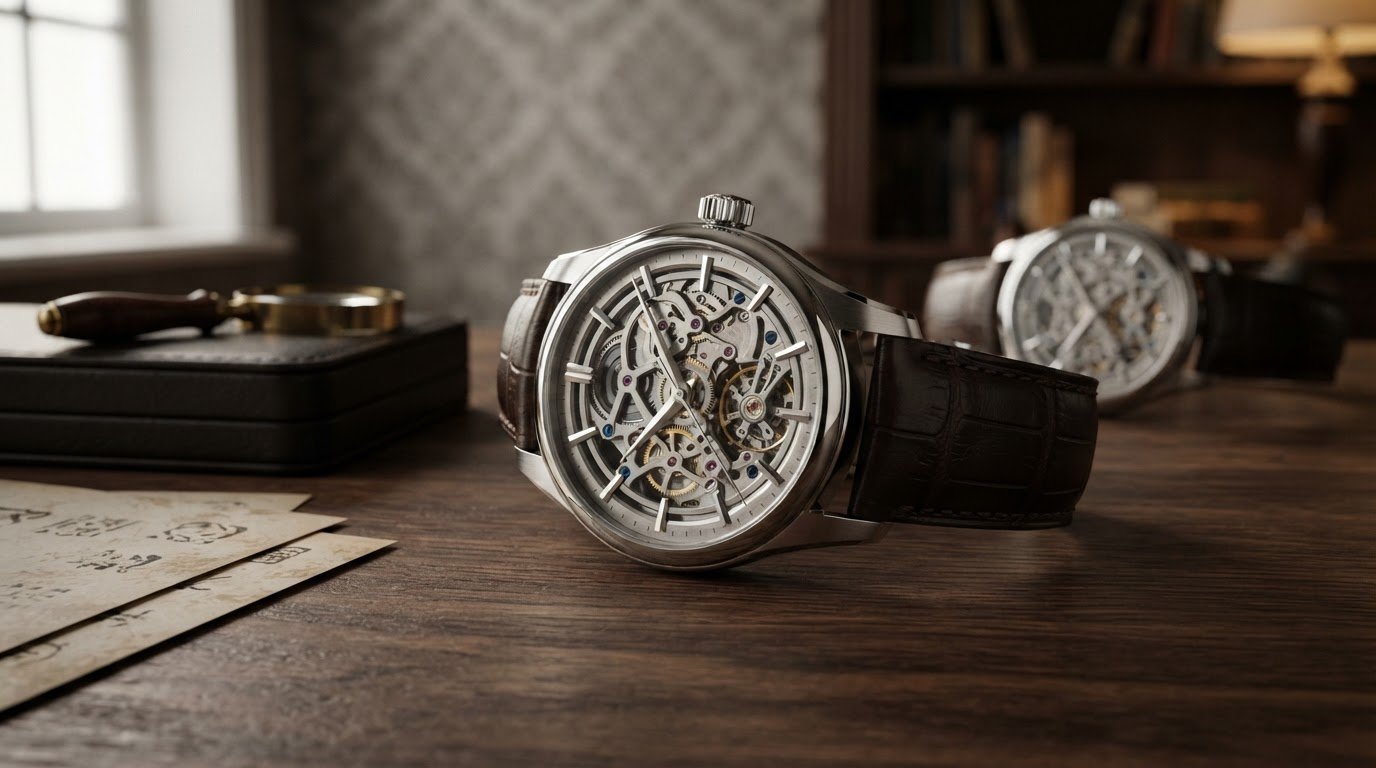
The right high end watch isn’t necessarily the most recognizable one. It’s the timepiece that fits your taste, routine, and priorities. With established brands, intricate movements, and many styles to compare, choosing can feel as challenging as building a shortlist. Focus on the details that affect how you’ll wear and enjoy a watch, not just the name on its dial.
Technical details are useful when you understand what they mean for ownership. Movement type affects how a watch is powered; case material, size, and shape affect its feel on the wrist; and dial layout affects readability. New and pre-owned watches also involve different considerations, so review the specific watch’s condition, available documentation, and warranty terms before making a decision.
This guide explains how to compare movements, materials, and styles, then assess ownership options and purchase protections. Luxury of Watches offers new and pre-owned timepieces from established luxury brands, with a five-year in-house warranty on its authentic watch selection. Use the criteria below to build a practical shortlist and compare individual watches with confidence.
Key Takeaways
- Choose high end watches by balancing craftsmanship and brand heritage with comfort, legibility, and how you plan to wear the watch.
- Compare mechanical, automatic, and quartz movements by how they work and what you prefer, rather than assuming one is right for everyone.
- Assess case materials and design for the look, feel, and care that suit your routine.
- When comparing new and pre-owned watches, review each watch’s condition, available provenance information, included documentation, and warranty terms.
- Luxury of Watches offers new and pre-owned watches from established brands, with a five-year in-house warranty on its authentic watch selection.
What Makes a High-End Watch Worth Considering?
A high-end watch is distinguished by qualities such as its movement, construction, finishing, design, and ownership experience, not simply its price or name. A good fit for you also needs to feel comfortable, display the time clearly, and suit the way you intend to wear it.
Different buyers value different things. A finely finished mechanical movement may appeal if you enjoy traditional watchmaking and the engineering behind timekeeping. For straightforward everyday wear, you might prioritize legibility, comfort, and a design that works in different settings. Learning about the science of timekeeping can provide useful context, but technical complexity matters most when it adds something you personally value.
Which qualities distinguish a luxury timepiece?
Look closely at the movement and how it is presented, the fit of the case and its components, and the finishing of visible details such as the dial, hands, and case surfaces. Materials affect appearance, weight, and care. Steel has a versatile metallic look, while precious metals create a distinct presence. Neither is automatically the better choice. A complex movement may be interesting to explore, but complexity isn’t a requirement for every buyer.
Brand identity can help you narrow a shortlist, but it shouldn’t make the decision for you. Rolex, Cartier, and Breitling have recognizable design languages and histories, yet their reputations can’t tell you which watch will feel right on your wrist. Consider ownership details as well: the individual watch’s condition, available documentation, and applicable warranty terms.
How should your lifestyle shape the shortlist?
Begin with when and where you expect to wear the watch. For everyday use, focus on comfort, an easy-to-read dial, and proportions that sit well on your wrist. For formal occasions, you may prefer a refined profile and a design that works with different outfits. If you travel often, a clear time display or a useful travel function may matter. Collectors may place greater importance on a movement, design history, or how a watch fits into a collection.
Case size alone doesn’t determine fit. Shape, thickness, bracelet or strap, and overall balance all affect how a watch wears. Consider whether you can read the dial at a glance and whether the watch suits the clothes you wear most. These practical checks help separate a design you admire from one you’ll enjoy wearing. For more on brand heritage and identity, see this luxury watch brands collector’s guide.
How Movement, Materials, and Design Shape a High-End Watch
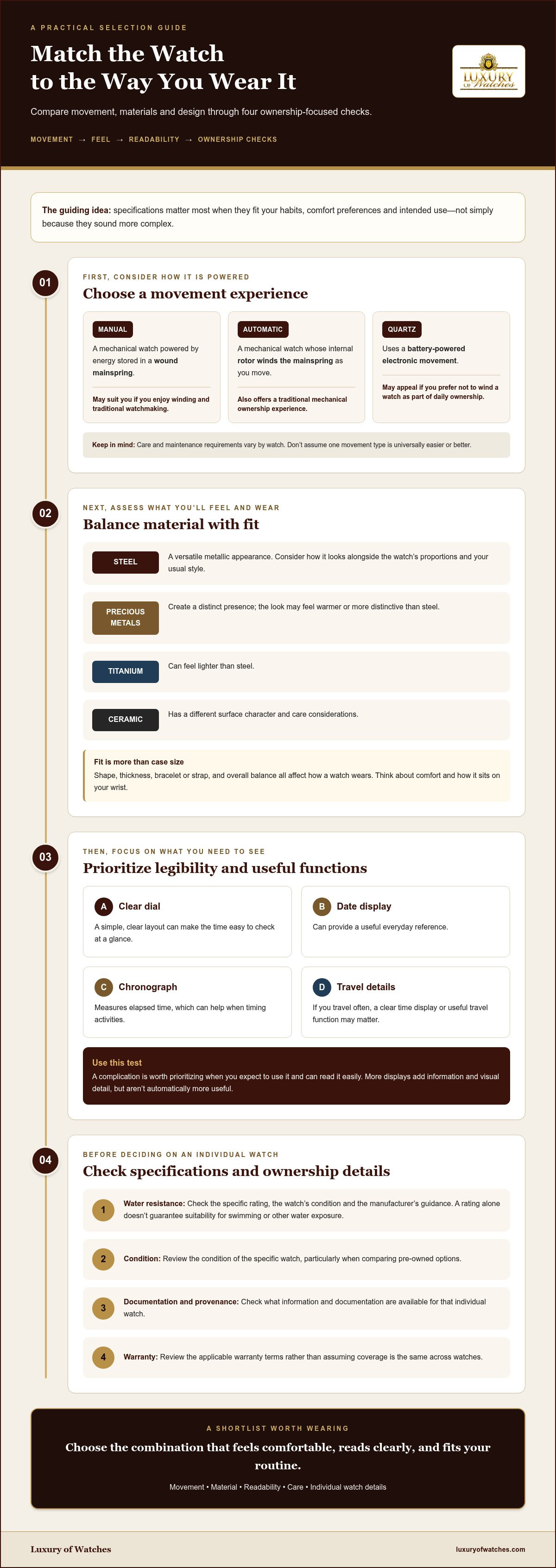
A watch’s specifications are most useful when you connect them to how you’ll wear it. Movement type determines how the watch is powered and shapes the ownership experience. Case and bracelet materials affect its weight, appearance, and care, while the dial layout affects how easily you can read the time and other information. Choose the combination that suits your habits and comfort preferences, rather than defaulting to the most complex specification.
Mechanical, automatic, or quartz: what changes for the owner?
A manually wound mechanical watch runs on energy stored in a wound mainspring. An automatic watch is also mechanical, but a rotor inside the watch winds the mainspring as the wearer moves. Both may suit someone who enjoys traditional watchmaking and the interaction that comes with a mechanical watch. A quartz watch uses a battery-powered electronic movement and may appeal if you prefer not to wind a watch as part of daily ownership.
Each movement type has different ownership considerations, including how it is powered and the care it may need over time. Maintenance requirements vary by watch, so don’t assume that one type is universally easier or better. For context on the craft and professional practice behind horology, the American Watchmakers-Clockmakers Institute is a useful industry resource.
Which materials and functions suit your daily routine?
Case and bracelet materials affect how a watch looks and feels on your wrist. Steel has a versatile metallic appearance; precious metals offer a warmer or more distinctive presence. Titanium can feel lighter than steel, while ceramic has a different surface character and care considerations. Material isn’t the only factor in comfort: case proportions, bracelet fit, and the watch’s balance matter too.
Think about what you need to read on the dial. A simple, clear layout can make the time easy to check at a glance, while additional displays add information and visual detail. A date display can be useful for everyday reference. A chronograph measures elapsed time, which can help when timing activities. A complication is worth prioritizing when you expect to use it and can read it easily.
Water resistance is a stated specification, not a guarantee that a watch is appropriate for every water-based activity. The rating, the watch’s condition, and the manufacturer’s guidance all matter. Don’t assume a watch with a water-resistance rating is suitable for swimming or other exposure without checking its specific instructions.
When comparing high end watches, weigh movement, material, complications, and readability together instead of treating one specification as a measure of quality. To compare designs and configurations, explore luxury watches from established brands and consider which details fit your routine.
Comparing New and Pre-Owned High-End Watches
A new watch offers an unworn timepiece, while pre-owned options can broaden your selection, including access to designs no longer sold new. Neither is automatically the better choice. Compare the individual watch’s condition, included documentation, and stated warranty coverage, then decide which ownership experience fits your priorities.
| Consideration | New | Pre-owned |
|---|---|---|
| Condition | Review the listing’s description and what is included. | Assess the specific watch’s stated condition and any signs of wear. |
| Selection | Explore watches offered as new. | May offer a broader range of ownership histories and discontinued designs. |
| Warranty | Read the applicable coverage and its provider. | Coverage can vary by watch; review the terms provided for that piece. |
Luxury of Watches provides a five-year in-house warranty on its authentic watch selection. This is retailer-provided coverage, not a manufacturer international warranty. Read the terms that apply to the specific watch before purchasing. Condition, provenance information, and included documentation can differ among pre-owned watches, so don’t assume every listing has the same history or accompanying materials. For more ownership guidance, read the pre-owned luxury watches guide.
Which watch style and brand match your priorities?
Choose a style for the situations in which you’ll wear it, not for status alone. A dress watch may suit formal settings, while a sport-oriented design may feel more at home in casual routines. A versatile watch can work across both. Travel-focused functions may be useful if you regularly track time across locations. In every category, consider comfort, dial readability, case proportions, and how well the watch fits your wardrobe.
Brand heritage can add context to your decision. Patek Philippe, Audemars Piguet, IWC, and Panerai each have distinct histories to explore, but a name alone can’t tell you whether a particular watch suits your taste or intended use. The history of precision timekeeping offers context on how watchmaking has developed. Think of a watch first as an object you want to own and wear, not as a promise of future investment performance.
Among high end watches, a satisfying choice brings together a suitable condition, a style you enjoy, and ownership terms you understand. Compare the details of each individual piece instead of relying on category labels to tell the whole story.
A Practical High-End Watch Buying Checklist for Online Shoppers
Start an online purchase by assessing the specific watch, not just its brand or appearance. Use this checklist to compare what matters to you with the product information and purchase terms before deciding.
- Define the intended use. Decide whether you want a watch for daily wear, formal occasions, travel, or collecting. This helps you focus on the functions, design, and durability specifications relevant to your plans.
- Consider wrist fit and readability. Review the stated case dimensions and dial images. Think about how the proportions may sit on your wrist, whether the display is easy to read, and whether the design suits your usual wardrobe.
- Confirm the exact reference and specifications. Compare the reference and listed details with the features you care about, such as movement type, case material, functions, or water-resistance rating. Don’t assume watches from the same brand share identical specifications.
- Review the watch’s condition. For a pre-owned piece, read the condition description carefully and examine the available photographs. Note visible wear and any information provided about the watch’s history or condition.
- Check what’s included. Review the listing for documentation and other accompanying items. Provenance information and documentation vary by watch, so don’t assume every piece comes with the same materials.
- Read the warranty terms. Identify the warranty provider, duration, and stated coverage before purchase. Distinguish retailer-provided coverage from a manufacturer warranty and understand the terms that apply to the specific watch.
- Review the transaction information. Look for clear product details, secure transaction information, and accessible customer support. These details help you understand the purchase and where to turn for assistance.
Luxury of Watches provides secure transactions and expert customer support. Its authentic watch selection includes a five-year in-house warranty. This is retailer-provided coverage, not a manufacturer international warranty. For more detail on the coverage, read the five-year watch warranty guide.
Reviewing these points makes it easier to compare high end watches online. Once you’ve identified the specifications and terms that matter, browse luxury watches to explore new and pre-owned options from established brands.
Explore High-End Watches with Luxury of Watches
The right watch offers more than a respected name. It should suit how you plan to wear it, feel comfortable on your wrist, reflect your design preferences, and come with purchase terms you understand. Luxury of Watches offers new and pre-owned luxury watches from established brands, so you can compare different brand identities and ownership options in one place.
What can shoppers compare at Luxury of Watches?
Explore watches from brands including Rolex, Cartier, Breitling, and TAG Heuer, alongside other established names. Each brand has its own history and visual character, but the best choice depends on the specific watch and your priorities. Consider whether you prefer a refined, formal look, a more functional design, or a versatile style that works across occasions.
New and pre-owned watches offer different paths to ownership. As you browse, compare the details provided for each watch rather than assuming that every piece from a brand shares the same specifications or condition. Pay attention to the movement, materials, proportions, and functions that matter to you. For a pre-owned watch, review its condition description and any available provenance information or documentation. These details help you assess the timepiece itself, not just the reputation associated with its dial.
The authentic watch selection includes a five-year in-house warranty. This coverage is provided by Luxury of Watches, not a manufacturer international warranty. Read the coverage information for the watch you’re considering and understand who provides the warranty.
What should you do next to find your watch?
Return to your shortlist before choosing a particular piece. Start with how you intend to wear the watch, then narrow your options by design, movement, and whether you prefer a new or pre-owned timepiece. Finally, compare the stated condition and purchase terms with what you’re comfortable owning. This approach keeps the decision practical and personal instead of letting brand recognition decide for you.
Luxury of Watches provides secure transactions and expert customer support as you consider your options. Compare the details provided for each watch, especially when choosing between pieces with different specifications or ownership histories. A considered shortlist makes it easier to identify which high end watches align with your taste and expectations.
Ready to compare? Explore high-end watches and browse new and pre-owned selections from established luxury brands.
Choose a Timepiece That Feels Right for You
The best high end watches bring together the details you value: a movement you appreciate, a design and fit suited to your routine, and ownership terms you understand. Whether you’re comparing new or pre-owned timepieces, review the specific watch’s condition, documentation, and warranty coverage before choosing.
Luxury of Watches offers new and pre-owned selections from established luxury-watch brands, with secure transactions and expert customer support. Its authentic watch selection includes a five-year in-house warranty provided by the retailer, not a manufacturer international warranty. Clear priorities make it easier to compare your options.
Ready to find a watch that matches your taste and intended wear? Explore the high-end watch collection and take the next step toward a timepiece you’ll be pleased to wear.
Frequently Asked Questions
What makes a watch high-end?
A high-end watch is often distinguished by its craftsmanship, movement, finishing, materials, design, and brand heritage. No single feature makes it the right choice for every buyer. Consider how the case feels on your wrist, whether the dial is easy to read, and how you plan to wear the watch. Its specifications and ownership terms should suit your priorities, not just its prestige.
Are pre-owned high-end watches worth considering?
Yes. Pre-owned high-end watches can offer a wider range of styles, references, and ownership histories to compare. Whether a particular watch is right for you depends on its stated condition, available provenance information, accompanying documentation, and warranty terms. Assess each watch on its own merits instead of assuming every pre-owned piece has the same condition or purchase protections. This makes it easier to decide whether it meets your expectations.
How do I choose between an automatic and a quartz luxury watch?
Choose according to how you want to wear and interact with the watch. An automatic movement is mechanical and is wound by the wearer’s movement, while a quartz movement is powered by a battery. An automatic may appeal if you value mechanical watchmaking; quartz may suit you if you prefer a battery-powered mechanism. Compare the specific watch’s details and care guidance, since neither movement type is right for everyone.
Can a high-end watch be worn every day?
Yes, some watches suit daily wear, but suitability depends on the individual design, fit, materials, and stated specifications. Consider whether the case feels comfortable, the bracelet or strap fits well, and the dial is easy to read during your routine. Check the watch’s water-resistance information and care guidance for its intended use. A luxury finish alone doesn’t make a watch suitable for every activity or environment.
What should I check when buying a luxury watch online?
Review the exact watch details, condition description, photographs, and any documentation included with that piece. Read the warranty terms to understand who provides coverage, how long it applies, and what it covers. Clear transaction information and accessible customer support also help you understand the purchase. Assessing these details individually is more useful than relying on brand reputation alone.
Does a retailer warranty mean the watch has a manufacturer warranty?
No. A retailer’s in-house warranty is distinct from a manufacturer’s international warranty, so check the named provider, duration, and coverage terms. Luxury of Watches offers a five-year in-house warranty on its authentic watch selection. Review the terms for the watch you’re considering to understand what the coverage applies to before purchasing.